

Introduction
Asthma is a disease goes by several names- feline bronchial disease, allergic bronchitis, and allergic airway disease. We tend to see asthma more often in in young to middle aged cats than dogs, with the Siamese cat being the most prevalent feline breed.
It is a disease of the lower airways that affects up to 5% of cats. Feline asthma is not cured, only controlled.
It is technically a type-1 hypersensitivity reaction to allergens in the air like pollen or spores. This reaction causes the releases of compounds called cytokines, leading to the following:
Bronchoconstriction- the airways constrict and air cannot pass through to the lungs
Edema- fluid buildup interfering with oxygen exchange in the lungs
Eosinophilia- an excess of a certain type of white blood cell
Excessive mucus production- further causing in interference with oxygen exchange
If your pet has asthma you should monitor its respiratory rate while at rest. Count every inhalation and exhalation as one, and do it for 15 seconds. Multiply that number by four for the respiratory rate per minute.
Normal dogs and cats should be around 30 while at rest. Find out what is normal for your pet when it is not ill, and use that as your basis for comparison to see if it is increasing.
Anyone who has ever had an asthmatic attack has an idea of what these pets go through when they can’t get their breath. It’s like trying to breathe with a pillow pressed against your nose and mouth, and leads to panic.
A pet that cannot breath well due to asthma can be an emergency situation. This is a medical emergency requiring immediate veterinary care. The Long Beach Animal Hospital, staffed with emergency vets, is available until the evenings 7 days per week to help if your dog or cat is having any problem, especially breathing hard or bleeding.
Think of us as your Long Beach Animal Emergency Center to help when you need us for everything from minor problems to major a major emergency. We serve all of Los Angeles and Orange county with our Animal Emergency Center Long Beach, and are easily accessible to most everyone in southern California via Pacific Coast Hwy or the 405 freeway.
If you have an emergency that can be taken care of by us at the Animal Emergency Hospital Long Beach always call us first (562-434-9966) before coming. This way our veterinarians can advise you on what to do at home and so that our staff and doctor can prepare for your arrival. To learn more please read our Emergency Services page.
Since this is more of a feline problem than a canine problem we will emphasize cats over dogs in this page.
The Mayo Clinic has information on asthma in people for an interesting comparison.
Graphic photos on this page.
Medical Terms Glossary
A glossary of medical terms will be used in this page:
| dyspnea – difficult breathing | tachypnea – fast respiratory rate |
| pneumothorax – excess air in the thorax | bronchi – large breathing tubes in the thorax |
| alveoli – where oxygen goes from lungs to the blood | thorax – chest |
| pneumonia – infection in the lungs | hypertrophy – excessive growth of a cell or organ |
| necropsy – animal autopsy | bronchiole – small breathing tubes in thorax bradycardia- low heart rate |
Normal Physiology
In the normal thorax inhaled air is brought to the lungs through progressively smaller breathing passages. It starts with the trachea (windpipe) and progresses to bronchi and bronchioles, eventually ending at the actual lung tissue called alveoli. It is at the alveoli that oxygen is absorbed by red blood cells on inhalation and carbon dioxide is excreted on exhalation.
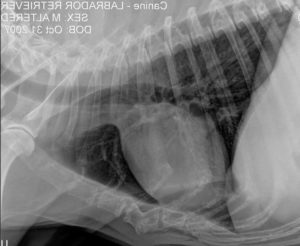
This is a radiograph of a dog’s chest. All of the black is either air in the trachea (windpipe on the top-left) or the lungs
These breathing passages contain smooth muscle that controls their size. This is the type of muscle that works automatically without you consciously telling it what to do as part of the autonomic nervous system. Our VNA page has spinal anatomy to show the nerve pathways that accomplish this.
When these muscles are relaxed the air passages and lung tissue are fully open and breathing is effortless. When they contract (called constriction) the airways narrow dramatically and it is difficult for air to make it all the way to the lung tissue where it exchanges oxygen for carbon dioxide.
The size of these breathing passages, especially the bronchioles since they are small in diameter, can have a substantial influence on how much air makes it all the way to the alveoli. The lungs have an extensive network of passages and blood vessels.
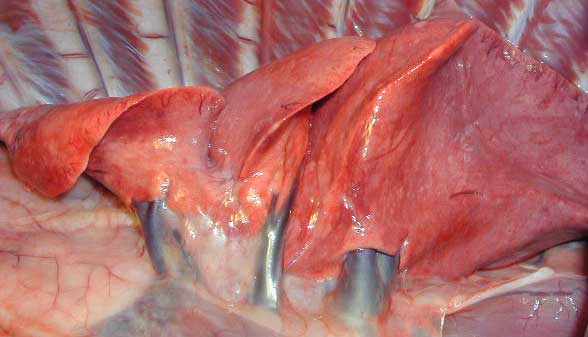
The lungs are sponge-like. You can see just a small portion of the blood supply- it is the three vertical and bluish vessels going from the heart to the lungs at the bottom of the picture. Within the actual spongey lungs there is an extensive network of small blood vessels.
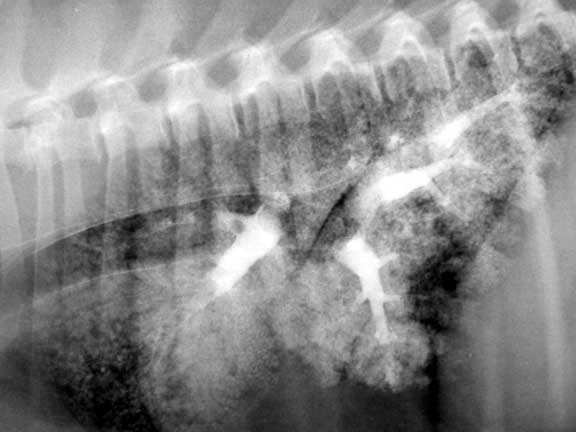
This barium radiograph illustrates just some of those breathing passages. The barium outlines the major bronchi, the 4 large white breathing passages below. All the fainter diffuse whitish area in the lungs below are barium in the small bronchi and alveoli. You can see how extensive this network is.
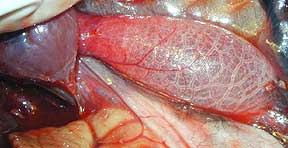
Since we are an exotics practice, we thought it might be fun to show you the air filled lungs of a bearded dragon. The heart is the purplish and round structure to the upper left of the picture. The lung is the air filled and mesh appearing structure in the middle of the picture.
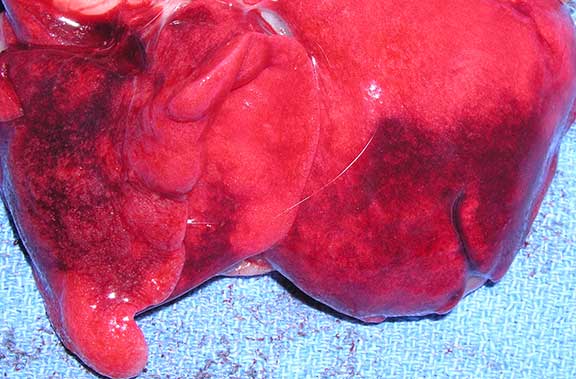
The lungs are very sensitive and easily damaged. The dark areas on this lung were caused by trauma- this pet was hit by a car. This is called a pulmonary contusion.
Pathophysiology of Asthma
Something (smoke, pollen, perfume, pollution) stimulates the bronchi and bronchioles, causing them to become inflamed and swell (edema). This sets up a hypersensitivy reaction causing the smooth muscle in them to constrict. Sometimes the smooth muscle hypertrophies (gets larger) and causes long term problems.
When the smooth muscle in the bronchi and bronchioles constrict breathing becomes harder. In addition, cells that normally produce mucous in small quantities might increase their production and literally clog up the air passages. If enough mucus production and constriction occurs the alveoli are unable to exchange oxygen and carbon dioxide to the red blood cells.
Obviously, this is a serious problem because your pet can no longer exchange oxygen and carbon dioxide at the alveoli. This is crucial to say the least. A type of white blood cell called eosinophils starts releasing chemicals known as mediators. These chemicals cause scarring of the breathing passage adding to the problem.
Unfortunately, chronic asthma can increase the blood pressure (hypertension) in the lungs leading to potential failure of the right side of the heart. It can also progress and cause emphysema.
Cause
In most cases we do not know the cause, which of course is frustrating. Risk factors include cigarette smoke, marijuana smoke, dusty cat litter, air or scented fresheners, and any aerosol-like deodorant or hair spray.
Litter that is scented, is dusty or finely ground and has clay in it, can be a problem. Some cats get the problem when exposed to litter made from pine or cedar, especially if they have been treated. Sometimes litter that is made from newspaper, corn, wheat, or wood pellets can be helpful. Clean the litter pan more often to prevent noxious odors.
Tobacco and marijuana smoke are very toxic to animals. In additon to predisposing dogs and cats to respiratory disease in general, this smoke is a potent stimulator of asthma in cats. Even the smoke that lingers on your clothes and breath can cause a problem, so smoking elsewhere does not prevent this problem. Scented candles and the burned wood in your fireplace are also implicated.
Our households are drowning in a world of chemicals. These chemicals can trigger and allergic reaction. This includes cleaning products, fabric softeners, carpet cleaners and air fresheners, shampoo and soap, hair dye, baby powder, furniture polish, paint, perfume and cologne- you get the picture.
A type of allergy, called allergic inhalant dermatitis, is caused by grasses, trees, shrubs, pollen particles, house dust molds, bed bugs and mites. These allergens usually cause a skin condition, manifested by excess itching and licking. These same allergens can set off an asthmatic attack.
Food allergies can also be a factor with asthma and skin conditions in cats. The allergy can be due to the beef, fish, corn, milk, wheat, or gluten that is in many foods. Even foods that have not caused a problem in the past can trigger an allergic reaction some time in the future.
One of the foods we have found most beneficial when we suspect a food allergy is Hills Z/D or Ultra. It must be fed for up to two months to see if it is working. To confirm the food allergy you need to feed the original food and see if the asthmatic or skin problem recurs.
Stress can add to the problem. Cats do not like abrupt change in their daily routine, so take it slow whenever you make a change. Children, travel, fireworks, guests, repairmen, gardeners, maids, etc can all be a source of stress that adds to the problem. We have a detailed page on stress in cats.
Diseases like diabetes mellitus and kidney disease can add chronic stress, especially when giving insulin injections or SQ fluids.
Symptoms
Symptoms of asthma can be chronic, acute, or intermittent. The classic signs of a cat with asthma are wheezing or coughing. If you are observant you might have noticed a slight increase in your cats respiratory rate or effort prior to the wheezing or coughing.
Other symptoms are sneezing and labored breathing. As time progresses you might even observe a poor appetite (anorexia), weight loss, or lethargy, although these are not common symptoms.
The wheezing or coughing can vary in severity. Your cat might extend its neck or even breathe with an open mouth when severe. If mild all you might notice is an increased respiratory rate when your cat is at rest.
This cat has severe dyspnea due to asthma. It is in a special cage that supplies 100% oxygen. We will not touch this cat for treatment or diagnostic tests until the 100% oxygen has had a chance to help.
We will constantly monitor this cat using a Pulse Ox (Pulse Oximeter). It measures the percentage of oxygen in the hemoglobin of the red blood cells (rbc’s). It should be in the mid to high 90’s.We usually take a quick baseline pulse ox on a cat presented during an emergency, then compare it later after it has been on 100% oxygen to determine when it is OK to remove the cat from the 100% oxygen.
Our human volunteer is showing you how it works, and her readout. She is normal, although she was nervous when we filmed her, which is why her heart rate is 83 beats per minute. Her oxygen saturation (SpO2) is 98% percent, so we don’t have to put her in the oxygen cage!
As a comparison, birds can get many breathing conditions. This is tachypnea, a very elevated respiratory rate. When presented in this advanced state the problem has been present for a long period of time usually, and the prognosis is poor.
Diagnosis
Diagnosis is not straightforward, and there is no one “asthma” test.
Cats are masters at hiding problems, so by the time a diagnosis of asthma is made the disease process has usually been present for a significant period of time. This emphasizes the importance of close observation of your cat and a physical exam if you suspect a problem. Our In Home Exam section can show you what to monitor at home before you pet is ill.
Numerous other diseases cause similar symptoms, so the diagnostic process should help differentiate them. Some of these diseases that have similar symptoms include:
- Heartworm
- Pulmonary contusion (you saw a picture of this above)
- Diaphragmatic hernia – a tear in the diaphragm, the muscle of respiration
- Pleural effusion- fluid build up in the thorax and around the lungs
- Chylothorax- lymphatic fluid build up in the thorax and around the lungs
- Lung worms
- Heart disease
- Cancer
- Heart failure (cardiomyopathy)
- Pneumonia
Signalment
Mostly cats, with Siamese cats being the most prevalent breed. Most of these cats are young to middle aged.
History
The classic signs of wheezing and coughing, for a variable period of time prior to exam. Sometimes these cats cough in a crouched position while extending their necks. Other diseases like lungworms, heartworms, heart failure, foreign bodies, tumors in the lungs and fluid in the thorax can all cause coughing in cats. Asthma is the most common cause of coughing though in the cat.
Physical Examination
The findings of the physical exam depend on how severe the asthma is, how long it has been present, what caused it, and if there are any other disease processes occurring simultaneously. A cat with asthma can have a normal physical exam.
The trachea (windpipe) might be sensitive and elicit a cough upon palpation. An increased respiratory rate might be noted, along with increased lung sounds on auscultation with the stethoscope. The lungs sounds might be crackles or wheezes. There might even be normal lungs sounds in the presence of asthma.
More expiratory effort vs inspiratory effort might be noted. This could even include an abdominal push. Heart rate can be low (bradycardia), normal, or high (tachycardia).
In severe cases there might be open mouth breathing and blue discoloration of the mucous membranes (cyanosis). Cyanosis is a serious sign and needs immediate attention.
Diagnostic Tests
Blood Panel
A blood panel might show an increase in a white blood cell called eosinophil. This is not a consistent finding though, and many pets with asthma have a normal eosinophil count.
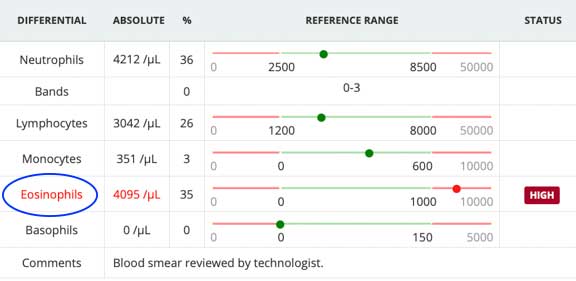
This eosinophil count is very high (over 4x normal), and it could be an indication of asthma. It also could be an indication of internal or external parasites, and even a rare disease called hypereosinophilia.
Radiography
Radiographs are an important tool in diagnosis, although a normal radiograph is not uncommon even if your cat has asthma. This occurs in 20% of cats. Classic radiographic findings include what is called a diffuse bronchial or bronchointerstitial pattern, hyperinflation, or collapse of the right middle lung lobe. See if you can see these findings in the abnormal radiographs below.
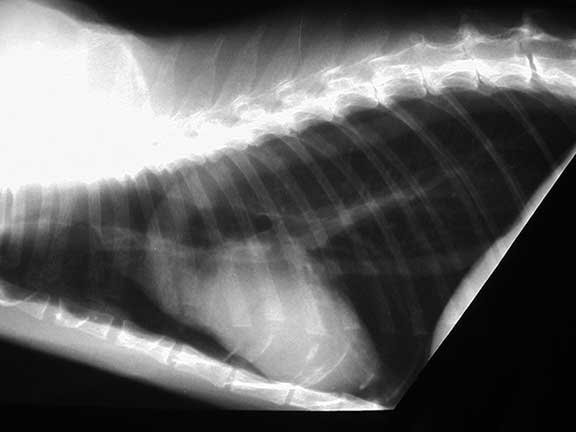
This is a normal chest radiograph in a cat. All the dark areas are lung or windpipe. They are dark because they are filled with air. This is what we want to see. The picture below labels the organs.
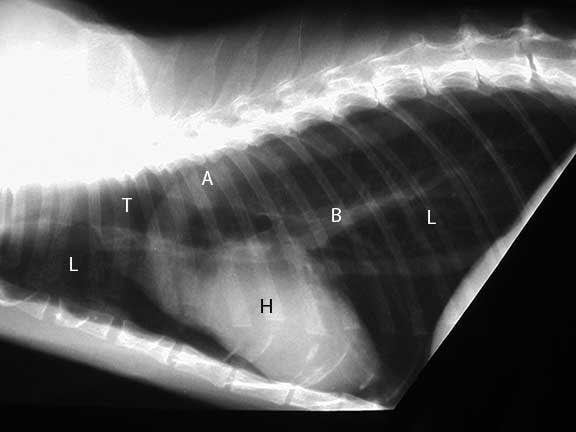
The anatomy is labeled for better understanding
T- trachea (windpipe)
L- lung
A- aorta
H- heart
B- Main bronchi
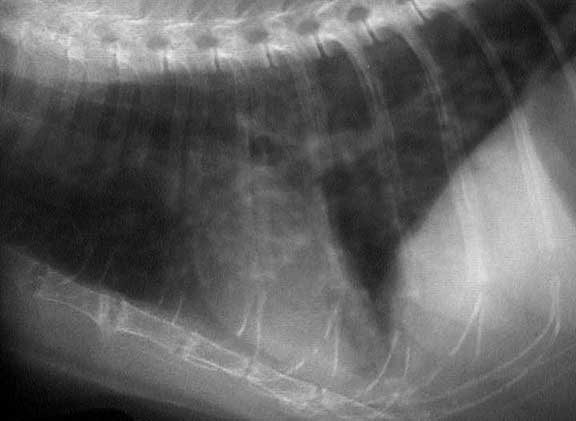
This is a typical radiograph of a cat with asthma. Notice how the lung is not as dark, and has a a moth-eaten appearance. This is feline asthma.

Our digital radiography might give you a better view of the moth eaten appearance in a different cat.

This cat has asthma also, but the radiograph is not typical. The arrow point to the lesion in the lungs.
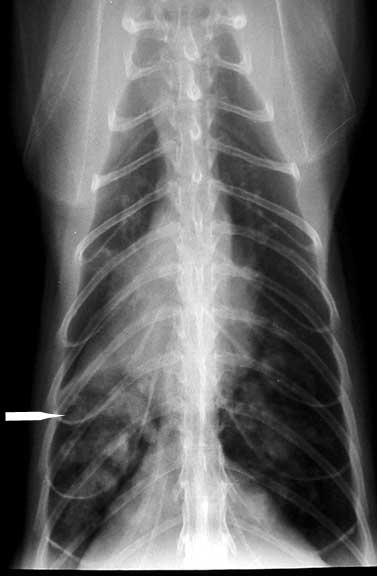
A different view of the radiograph you see above. You can see the problem area in the lungs at the arrow. Compare it to the other side where the lungs are dark (normal).
We cannot assume that just because a cat is breathing hard it has asthma. There are several different causes of this. They include diaphragmatic hernia, heart disease, pleural effusion, FIP, pyothorax and chylothorax to name some of the more common ones.
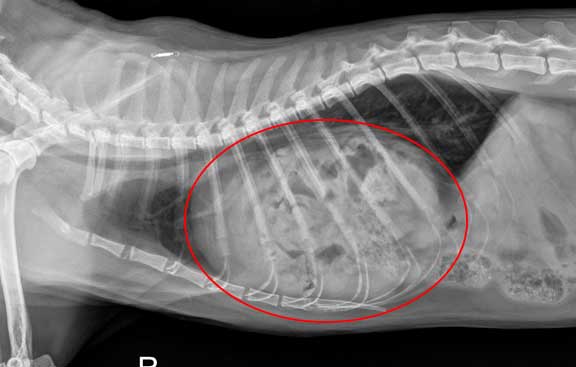
The red circle outlines a diaphragmatic hernia
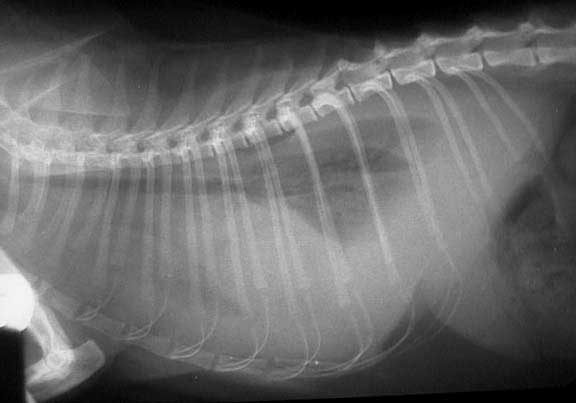
This is what fluid looks like in the thoracic cavity. Notice how little dark lung there is.
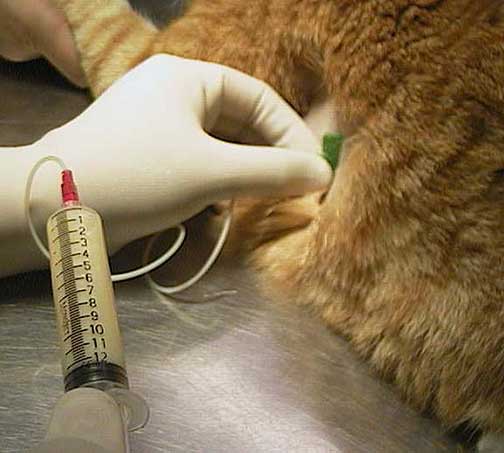
Some of the fluid was drained from this thorax. In this case it is called chylothorax. You can tell by the milky fluid in the syringe.
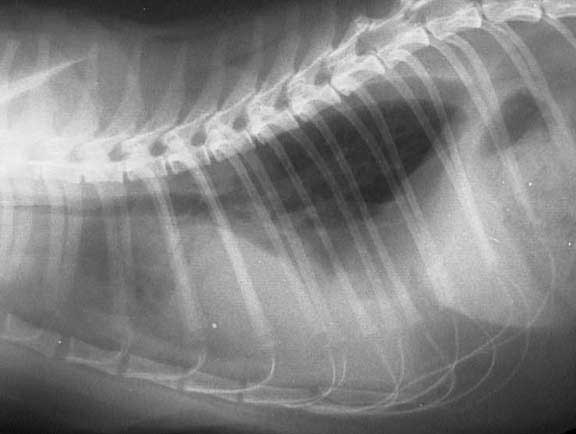
After draining the dark lung tissue becomes more apparent. There is still a substantial problem, but at least now the lung can expand and the cat can get some air.
Bronchial Wash
Bronchoscopy can be used to visualize the airways. During this visualization diagnostic samples of the lining of the airways can be obtained.
Bronchial wash is a secondary diagnostic test. For this test a small amount of sterile saline is flushed into your cats trachea (windpipe). This saline is retrieved and analyzed for cell type. An excess of a type of white blood cell called an eosinophil could indicate asthma. Eosinophils can also be found in normal cats, so this is not a perfect test.
In addition to analyzing the cells a culture and sensitivity can be performed to look for pathogenic bacteria. It is common to grow bacteria in this culture, so this test is not always helpful. If the bacteria are grown in large amounts, or if a Mycoplasma is present, we will sometimes treat with antibiotics or do a PCR test to confirm.
Special Tests
Heartworm antibody and antigen tests can also be used to eliminate the possibility of feline heartworm disease.
Fecal
Fecal exam to check for worms ( internal parasites). Many of these replicate or migrate through the lungs, and can cause coughing. It is common to routinely treat a suspected asthmatic cat with drugs to kill parasites since some parasites do not show up on a test for them.
Treatment
Acute- when your cat all of a sudden has a severe problem
This emergency situation when your cat cannot get its air is also called status asthmaticus. Those of you that have asthma and cannot get your breath know how this can become a panic situation.
Cats that are having a severe breathing problem, called dyspnea, are placed in 100% oxygen. This calms them down and allows them to get the oxygen they are starving for. We usually do this before we proceed with any diagnostics or treatment.
Injectable bronchodilators and corticosteroids are also used when the respiratory problem is severe. We want to handle your cat as little as possible due to stress, so these injectable versions of these medications work best.
We can monitor the ability of the lungs to provide oxygen to the red blood cells with our Pulse Oximeter (Pulse Ox). This detects the oxygen saturation of the hemoglobin in the red blood cells (RBC’s). We like to see this in the mid to high 90’s. This is a good way to monitor if our treatment is working.
Chronic- for long term control
Earlier in this page we talked about causes of asthma in the cat. Eliminating those causes can be highly beneficial. That would be the first step in controlling chronic asthma whenever possible. In most cases, this is just not feasible. So we need to rely on medication.
Prednisolone
This is cortisone, and it is highly effective in controlling symptoms. It is a life saver for most cats with asthma because it reduces airway inflammation and mucus production.
Compared to other species, cats are tolerant of this drug. Overuse can cause diabetes mellitus and urinary tract infections, so it needs to be used under our supervision.
It can be given by injection, pill, or in a liquid form, and should be given on a steady basis for an initial few weeks one a diagnosis of asthma is made. Most people use the pill from because of the ability to control the dose- giving extra only when needed, using a low level when the problem seems stable.
Fluticasone
Eventually a transition to an inhaled steroid called Fluticasone is the preferred treatment of choice in the long run. For many cats one puff every 12 hours suffices. A Fluticasone steroid in combination with an in inhaled bronchodilator called Salmeterol is also effective for the long run. Fluticasone takes up to several weeks to be achieve full affect, so oral steroids are still given in the beginning when first starting the inhaled Fluticasone.
Salbutamol inhaler
This is a bronchodilator that is also effective. It should be used only as a rescue medication for flare ups and to minimize bringing your cat into the hospital when the Fluticasone is not working. This is because its long term use may result in worsening of the airway inflammation . The short acting version of this drug is called Albuterol or Salbutamol, the longer acting version is called Salmeterol.

It is a short acting beta 2 adrenergic receptor agonist, which means it is a bronchodilator. This opens up the breathing passages in the lungs.


A special kit is available for cats that has a mask (on the left) to place over your cats face

The inhaler is put on the back of the kit and your cat breathes in the medication
Terbutaline
This is a bronchodilator that is used in an emergency (along with 100% oxygen) to dilate the airways.
Cyclosporine
If the above medications are not working it might be helpful to try this class of drugs.
Antibiotics
We will use antibiotics on occasion, especially if we suspect pneumonia.
Weight reduction
This is common sense if your cat is obese. We have high fiber diets to help. The two primary ones we recommend are Hills R/D and W/D. There is a significant benefit to the asthma problem when an overweight cat gets to its normal weight.
Avoiding allergens
If you can identify the specific allergen in the environment causing the problem this could be highly beneficial. The problem is in identification. A high quality HEPA air filter could be beneficial. Clean any air filters for your house, heater, or air conditioner
Food Trial
Feeding a low molecular weight protein (Hills Z/D and ultra) will be effective if your cat has a food allergy. You have to feed for up to 2 months to know for sure, and you cannot feed any other food or snacks.
Summary
Most cats with asthma are kept well controlled with medication. Be on the alert for subtle breathing patterns that signal the problem could become acute by monitoring respiratory rate.
If increased your pet needs immediate attention by us. Try to keep stress to a minimum, and make sure your pet is not overweight. This is an all too common problem, and predisposes your pet to other problems besides asthma.
For most cats the prognosis is good for the long term if caught early enough and medication is used consistently.