

Introduction
It is not uncommon for a dog or cat to fracture its forearm. The two bones that are usually involved are the radius and ulna. Depending on the severity of the fracture, it is either splinted or surgery is performed to stabilize the bones with a bone plate.
Puppies heal well with a splint. In small breed adult dogs, due to their bone anatomy and blood supply, a splint will not work, and a plate is needed surgically for proper healing. If a splint is used there is a good chance there will be what is called a non-union. Sometimes when this happens the leg needs amputation, so it is best to perform the surgery and not take a chance.
This page will do a summary of each treatment for a forearm fracture. These are very painful, and some dogs can go into shock. This is an emergency.
The Long Beach Animal Hospital, staffed with emergency vets, is available until the evenings 7 days per week to help if your pet is having any problems, especially shock, seizures, pain, difficulty breathing, or bleeding.
Think of us as your Long Beach Animal Emergency Center to help when you need us for everything from minor problems to major a major emergency. We serve all of Los Angeles and Orange county with our Animal Emergency Center Long Beach, and are easily accessible to most everyone in southern California via Pacific Coast Hwy or the 405 freeway.
If you have an emergency that can be taken care of by us at the Animal Emergency Hospital Long Beach always call us first (562-434-9966) before coming. This way our veterinarians can advise you on what to do at home and so that our staff and doctor can prepare for your arrival. To learn more please read our Emergency Services page.
Symptoms of Forearm Fracture
Dogs and cats with this problem will usually be holding the leg up or else limping completely. Other symptoms might included whimpering, licking or biting the leg, or pain when you touch the area.
You should never touch an area that is swollen or seems painful. Not only can you make the problem worse, the pain can be extreme, and even a docile dog or cat can bite.
Case #1
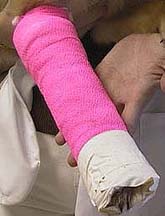
This pup had a mild fracture of the radius and ulna (forearm). Since young animals heal rapidly, and because the fracture was relatively stable, a special type of padded plastic splint was used to stabilize it. It will stay on for 4-6 weeks.
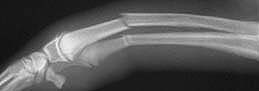
After the pup is sedated an anchoring tape is applied to prevent the splint from sliding off.
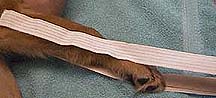
A heavy layer of cotton is wrapped around the leg, and the plastic splint is placed along the bottom of the leg outside this cotton layer.
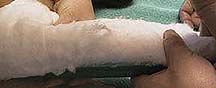
Several layers of gauze are tightly wrapped over the cotton and plastic splint, and the initial anchoring tape is adhered on top of this gauze. This prevents the splint from sliding down.
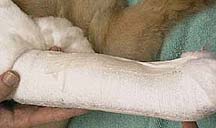
A final layer of tape is wrapped over the gauze. This helps keep it dry, adds to the stability, and identifies this as a girl dog!
Case #2
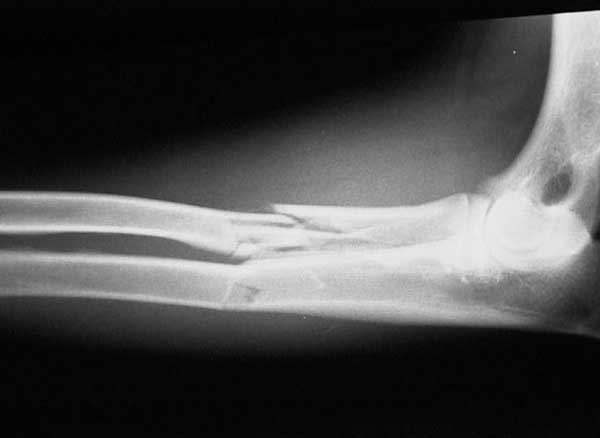
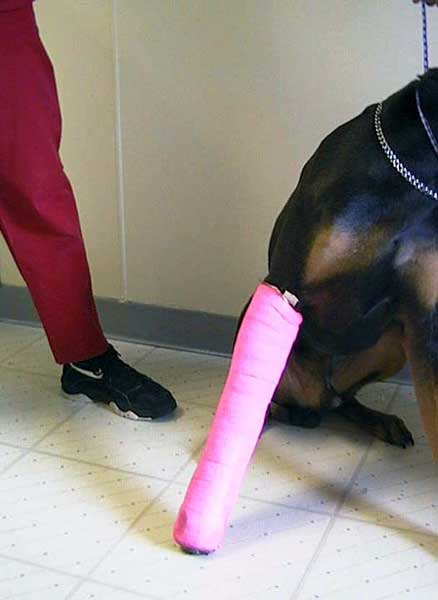
Three weeks after the splint was applied a routine x-ray was taken to assess healing. Both the dark areas and white areas at the fracture site are normal stages in the healing process.
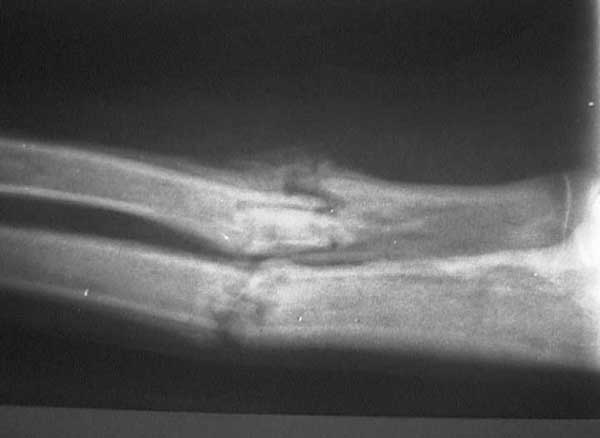
Six weeks after the fracture (and not a day too soon for his dad), the bone has not only healed, but it has remodeled making it smoother and anatomically more correct. This bone will continue to remodel for many months.

Case #3
Surgical correction of a radius or ulna fracture frequently involves plates. In toy and small breed dogs a splint will not suffice. Plates are mandatory to prevent a malunion or nonunion, which could lead to amputation. It is a specialized surgery requiring special equipment and expertise, along with meticulous placement of the fractured pieces.
If you look at this view of Pebbles’ fracture it looks like a splint could be utilized for stability.

On this view of the same bones the severity of the fracture is obvious. Surgery is needed due to the amount of displacement at the fractured edges and the fact it is a small breed dog.
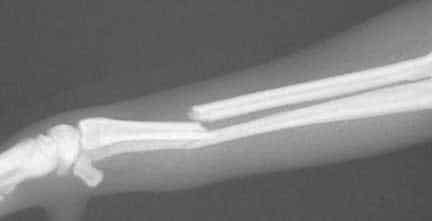
Here is a view of the bones after a plate has been applied surgically. As you can see from the fractured ends, the alignment is perfect.

Another x-ray gives you an indication of the size of the plate from the top. The amount of cotton padding around the splint can be visualized also.
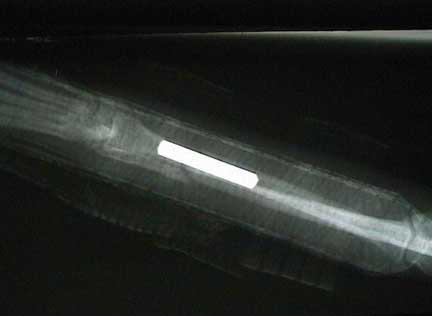
A splint is put on for additional support, comfort, and to prevent Pebbles from chewing at the surgical site. Pebbles will need to wear this splint as additional support until the fracture heals. This will take up to several months.

During and immediately after surgery we will give pain medication.
We have a detailed page on anesthesia to learn how we anesthetize a pet for surgery.
We have a page on surgery on a tibia (shinbone) using a plate.
How about a page on a rabbit with a fractured femur?