

Goals
One of the more common reasons pets are euthanized is due to behavioral problems. There are many reasons for behavioral problems in dogs. This section emphasizes the importance of early prevention to minimize this serious problem.
To teach your pup specific behaviors that will help him/her avoid developing annoying and/or dangerous behavior problems.
Common dog behavioral problems include:
- Barking
- Chewing
- Digging
- Separation Anxiety
- Inappropriate Elimination
- Begging
- Chasing
- Jumping Up
- Biting
- Aggression
Tools you will need
- Food bowl and food
- Yummy treats
- “Home alone Toys” (Buster Cubes, activity Balls, Kongs, etc.)
Overview
More dogs are put to sleep annually in animal shelters than die from diseases. Most of these dogs are under one year of age. The reasons are many, but certainly a major contributor to this sad state of affairs is people’s expectations of what dogs are all about, and people’s failure to successfully guide their pups into healthy adulthood.
Many of these dogs have not learned even the most basic manners (see Basic Manners page), and some have more serious behavior problems such as aggression. and many, many families live with dogs who have behavior problems that cause stress within the family and, in some cases, danger to others in their communities.
This section addresses some of the most common behavior problems and suggests preventive measures that can be used to avoid them.
How to prevent behavioral problems in dog
In addition to the basic manners and leadership exercises described in previous pages, the following preventive exercises are very important in raising a well-mannered puppy who will stay in its home for life.
Keeping puppies happy
All puppies chew, dig and bark. In most cases this is the result of boredom. Dogs are very bright, as well as energetic, animals. To avoid annoying behaviors such as destructiveness, barking, and digging, they must be provided with activities that exercise both their minds and their bodies.
Daily exercise, play, and training are critical. Provide your pup with safe, appropriate chew toys, and restrict his/her access to items you value, such as remote controls, shoes, clothing, purses, etc. Block off (with temporary fencing) areas of the yard you don’t want destroyed. Many puppies outgrow some of their tendencies to dig, but many continue this habit because there is nothing else to do.
If your pup spends several hours alone while you are gone during the day, leave him/her with “home alone toys” such as Buster Cubes, activity Balls, and stuffed Kongs. Consider having a neighbor or pet sitter drop by and play with the pup midway through the day.
With proper preventive measures, we can protect our belongings as well as provide adequate entertainment for our pups so that their teething and natural tendencies to chew are kept to a minimum.
Teach your pup mealtime manners
Many pups have no problem when people come near their food bowls. Unfortunately, we are sometimes surprised to find that puppies who growl in warning when they are young often bite when they are older.
First, teach your pup to sit before you put the bowl on the floor. This is very easy to teach. You can teach it separately (see Basic Manners page), or you can simply stand with the bowl patiently until your pup sits. Say “Yes!” and put the bowl on the floor. Gradually increase the amount of time you require the pup to stay sitting before putting the food down.
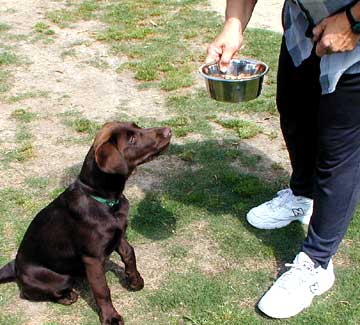
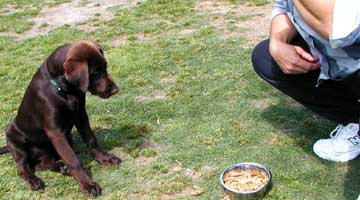
Second, teach your pup that good things happen when people (of all ages, especially toddlers and young children) approach his/her food bowl. Take some yummy treats like hot dogs or cheese, and toss them into the bowl while the puppy is eating. Sit next to the pup with an empty food bowl and fill it a few pieces of kibble at a time, sometimes tossing in something really yummy.
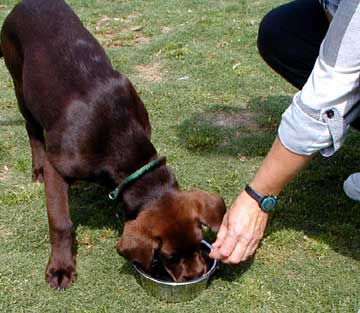
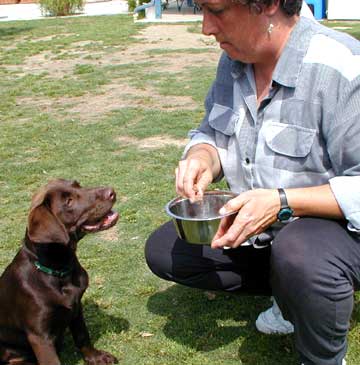
Feed the pup in different locations so she/he doesn’t become protective of one spot in the kitchen.
Note: If you have a dog that stiffens, growls, or snarls when you approach him/her around the food bowl or when she/he is chewing on a toy or treat, get professional help from a positive reinforcement trainer or behavior specialist. A more extensive behavior modification program will be necessary.
Practice socialization
The reasons dogs become aggressive toward people are many, but in many cases it is because of an underlying fear based upon poor early socialization. The best way to ensure that your dog is safe around people of all types is to religiously practice a socialization program from a very young age. See Socialization page.
If you have a dog who appears extremely fearful of people (avoidance, tail between the legs, ears flattened, etc.), obtain the services of a positive reinforcement trainer or behavior specialist. A desensitization/counterconditioning behavior modification program may be necessary.
Give exposure to a variety of different dogs
The reason dogs become aggressive toward other dogs is primarily because of poor early socialization. (It can also result from a traumatic incident such as being attacked by another dog.) The best way to ensure that your dog gets along with others of its own species is to religiously practice a socialization program from a very young age. See Socialization page. Lifelong exposure to a variety of different dogs is important to avoiding this all-too-common problem.
Again, if you have a dog who appears aggressive around other dogs, obtain the services of a positive reinforcement trainer or behavior specialist. A desensitization counterconditioning behavior modification program may be necessary.
Teach your up how to be alone
This is one of the most common behavior problems presented to veterinarians. It is a complex behavior problem that can have its root in many causes. However, to ensure that your puppy doesn’t suffer from anxiety when left alone, make sure that you avoid having the puppy become overly dependent upon your physical presence. From a young age, accustom your pup to being alone for a few hours. Start by having your pup stay in another room of the house where she/he can see and hear you, but not be with you all the time.
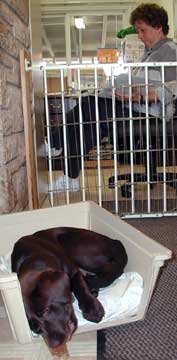 /
/Many puppies suffer separation anxiety when people bring the new puppy home over a holiday or summer vacation. The pup is surrounded by people 100% of the time for several days (or months!), and then when everyone goes back to work or school, is suddenly left all alone. Avoid this scenario by implementing the steps above on a regular basis and, minimally, several days or weeks before you return to work after a long period of absence.
If all else fails there is medication that is extremely helpful with this problem. ask your veterinarian if this applies in your situation.
Recommended Reading
An Owner’s Guide to Dog Behavior by Dr. Ian Dunbar
Behavior Problems in Dogs by William Campbell
The Culture Clash by Jean Donaldson
Toolbox for Remodeling Your Problem Dog by Terry Ryan (Don’t be fooled by the title; this is an excellent resource for avoiding problem behaviors by teaching the right ones from the start.)