

Trauma to the internal organs that are prolapsed through the cloaca (vent) opening can seriously affect a bird. It is seen in cockatoos and the smaller breed birds like budgies (parakeets or budgerigars) and cockatiels. A prolapsed cloaca in a bird requires immediate replacement of the prolapsed organs.
This page shows how we diagnose and treat this disease. To learn more after reading this page the Association of Avian Veterinarians (AAV) has information on birds also.
Graphic photos on this page.
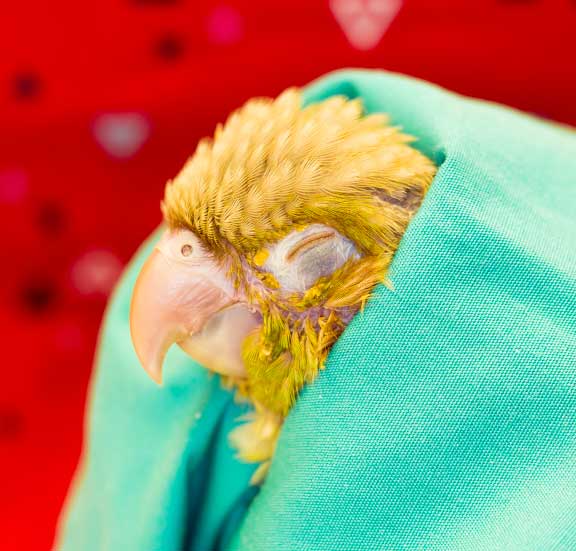
Birds with a cloacal prolapse can be quite ill, and even in shock. We consider it an emergency.
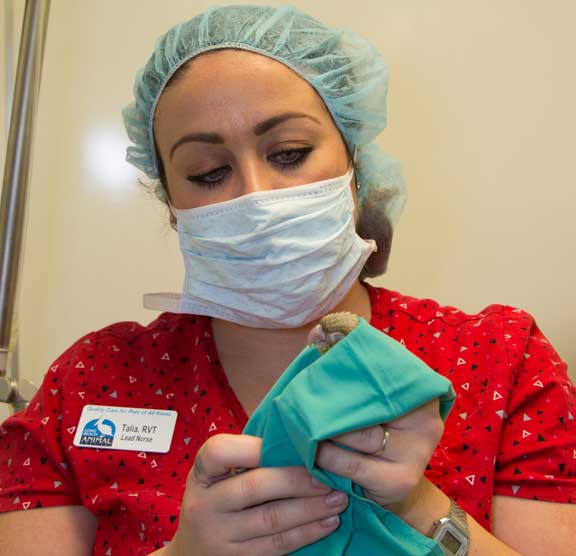
They are handled gently at all stages
A cloacal (vent) prolapse is an emergency requiring immediate veterinary care. The cloaca and become infected and even traumatized to the point that your bird can potentially bleed to death or require surgical removal of the cloaca that has lost its blood supply.
The Long Beach Animal Hospital, staffed with emergency avian vets, is available until the evenings 7 days per week to help if your bird is having any problem, especially breathing hard or bleeding. Think of us as your Long Beach Animal Emergency Center to help when you need us for everything from minor problems to major a major emergency.
We serve all of Los Angeles and Orange county with our Animal Emergency Center Long Beach, and are easily accessible to most everyone in southern California via Pacific Coast Hwy or the 405 freeway.
If you have an emergency that can be taken care of by us at the Animal Emergency Hospital Long Beach always call us first (562-434-9966) before coming in so that our veterinarians can advise you on what to do at home and so that our staff and doctor can prepare for your arrival. To learn more please read our Emergency Services page.
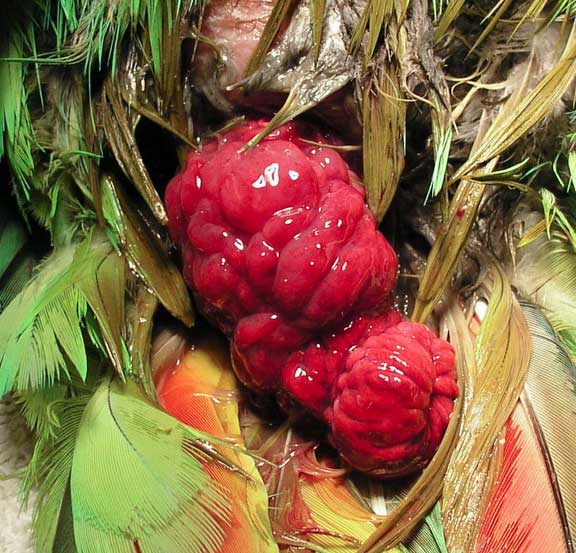
This is a severe prolapse and requires immediate emergency care if we are to save this organ, let along the bird’s life
Cause
Straining due to parasites, abdominal masses or tumors, chronic egg laying, abnormal eggs and poor nutrition are all predisposing factors. Determining the exact cause can be difficult.
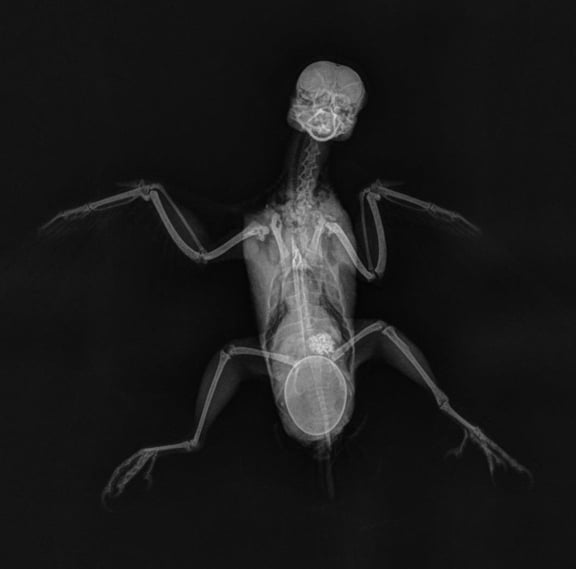
That is a big egg for a little budgie, and chronic egg production, especially in cockatiels, can lead to a prolapse
Symptoms
Birds that have this problem might exhibit depression, straining, lack of droppings, fluffed appearance, and poor appetite. Sometimes the only symptom you notice at home is blood in the droppings. These symptoms occur in other diseases, so the diagnostic approach has to be thorough.
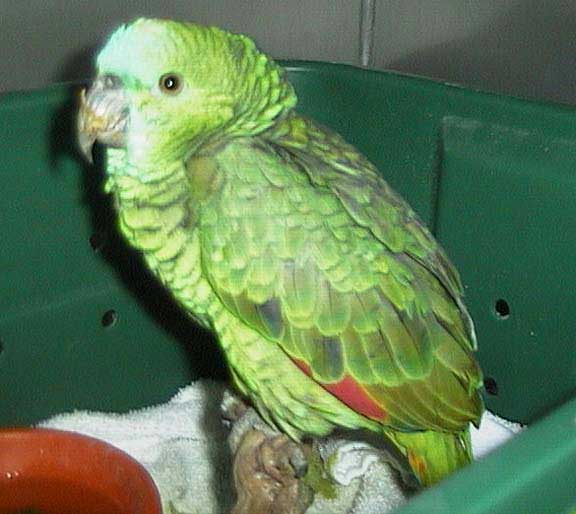
Birds are masters at hiding illness, and any time your bird shows any signs of a problem, like this fluffed parrot, it should be brought to us for an exam and diagnostic tests
Diagnosis
In many prolapsed birds there is a history of recent egg laying. During the physical exam internal organs (intestines or reproductive usually) are apparent at the cloaca.
When diagnostic tests are used their main indication is to find the underlying cause to the problem in order to prevent recurrence. These tests include fecal exams for parasites, x-rays for abdominal masses pushing on the abdominal contents, and blood panels to determine general health and organ function.
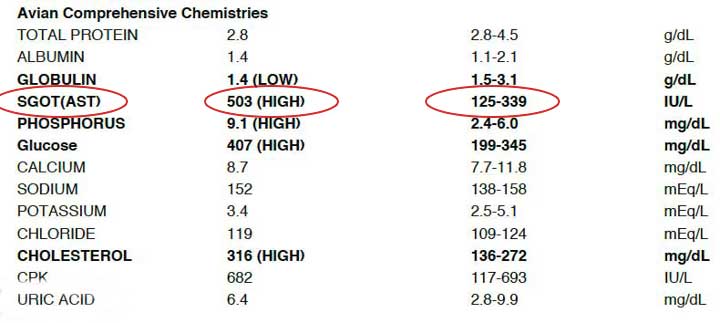
This blood panel shows elevated liver enzymes, a potential liver problem that could lead to a prolapse
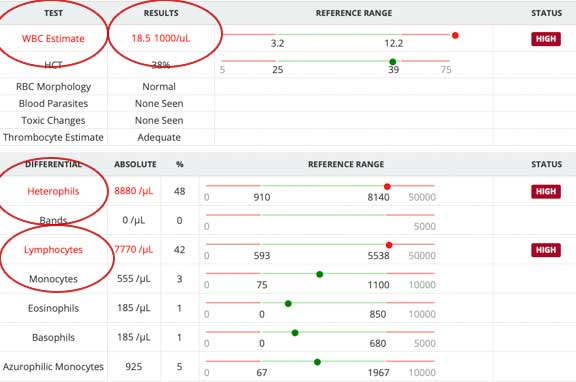
This CBC shows elevated WBC’s. An infection can be the cause of this elevation, leading to a prolapse.
Treatment
Birds with prolapsed cloaca’s require emergency care. Many are hypothermic and require immediate warming. Others can be dehydrated so warm fluids are also administered. Antibiotics are usually administered to prevent infection in the affected organs.
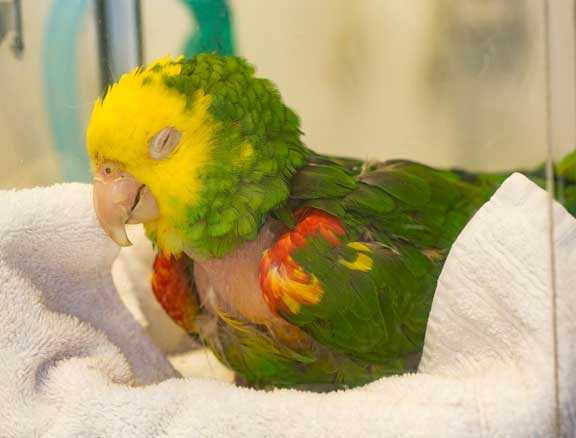
Ill birds like this parrot are immediately put into a warm room and given fluids and oxygen. Only once they are stable to we perform any diagnostic tests or treatment.
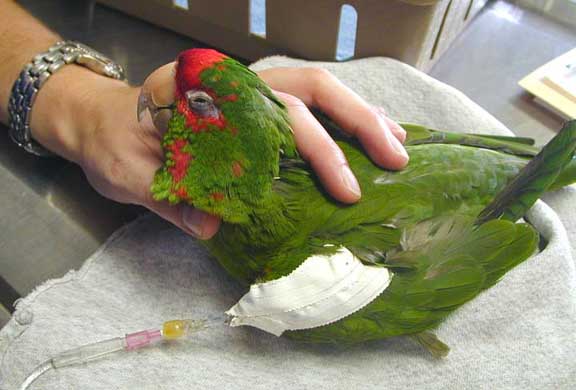
Fluids are a crucial part of therapy. This parrot is being given fluids intravenously (IV). We have a page dedicated to this life-saving treatment- click here to learn more.
Once a bird is stabilized the prolapse is replaced back into the abdomen. The sooner the better because internal organs that are exposed to the environment are easily traumatized and infected. Amputation could be needed on infected tissue or tissue that has inadequate blood supply.
In some cases we anesthetize the bird to allow muscle relaxation and subsequent easier replacement of the affected organs.
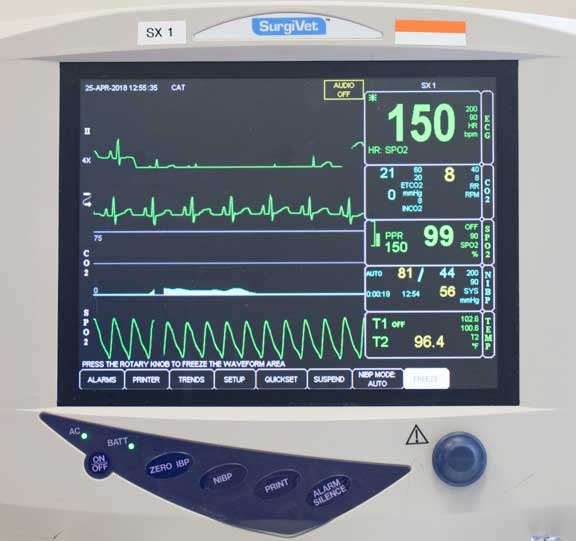
We closely monitor heart rate and respiratory rate, along with other important parameters, when anesthetize animals
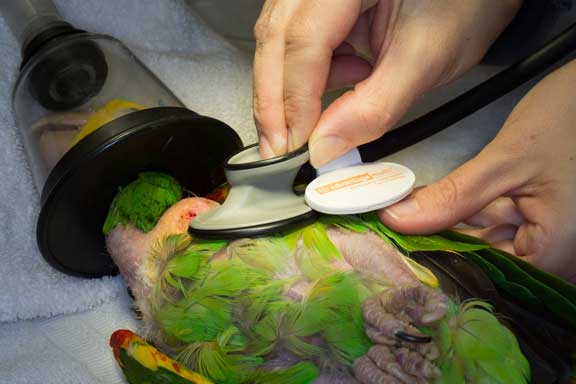
In addition to the above monitor, they are constantly monitored by our nurse anesthetist
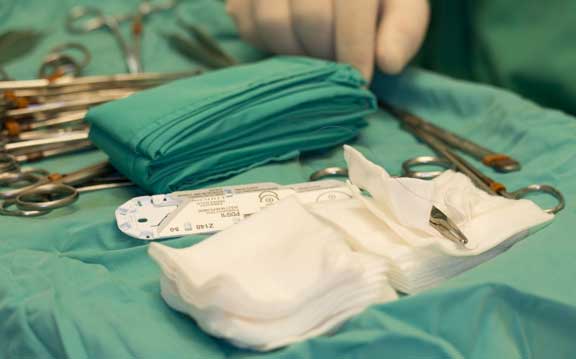
Sterile instruments are used for any surgical repair. You can learn much more about surgery at our Surgery page.
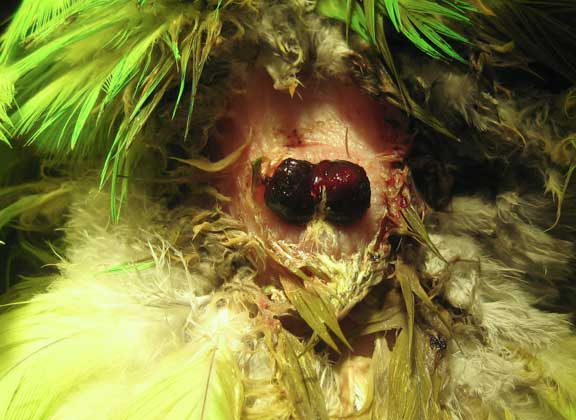
This is one way a prolapsed cloaca might look
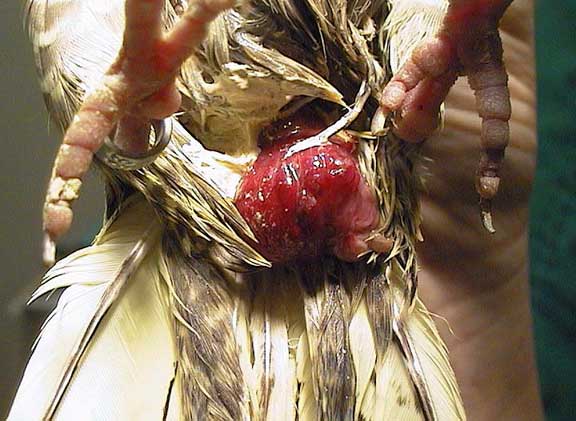
The prolapse in this cockatiel has been present for several hours. The coloration tells us it is healthy enough to allow replacement back into the abdomen. It will be gently cleansed and flushed with sterile saline. It is an internal organ and requires delicate handling.
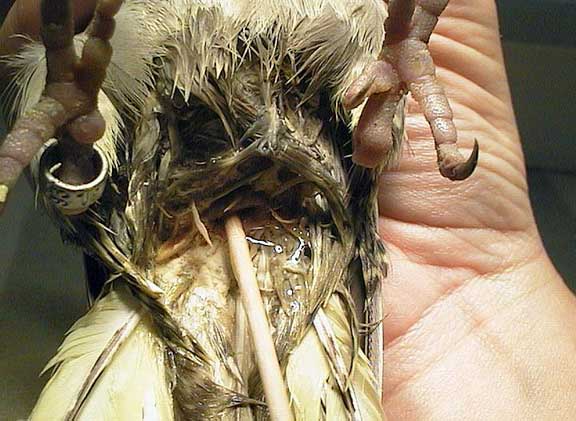
The area is lubricated copiously with K-Y jelly and the prolapse is gently manipulated back into the abdomen using Q-tips. This process takes several minutes because the organ is swollen and predisposed to tearing.
After it is replaced special sutures (at the arrows) are used to prevent it from coming out again. They are put in tight enough to keep the organs inside but loose enough to allow droppings to pass. These sutures will be kept in for at least several days to allow the prolapsed tissue to heal.
Prevention
There are factors involved with this problem that we have no control over. Factors we can control are good nutrition, a clean environment, spaying birds that are predisposed to egg binding or are excessive egg layers, minimizing obesity and stimulating exercise.
Careful daily observation of your pets daily habits will help you recognize the early symptoms of this disease. No matter what the problem, any time your pet bird shows any symptoms of a disease, no matter how subtle, it is considered significant and requires immediate veterinary care.
This is because birds are masters at hiding illness, and we are all too often presented with sick birds in advanced stages of disease. Our ability to return these birds to normal health is diminished because proper care has not been given early on in the disease process where it is most beneficial.
Return to Avian Diseases page.