

Introduction
Proventricular Dilatation Disease (PDD) in birds , also known as Macaw Wasting Disease or Macaw Fading Syndrome (it was first seen in macaws), and Neuropathic Wasting Disease, is a devastating disease of mostly young psittacines. It was first recognized in the early 1970’s.
It was first called “Macaw Wasting Disease,” as the disease caused a gradual wasting away of macaws. It occurs in over 50 species of parrots. Common species are African Grey parrots, Amazons Macaws, and Cockatoos. It is suspected to also occur in non-psittacine birds like canaries, weaver birds, and toucans. The University of Guelph found it in some Canada geese, thinking diet was involved. Dr. Giacomo Rossi at the University of Camerino sees a link that could indicate it is an autoimmune disorder.
Dr. Ian Tizard has made this his career focus. After reading this page you can learn more from the Schubot Exotic Bird Health Center at Texas A & M.
What is Proventricular Dilatation Disease?”
This disease involves the nerves that supply the gastrointestinal tract of birds, especially the proventriculus or true stomach.
Nerves supplying other organs may also be affected, and in some cases, encephalitis (inflammation of the brain) may occur.
First recognized in the early 1970’s, PDD was originally called “Macaw Wasting Disease,” as the disease caused a gradual wasting away of macaws. Since that time, the disease has been found to affect more than 50 different species of pet birds. It is found most commonly in Macaws, African Grey parrots, Amazon parrots, Cockatoos and Conures. There are some estimates that 20-35% of all birds are affected.
The proventriculus is the chamber of the digestive tract just in front of the ventriculus (gizzard). When it dilates there is an inability of the stomach to digest food. It can be a problem in any psittacine, but is found most commonly in macaws and cockatoos.
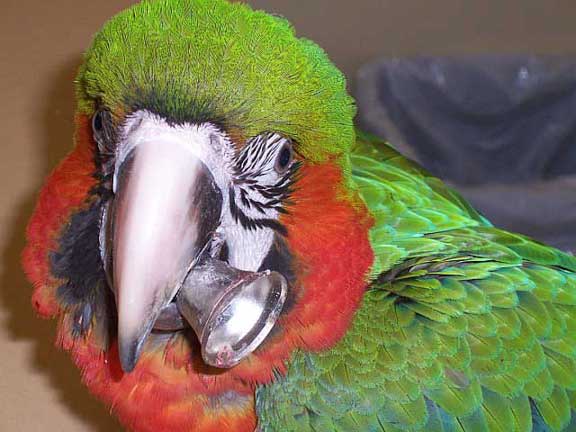
This playful Macaw with a bell stuck on its tongue shows how interesting these birds are. Thankfully, we do not see many Macaws with PDS at LBAH anymore. Click here if you want to see how we removed the bell from this tongue.
Cause of PDD in Birds
A virus called a bornavirus (Avian Bornavirusor ABV) is the suspected cause. This virus is shed in the feces, saliva, and respiratory secretions intermittently. The virus affects the nerves and causes them to become inflamed.
Signs of Birds Affected With PDD
Birds that have this problem are weak, have lost weight, and can have difficulty perching. Many of them will have impacted crops, regurgitate and pass undigested seeds in their droppings. Some will show neurologic signs like tremors, inability to perch, seizures, and paralysis. Some birds can harbor the virus for years before showing any symptoms.
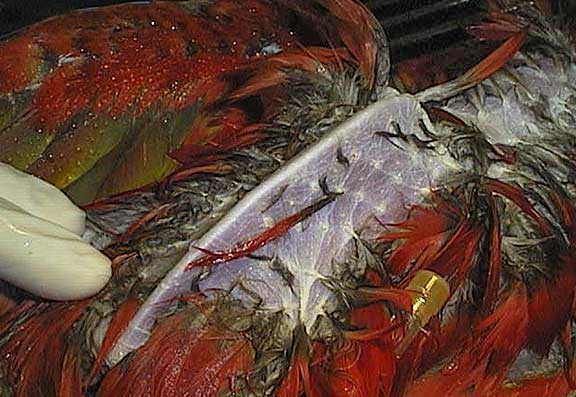
It was originally called “wasting disease” because these birds would lose weight and we could palpate the prominent keel bone from the breast muscles wasting away. The proper term is atrophy of the muscles. Notice the IV catheter in this bird for fluid administration
These are also the symptoms of lead toxicity in some birds, so they are not specific for PDS. The term for a disease that is specific for a set of symptoms is pathognomonic. This is a rarity in veterinary medicine.
Since these birds can no longer digest and absorb food they lose weight and their keels become very prominent. This is why it was originally called Macaw Wasting Disease.

Regurgitation of a mucous like fluid is one of the classic signs of PDS. There might be seeds adhered to the mouth and feathers around the face.
Diagnosis of This Syndrome
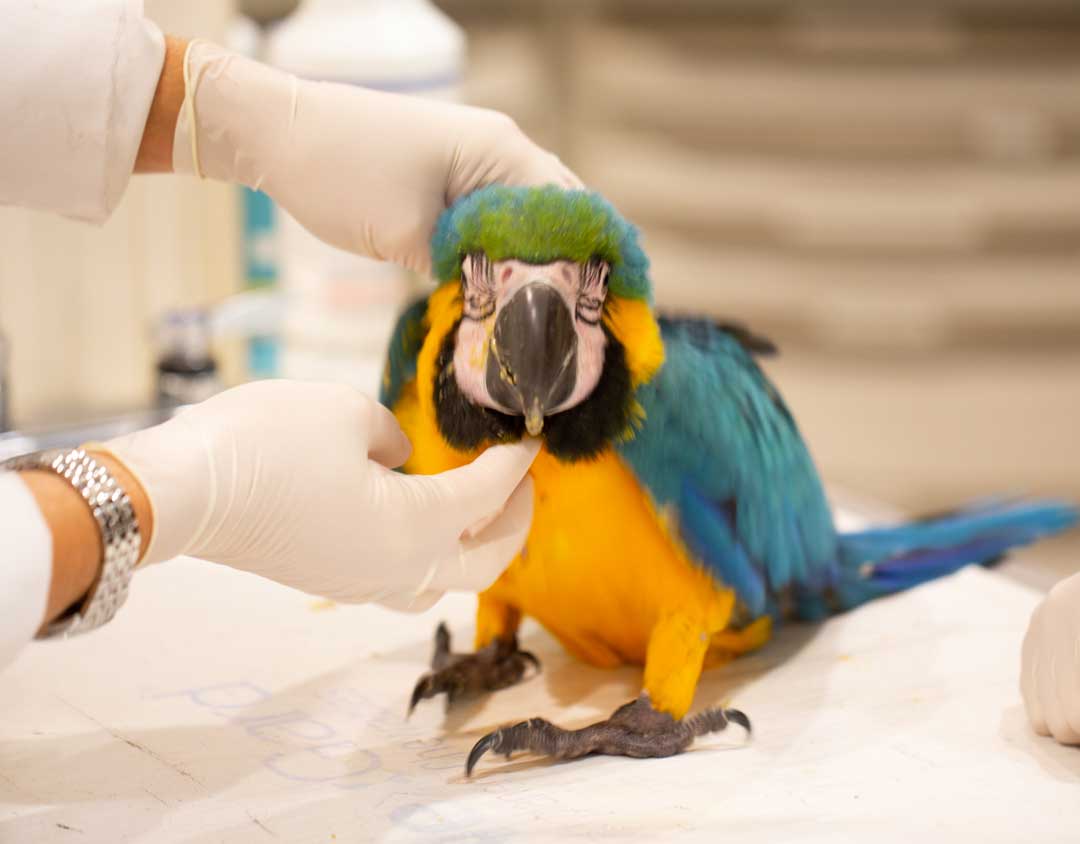
Every diagnosis starts with a thorough exam.
Young cockatoos and macaws that have symptoms of this disease warrant further diagnostic tests. Other diseases can mimic PDS, so it is important to follow a thorough diagnostic process. Baby birds and those with infections, cancer or toxicities can also have a dilated proventriculus.
Every sick bird needs a full blood panel to find the cause of its illness, and to check for other problems that are not apparent from the history and physical exam findings.
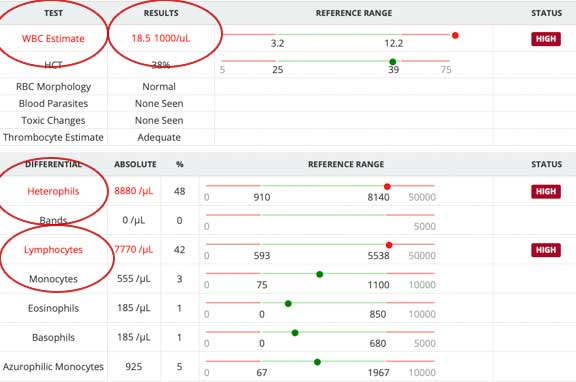
These are just some of the tests that are performed on a blood panel. Note the elevated WBC (White Blood Cells)
This virus can be checked for by submitting special fecal or cloacal samples, in addition to blood samples looking for antibodies to the virus. These tests are called the Western Blot test or an ELISA (enzyme linked immunosorbant assay) test.
A PCR test is also used. False negatives and false positives occur to these tests, so they are not reliable for a definitive diagnosis. Antibodies to the virus can be checked, but this is unreliable since it depends on the bird’s immune system. The definitive diagnosis is made on necropsy (autopsy of an animal) analyzing brain tissue.
A biopsy of the crop or proventriculus is needed to confirm the diagnosis. The pathologist is looking for what is called a lymphoplasmacytic infiltration in the nervous tissue.
X-rays are a significant aid in making this diagnosis. The chambers of the stomach will show enlargement, which can be outlined with barium. Barium allows us to see the structures of the digestive tract more clearly. It also lets us know if the digestive tract is normal by assessing how long it takes for the barium to pass through to the end.
To understand how we perform a radiographic analysis of this problem it is important to understand the radiographic anatomy of a bird.

This is a normal x-ray of a bird laying on its right side. The head is towards the left. The diagram below explains the structures.

AS- air sac
PV- proventriculus
Vent- ventriculus (gizzard)
S- spleen
H- heart
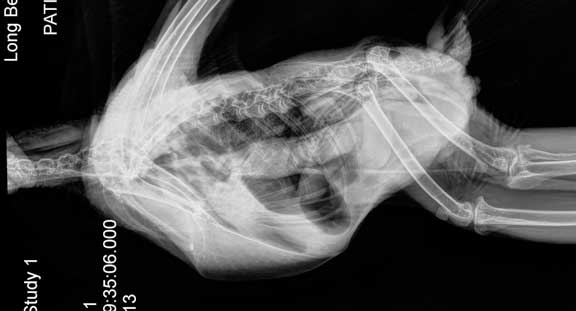
Do you see the proventriculus on this digital radiograph that shows tremendous detail?
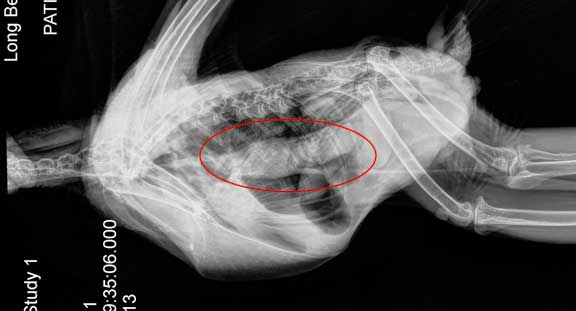
The proventriculus is circled in red

This bird has PDS. The arrows circle the hugely dilated proventriculus.
We frequently give barium to help in outlining the digestive tract and to look for causes of the dilated proventriculus other than PDS.
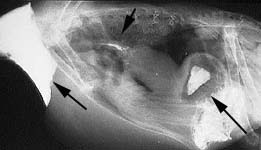
In this x-ray the barium filled crop is on the far left (arrow on far left), there is barium in the esophagus (arrow in middle) and the ventriculus has barium in it (arrow on far right). The dilated proventriculus, without any barium in it, can be seen just to the left of the ventriculus.
How are Birds with PDD treated?
PDS carries a poor prognosis. Medication to minimize vomiting and supportive care with fluids, antibiotics, and feeding small amounts of food at each meal might be helpful temporarily. Some birds have responded to higher doses of anti-inflammatory drugs like cortisone and the NSAID Meloxicam.
Other drugs that have been tried are Ribavarin and cyclosporine. They do not cure the problem, and if they do work it tends to be temporary.
Prevention of Avian PDD
Birds with this problem need to be isolated from other birds. Stricklands hygiene measures go a long way to preventing spread. Eliminating birds that are healthy carriers might be effective.
Feed your bird food that is easily digestible. Mash pellets into a paste, and assist feed with a syringe if needed. Add steamed vegetables also.
If your bird suddenly becomes ill The Long Beach Animal Hospital staffed with emergency vets is available until the evenings 7 days per week to help if you see this in your pet, so please do not wait or attempt to take care of this problem on your own. If you have an emergency always call us first(562-434-9966) before coming in so that our veterinarians can advise you on what to do at home and so that we can prepare. To learn more please read our Emergency Services page.