

Introduction
Parrot fever in a bird has many names, including Chlamydiosis, Psittacosis and Ornithosis. It is called Psittacosis when it occurs in people and psittacine (parrot type) birds, and Ornithosis when it occurs in passerine (pigeons, doves, etc.) birds. Psittacosis is difficult to diagnose, and is a mysterious disease that does not “follow the rules” of typical avian diseases.
Psittacosis has a worldwide distribution and can occur sporadically or in epidemic fashion at any time of the year. For many years the states that bordered with Mexico had the disease more than other states. Fortunately, due to client education, less sales of birds at flea markets, increased restrictions at border crossing, more local breeding of birds as opposed to importing, and increased knowledge, we do not see this disease at LBAH as much any more.
The Centers for Disease Control and Prevention (CDC) monitors Psittacosis cases throughout the country.
Psittacosis is a reportable disease in CA. Here is the form we submit to the Los Angeles County Public Health Department when we have a positive case. This data from the years 2001-2014 is taken from their web site:
2001 to 2014 ‐ Psittacosis in birds in LA County:
171 cases of psittacosis in birds reported.
The majority of cases 95% (162 cases) were small pet birds such as parakeets, cockatiels, budgerigars, and rosellas. Only 5% (8 cases) were parrots and two were hawks.
Numerous cases were a result of interstate trade in pet birds. For example, in 2009, a shipment of 185 birds from LA County to Wisconsin was tested for psittacosis on arrival. More than half
(55%) of the birds in the shipment tested positive for the infection.
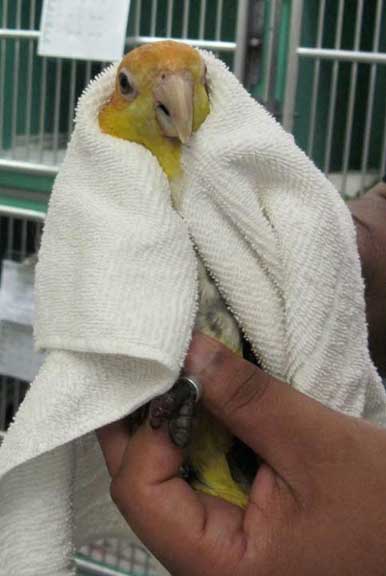
Any ill bird that comes into our hospital is handled gently and carefully. They are usually sicker than an owner realizes and need special care.
A bird that has Psittacosis can go from being perfectly normal to being collapsed and in need of emergency life-saving care in a short period of time.
The Long Beach Animal Hospital, staffed with emergency avian vets, is available until the evenings 7 days per week to help if your bird is having any problem, no matter how minor it seems at first. Think of us as your Long Beach Animal Emergency Center to help when you need us for everything from minor problems to major a major emergency.
We serve all of Los Angeles and Orange county with our Animal Emergency Center Long Beach, and are easily accessible to most everyone in southern California via Pacific Coast Hwy or the 405 freeway.
If you have an emergency that can be taken care of by us at the Animal Emergency Hospital Long Beach always call us first (562-434-9966) before coming in so that our veterinarians can advise you on what to do at home and so that our staff and doctor can prepare for your arrival. To learn more please read our Emergency Services page.
Parrot Fever (Psittacosis) in a Bird
Important Regulations
The United States Department of Agriculture regulates the importation of domestic birds in order to protect the domestic poultry industry. These imported birds must be accompanied by a health certificate. Upon admission they are quarantined for 30 days at a special facility and tested for Newcastle disease.
During the 30 days they are given food supplemented with medication that will treat Psittacosis. This medicated feed needs to be continued for at least an additional 15 days when the bird is released from quarantine. Getting this medicated feed has been a problem and it is not readily available.
State Health Regulations
Psittacosis is a reportable disease. When a positive diagnosis of Psittacosis is made an inspection might occur to determine the cause of the outbreak, number of birds affected, and any human exposure. Depending on the specifics of the situation a quarantine and treatment might be initiated.
This is where the Psittacosis Case Report is sent in California
Causes of Psittacosis
Psittacosis is caused by a bacterium called Chlamydophila psittaci (also known as Chlamydia psittaci) that is an obligate intracellular parasite. It has been isolated from many birds, especially parrots, cockatiels and parakeets. even turkeys and ducks are know to have this disease.
After exposure the incubation period can vary from 3 days to weeks.
Healthy birds can be carriers of Psittacosis, shedding the organism in their droppings intermittently. It is also found in respiratory discharge. Shedding is stimulated in birds by stress like overcrowding, chilling, and shipping. The shed Psittacosis bacteria can remain infectious in the environment for several months.
Symptoms
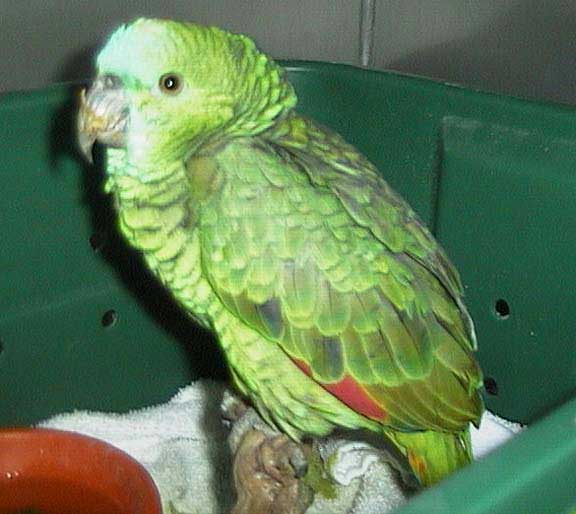
Birds are masters at hiding any symptoms of illness, especially in Psittacosis. An apparently healthy bird that is singing and eating in the morning can be gravely ill or be found dead by the same afternoon. It is imperative that you tune in to subtle signs of disease in your pet bird, and bring it in for an exam at the first sign of a problem. If you are unsure, it is better to be safe than sorry.
Some birds with Psittacosis are seriously ill and need 100% oxygen like this budgie (parakeet).
Typical symptoms, if present, might include a fluffed appearance, poor appetite, weight loss, respiratory disease, and lime green droppings. The droppings might appear to be diarrhea, but in reality they are usually watery urates, the equivalent of bird urine. Some birds have ocular discharge, leading to the term “one eyed cold”.
These symptoms occur with many other avian diseases, so it is imperative to follow proper diagnostic parameters when making this diagnosis.
Diagnosis
History
In some cases we have a high degree of suspicion because a bird has been imported into the country illegally. This means it has bypassed the USDA quarantine and treatment facility. These smuggled birds commonly come from Mexico. They can be purchased at swap meets for a low price, so you must be wary of these potential disease carriers.
Physical Exam
The physical exam may or may not reveal significant abnormalities. An exam of a bird gives us limited information compared to dogs and cats. This is because of the unique anatomy and physiology of a bird. Several examples will elucidate this point.
- A birds body temperature can go well over 107 degrees F and still be normal
- They do not have external lymph nodes that can be felt during an exam
- Their heart rate can easily be up to 500 beats per minute, making it almost impossible to detect murmurs and arrhythmias
- They do not have a diaphragm, the muscle of breathing that separates the abdomen from the chest
- They use air sacs as a major part of their respiratory physiology, as opposed to dogs and cats using only lungs.
- Their keel bone extends far down over their abdomen, making it impossible to accurately palpate abdominal organs.
Diagnostic Tests
Since a physical exam on birds yields significantly less information compared to a dog or cat, we need to rely more on diagnostic tests. To learn much more about the array of diagnostic tests we perform on many species of animals click here.
A blood panel might be perfectly normal, or it might show some problems. It might be anemic, have an elevated WBC (white blood cell count), or an elevation in liver tests.
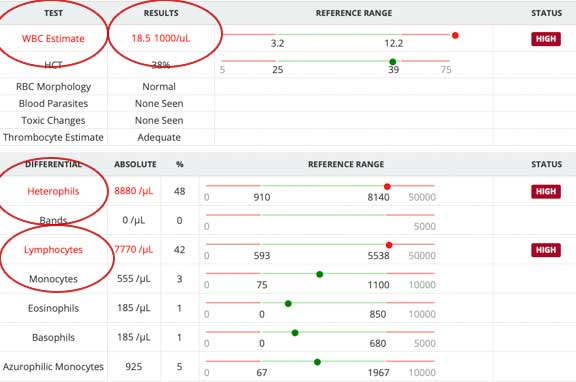
In some birds all we might see is an elevated WBC count
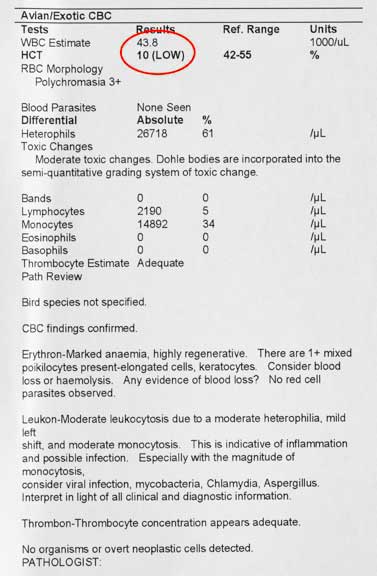
At 43,800 this bird has an extremely high WBC. It also has a HCT at 10%, indicative of a severe anemia. There are many avian diseases that can cause this, Psittacosis being one of them.
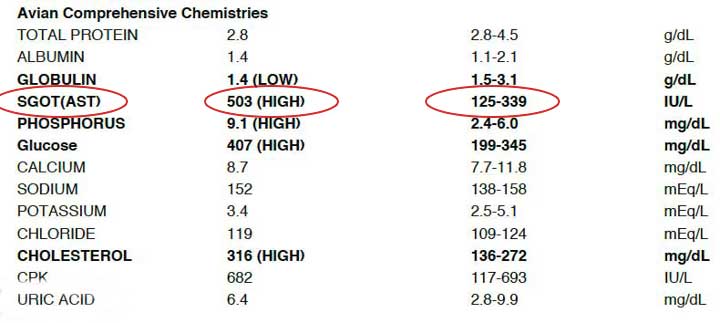
In some birds the liver tests can be high as see with this elevated SGOT
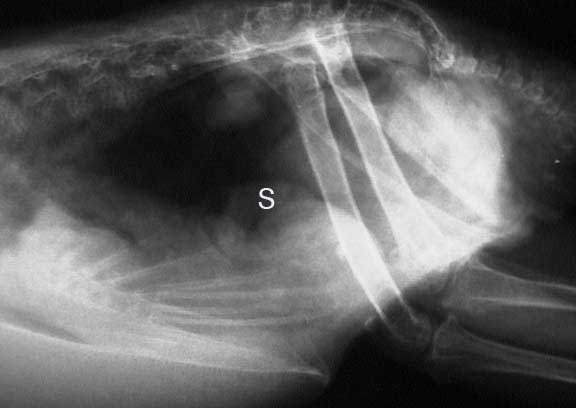
Another diagnostic test helpful in Psittacosis is radiology because it allows us to visualize internal organs. This bird has an enlarged spleen (S), the circular structure in the middle of its coelomic cavity. An enlarged spleen could be indicative of Psittacosis.
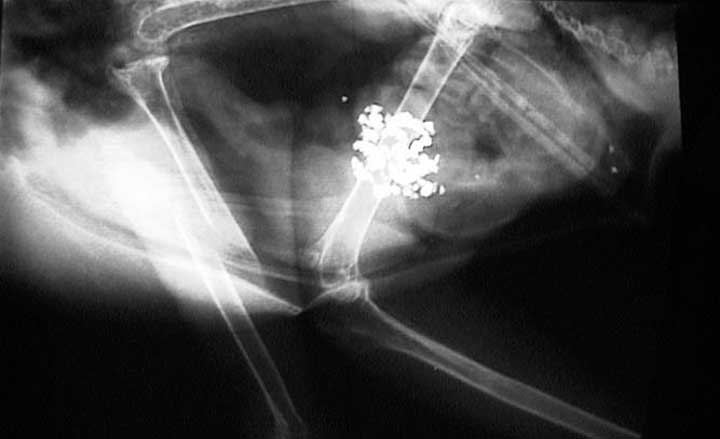
This sick bird, with symptoms similar to a bird with Psittacosis, turned out to be a bird poisoned with lead. We have a detailed page on Lead Toxicity to learn more.
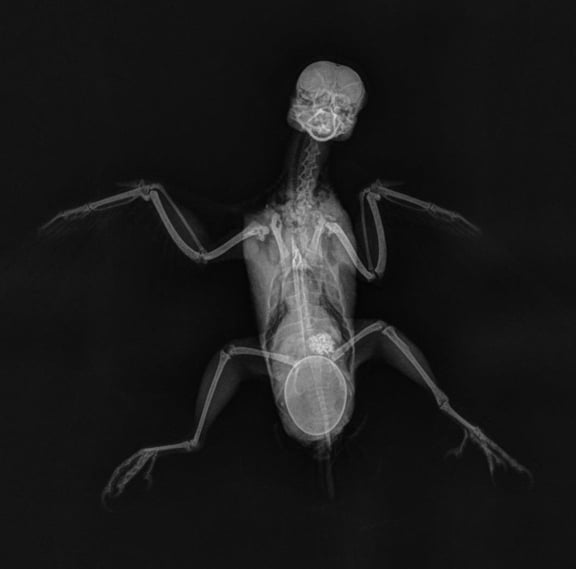
You just never know what you will find when you radiograph a sick bird. This parakeet (budgie) was lethargic and not eating well. It was because it was trying to lay an egg and the egg was stuck, causing waste products to build up in the blood stream since it could not urinate or defecate. You can see how we removed it in our Egg Binding page.
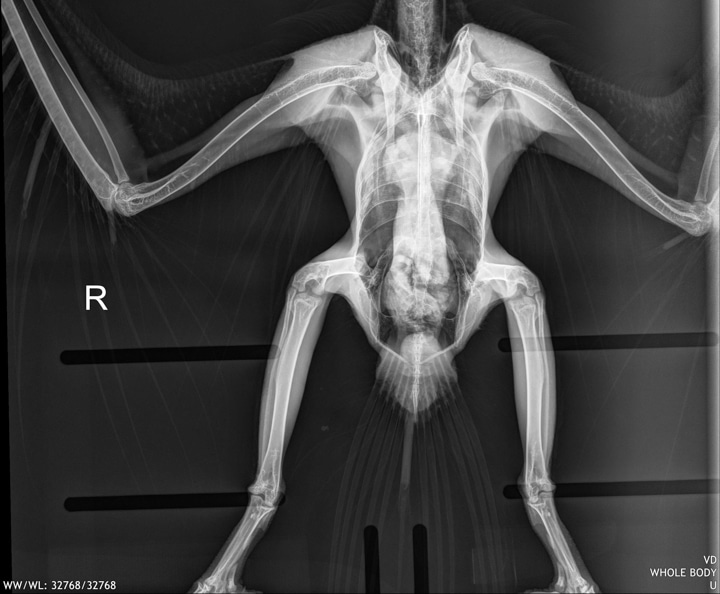
Digital radiography has enhanced our ability to see details in the internal organs, and diagnose Psittacosis and other diseases more readily
If you would like to learn more about reading a bird radiograph click here.
Culture
Culture is used to detect the Chlamydia organism itself, and is one of the most accurate methods of making an accurate diagnosis. It is time consuming, requires special techniques and laboratories, and since shedding of the bacteria can be intermittent, samples need to be collected for several days.
Also, it can take up to several weeks before the result is available, which defeats the purpose of the test for many ill birds. Unfortunately, the laboratories that perform this culture are not readily available to us any more.
Psittacosis tests
Diagnosis of avian Psittacosis can be difficult, especially in the absence of clinical signs. A single testing method might not be adequate. Therefore, use of a combination of culture, polymerase chain reaction (PCR)-based detection, and antibody detection is recommended when feasible.
Psittacosis tests have been developed to aid us in our diagnosis. No test is perfect or applies to every situation and species. In some cases we will perform several of these tests to increase accuracy:
Antibody Tests- These tests check for antibodies made by the immune system when it is exposed to the Chlamydia organism. Birds that are stressed, in poor nutritional state, or have other diseases, might not produce antibodies at all. Also, it is possible for these tests to be negative early in the course of the disease when the immune system has not had enough time to produce antibodies.
EBA- Elementary Body Agglutination checks the antibody called IgM (immunoglobulin M), which is found early in the course of the disease. As a result, it is used as a screening tool for healthy birds or if a bird is suspected to be early in the course of the disease. A positive result does not easily differentiate a bird that actively has the disease from a bird that has been exposed in the past and is currently not ill. It only requires a small amount of blood in relation to other blood tests.
IFA- Immunofluorescent Antibody checks for IgG (immunoglobulin G) that builds up in the bloodstream later in the course of the disease. It gives a better long term perspective as a result.
Antigen Tests- These tests check for the shedding of the Chlamydia organism in the feces. Viable Chlamydia are not needed for a positive diagnosis since they test for antigen or DNA of Chlamydia.
ELISA-Enzyme-Linked Immunosorbent Assay is used on ill birds. It was originally developed to detect human Chlamydia. Like the culture, samples should be taken over several days to increase the chance of finding the problem in intermittent shedders. It is an easy test to administer and can be performed as an outpatient basis with immediate results. False negatives and false positives can occur. a bird with a negative on this test still could have Psittacosis.
PCR- Polymerase Chain Reaction test.PCR- This is the test of choice, and has given us our greatest chance of diagnosing Psittacosis.
Autopsy (Necropsy)
Unfortunately, Psittacosis is sometimes accurately diagnosed only at necropsy. We especially look at the spleen, air sacs, and lungs.
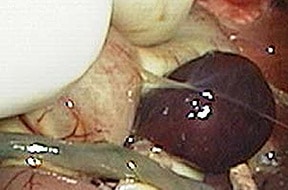
This dark red organ is the enlarged spleen of a bird that died of Psittacosis
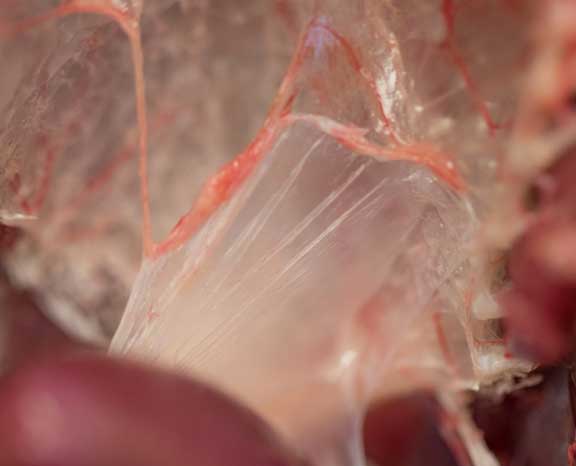
This is what a normal air sac should like look. It is translucent
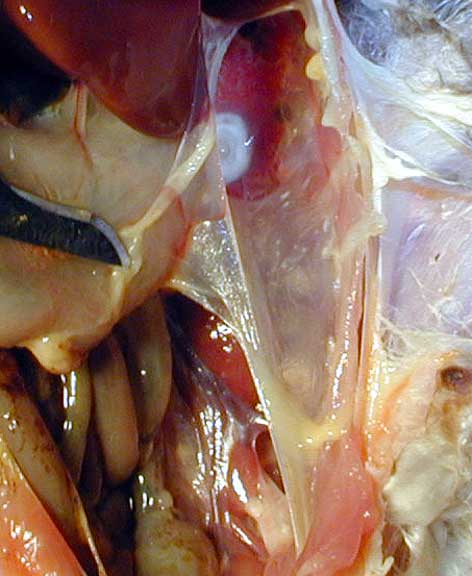
This air sac is cloudy with discharge at the bottom of it (see photo below if you cannot visualize it). This is an indication of an infection. Psittacosis could be a cause of this.
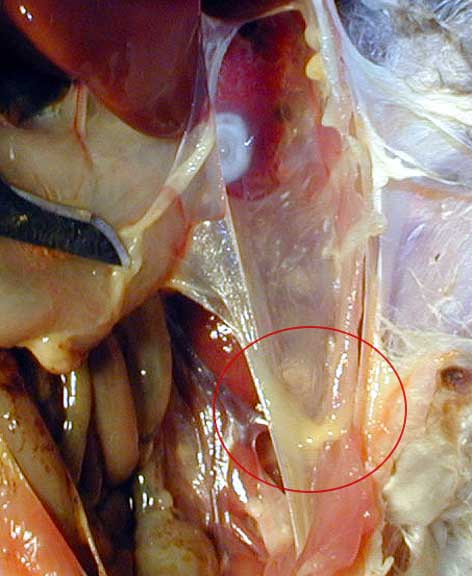
The bottom of the air sac shows the most cloudiness and discharge
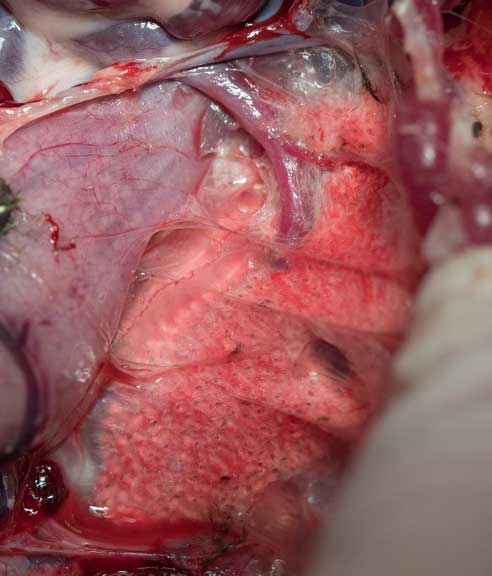
This is what a bird lung looks like. It is not translucent like an air sac, and we need to cut into it to see if there is any pathology.
Treatment
Birds that are suspected of having Psittacosis are immediately isolated. Protective clothing should be worn at all times when treating these suspects. Routine surgical masks might not be adequate to prevent exposure.
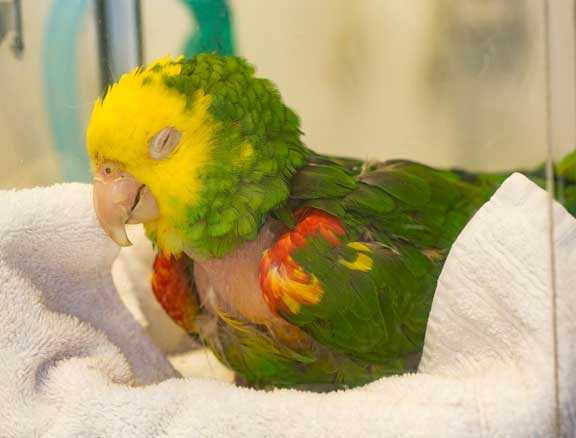
Some birds are very ill, and need warmth and oxygen like this parrot receiving 100% oxygen
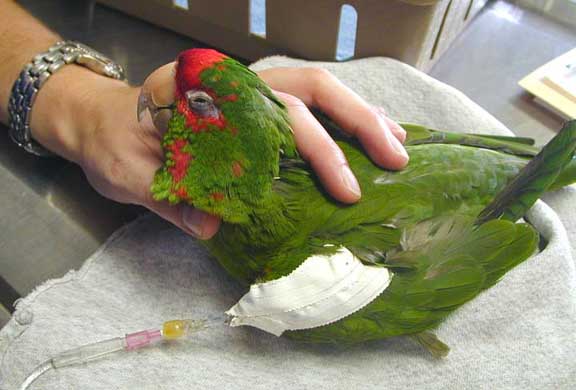
It might even need IV (intravenous) fluids
Birds that are weak, losing weight, or not eating need supportive care. This consists of fluids and supplemental feeding. We will frequently hospitalize them until they regain their strength. The mainstay of treatment is with the tetracyclines.
There are several different methods to get this medication into a birds system in order to achieve adequate blood levels.
- Medicated Feed- Medicated foods can be purchased or made up that contain 1% chlortetracycline (CTC). These need to be fed for 45 days. Acceptance is variable, so monitoring of food consumption is imperative. Calcium should not be greater than >7% in this diet because it can interfere with the tetracycline. This food is not readily available any more.
- Oral Doxycycline- This is the drug of choice for oral treatment. It is also used for 45 days, and is given to birds that are cooperative.
- Injectable Doxycycline- This drug, also know as Vibravenous, is given once every 5-7 days. Treatment is given for at least 6 weeks. Irritation can occur at the injection site, so it must be given under the direction of a veterinarian.
Prevention
Do not purchase a bird that seems ill or you suspect has been brought into this country illegally. New birds should be examined, tested, and quarantined for at least 45 days. During this 45 days these new birds can be treated also.
People with compromised immune systems should not be exposed to birds that might have Psittacosis. Gloves, masks, and protective clothing should be used when cleaning cages and working around birds suspected of this disease.
Clean cages and feeding bowls frequently, and set up housing so droppings, food, and feathers do not contaminate other cages. When feces dry the organism can become airborne, so daily cleaning can help prevent this.
Chlamydophilia psittaci is susceptible to routine disinfectants. Always use them in a well ventilated area. Common ones include:
Lysol
bleach
isopropyl alcohol
70% ethanol
Roccal.
Can Chlamydiosis Affect Humans?
Humans can get Psittacosis from birds. Cats get Chlamydia psittaci (more recently known as Chlamydia felis) and show evidence of eye problems, but it is only a rare case that cats can spread this disease to people. Other species of the Chlamydia bacteria that occur in sheep, goats, and cattle can cause disease in humans, but those diseases are not called Psittacosis.
Human exposure to avian Psittacosis is usually due to the inhalation of urine, respiratory secretions, feathers, or dried bird droppings that contain the organism and are dispersed in the air as fine dust particles. Other potential sources of infection are from oral contact, bites from an infected bird, or dissection of a dead bird. Even short term exposure can lead to an infection in people.
Symptoms in people range from nothing to severe disease with pneumonia. Typical symptoms include fever, chills, headache, muscle aches and cough. Inflammation of the heart, liver, and nervous system can occur, with even fatal cases reported.
People that work in pet stores, aviaries, and poultry farms (turkey processing plants) are most susceptible through the bird feces and dander they encounter. There is no know incidence of an infected person spreading it directly to another person, although that possibility needs to be monitored.
With proper treatment most people recover. According to the Centers for Disease Control and Prevention, between 50-100 cases of human Psittacosis are reported each year, with probably many more undiagnosed.
Return to Avian Diseases Page