

Introduction
Allergies are a common cause of skin conditions in dogs and cats, along with other species. This type of allergy goes by several names; the most common are atopy, allergic skin disease, or allergic inhalant dermatitis (AID).
The main difference between us and dog and cats is that allergies in pets tend to cause skin conditions and ear problems, as opposed to the runny eyes, runny noses, and sneezing we encounter in people. Symptoms typically include scratching and itching, although many other skin conditions can cause itching. This itching is called pruritus.
Allergies can be hard to control and are chronic in nature. This causes significant frustration for pet owners and discomfort for pets. A correct diagnosis, along with proper therapy instituted early in the course of the disease, will minimize this frustration.
Many pet stores and groomers will give advice on a “food” to feed to cure your pet’s skin condition. It is irresponsible for them to be giving any advice of this nature due to the numerous causes of skin conditions, let alone the complexity of this disease, and also the fact they have not examined your pet and do not have any important physical information about your pet.
We have a short page on Nutrition Advice that addresses this issue of people giving medical advice when they have no business doing so. On the page we talk about using Hill’s Prescription Diets to treat food allergies.
When a dog or a cat has a serious itching problem causing hair loss and skin problems the following diseases summarize the most likely causes and are the diagnostic and treatment approach in most cases. You will learn more about them in detail:
Fleas
Mites
Bacterial skin infection
Fungal Skin Infection
Food Allergy
Environmental Allergy
This allergy page summarizes and generalizes the complex problem know as allergic skin disease. It is detailed, and will take a few minutes of your undivided attention to help in understanding this problem. In the beginning of this page we will give you the background of their causes and how we diagnosis them. We will take about treatment towards the end.
Pathophysiology of Allergies
When the immune system encounters an antigen that has the potential to cause disease (ex. parvo virus) it produces antibodies called IgG (immunoglobulin G, previously known as gammaglobulin) and IgM (immunoglobulin M). For the first 7-14 days of infection the virus spreads throughout the body because not enough antibodies are produced to stop them. Within 7-14 days enough antibodies are made to neutralize the virus, and the pet eventually recovers from the disease, all other things being equal.
As time goes on, the now sensitized immune system is ready to produce large amounts of antibodies rapidly the next time it encounters this virus. The rapid antibody response neutralizes the virus immediately, instead of taking the 7-14 days that occurs the first time it encountered the virus. This is called the anamnestic response, and is why a pet that recovers from parvo virus does not get the disease again.
A different scenario presents itself when the immune system encounters an allergen that is not necessarily pathogenic (ex.- a pollen particle). A different part of the immune system kicks into high gear when these non pathogenic allergens invade the body.
When a pollen particle enters the body for the first time (through the skin or respiratory passage) it stimulates the body to produce antibodies also, this time they are called IgE (immunoglobulin E). This IgE antibody attaches to the allergen in order to neutralize it, just like IgG would do to a parvo virus.
This process, called sensitization, occurs in the first season a pet encounters a specific allergen in its area. Without this sensitization there is no allergy. This type of allergy is the most common type, and is called atopy or atopic dermatitis.
The next time a pet encounters these pollen particles (usually the next allergy season), the immune system produces large amounts of IgE antibodies rapidly because it has been sensitized to them from the previous season. Again, this is similar to what happens when the immune system makes IgG and IgM antibodies against parvo virus.
IgE, with attached allergens, circulates throughout the bloodstream to a type of cell called the mast cell. Mast cells contain many chemicals that can cause inflammation, the most important of which, in relation to allergies, is called histamine. When an IgE antibody (even IgG can be involved) with an attached allergen encounters a mast cell under the skin, it alters the membrane of the cell, and histamine leaks into the surrounding tissue.
Histamine causes inflammation, noted as redness (erythema) and itching (pruritus) on the skin surface. The reaction that is seen on the skin surface is called a wheal or a hive. This causes your pet to lick, scratch, or bite at this area which now itches.
It is the mast cell, that releases histamine when it encounters an IgE antibody with a pollen particle attached, that is a major component of allergies. This is what occurs in atopy and is suspected to occur in food allergy. In flea allergies, it is an allergic reaction to the flea saliva that causes the immune system reaction.
Other immune mediators are implicated in atopy. They include cytokines, neuropeptides, peptides, proteases, and leukotrienes. They can affect nerve fibers to the skin, causing itchiness. As if that is not enough, there are other immune mediators called Interleukin 31 (IL-31) that are involved. It’s an understatement to say that the immune system is very complicated. Add the ever present skin bacteria to this equation and it is easy to see how this can become a frustrating problem.
Food allergies have a slightly different pathophysiology then atopy in some cases. In food allergies, the offending allergen (usually a protein) is absorbed through the lining of the small intestines and proceeds right into the bloodstream. This causes a different immune system reaction. If the intestines are inflamed from some other disease process, for example IBD (inflammatory bowel disease) in felines, the normal barrier lining the intestines is compromised and more allergens can enter the bloodstream.
Types of Allergies
There are 3 main types of allergies in relation to skin conditions. It is possible for a pet to have a combination of all 3 allergy types:
Flea Allergy Dermatitis (FAD)
This is a very common cause of skin allergies, even if you do not see a flea on your pet. When a flea bites a dog or cat it is looking for a meal of blood in which to nourish itself. In order to suck this blood it inserts an anticoagulant into its saliva to prevent the blood from clotting while it sucks it through its small proboscis. It is the allergens in this saliva that cause an allergic reaction to occur.With the advent of new treatments that are convenient and very effective, this problem, while still important, has diminished in importance.
The products we recommend are oral Nexgard®, Advantage Plus®, Comfortis®, Bravecto®, or Trifexis® in dogs and topical Revolution in cats. In addition to excellent flea control these products also prevent heartworms and internal parasites like Roundworms. Revolution in cats even controls mites. Our staff has detailed information to give you on these products along with others to help you make the right decision for your circumstances.
Since we live in a flea infested area we recommend using these monthly flea products year round. They have the added advantage of worming your pet every month for Roundworms, Hookworms, and Whipworms.
Fleas are a common cause of skin allergies in felines. This is especially true when the scratching and hair loss is around the head and the rump.
Atopy or Allergic Inhaled Dermatitis
Another common cause of skin allergy is atopy. It is a genetically determined predisposition to produce IgE antibodies when exposed to an allergen. Re-exposure to this same allergen in the future causes allergic skin disease (you learned the mechanism above). Depending on the study, it is estimated that between 3% and 15% of canines have atopy.
Common allergens that cause this reaction are ragweed, pollen, house dust, house dust mites, mold, animal dander, feathers inside the house. Outside its grasses, trees, and shrubs. The allergens can be inhaled, pass through the pads of the feet, and even possibly ingested. Since these compounds are in abundance everywhere, it is apparent that preventing exposure in the first place is difficult.
If fleas are not a factor, atopy accounts for up to 90% of the allergies that cause allergic dermatitis. A certain number of pets with atopy also have a food allergy concurrently, which complicates the diagnosis and treatment.
Since there is a genetic component to this in many dogs, it is always a good idea to get references from a breeder to learn if any of the dogs they have sold have this problem.
Food Allergy
The least common cause of skin allergies is food allergy, although pets stores and groomers are under the impression that this is the sole and most important cause of skin allergy, which is why they give amateur advice on what to feed. They are in the business of selling food, which is why they only see food as a solution to atopy, when it is the least common cause. Our page on Nutrition Advice has much more information on this topic.
It is important to distinguish food intolerance from an actual food allergy. They are not the same, but many people giving amateur advice on this problem do not understand the difference.
In the vast majority of cases, food allergies are caused by an allergic reaction to proteins in food. The size of the protein particle is important. They have a molecular weight of between 18 and 70 kilidaltons (kD). In laymen’s terms, they are very, very tiny.
Heredity is a major predisposing factor in people, and probably so in animals.
Some of the more common food allergens in dogs and cats are:
| horse meat | eggs |
| beef | fish |
| pork | corn |
| lamb | soy |
| chicken | wheat |
| dairy products | rawhide chews and dog biscuits/treats |
In dogs, beef, dairy products, and wheat tend to cause most of the problems, with chicken, lamb, and soy following. In cats, beef, dairy products, and fish account for most of the food allergies. Premium dogs foods can contain these products, so just because you are feeding a higher quality or more expensive food doesn’t mean that food will not cause a food allergy.
Many pet stores are there to sell food, so they will tell you a certain type or brand of food will cure your pet’s skin (and other) conditions. The employees of these stores have no business giving their advice unless they are licensed nutritionists for animals, or are licensed veterinarians, and have discussed with you the following points that are so important in making a diagnosis of any disease, including allergic dermatitis:
- Your pet’s predisposition to certain diseases, including allergies
- Your lifestyle and your pet’s lifestyle
- The specific history of your pet’s skin condition- time of year, where they are itching, etc.
- Results of a thorough physical exam checking all organs besides skin
- Routine blood panel to assess the status of your pets internal organs along with protein levels, blood glucose, electrolytes, red blood cells, and white blood cells.
- Your pet’s vaccine status
- Diagnostic tests to eliminate internal (hormonal etc.) and external (mites for example) causes of skin conditions.
- The efficacy of prior treatments
- The effects a change in diet will have on other organs besides the skin
Most of the symptoms of food allergy involve inflammation and scratching of skin or ears, but might also include vomiting or diarrhea. These gastrointestinal symptoms tend to occur more in cats, and are sometimes categorized as Inflammatory Bowel Disease (IBD).
In those pets that truly have food allergy, a high percentage also have atopy at the same time. Cats might have more food allergies than dogs, although fleas are a common cause of skin allergy in cats. In cats a food allergy can manifest itself as hair loss and scratching diffusely around the body.
Symptoms
Symptoms of Canine Skin Allergies
The most consistent symptom in pets with allergic skin disease is excessive itching. The medical term for this is pruritus. High strung dogs might itch more than placid dogs. Chewing, biting, or licking, or rubbing the skin can all be manifestations of pruritus.
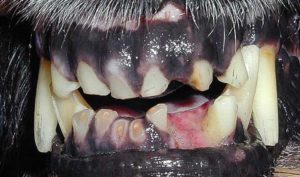
Pets can chew so incessantly that they wear down their incisor teeth to the gum line. The nerves can get exposed causing a painful condition that is chronic. You can learn more about how important this is for your pet’s quality of life from our Dental Disease page.
In canines some of the more common areas for pruritus to occur are the face, feet, and armpit areas. As the problem progresses the whole body might be involved. Some pets will scratch excessively but not show any problems with their skin.
If your pet has an allergy to fleas you might find tiny blood spots where it has layed down. These are the result of flea dirt that has fallen off your pet and become wet. Since flea dirt is made up mostly of blood that the flea has sucked out of your pet and has passed through its digestive tract, they appear as small blood spots on the floor or table tops when wet.
Symptoms of Feline Skin Allergies
Cats get skin allergies also, although not as frequent as in dogs. They might exhibit the same or different symptoms. Different symptoms include tiny bumps throughout the body, ulcers on the lips, excoriation of the neck, and even patches of missing hair (alopecia) without any skin lesions.
Ear problems related to allergies are rare in cats compared to dogs.
Cats get a problem called psychogenic alopecia that can be similar in appearance to atopy. This might start off from licking due to a urinary tract infection (UTI), infection in the anal sacs, or fleas. Even if those problems are treated, the licking behavior can still persist.
It can be difficult to tell pruritus from normal feline grooming. Vomiting hair balls, hair in feces, and hair in your cat’s mouth when you brush its teeth (you are doing this aren’t you?) are all clues.
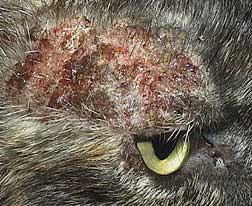
This cat has an allergy that caused it to irritate the skin above its eye by rubbing its face
Diagnosis
Since the symptoms of allergic skin disease mimic those of other skin diseases, a thorough approach is needed to differentiate them. In every disease we encounter we follow the tenets of the “diagnostic process” to ensure that we make an accurate diagnosis, and that we do not overlook some of the diseases that are also encountered in conjunction with skin diseases.
It is too easy to jump to the conclusion as to what is causing your pet’s pruritus. Here is a list of possible causes of scratching and itching in pets in random order:
Atopy
Drug reaction
Flea allergy dermatitis
Food allergy
Lice
Autoimmune disease
Pyoderma
Contact Dermatitis
Viral infection
Fungal infection (Malassezia)
Psychogenic
Mites
Seborrhea
Signalment
Typically, atopy occurs in mature dogs between 1- 3 years of age, although it can occur earlier (Shar pei’s can get it as early as 3 months). The condition rarely starts in dogs over 6 years of age. Most dogs get their first exposure to an allergen and develop sensitization in their first exposure to a pollen season.
Symptoms usually occur during their second season of exposure to the pollen allergen when the immune system has its exaggerated response to the allergen and produces high levels of IgE. Dogs that are highly allergic can show signs of atopy during their first season of exposure to pollen allergens. It depends on how long the pollen season lasts and how rapidly their body produces the IgE antibodies.
History
Atopy, in its initial stage, tends to be a seasonal problem. This can be a help in differentiating it from food allergy, which would be a non-seasonal problem. Atopy tends to be a progressive disease with worse symptoms each allergy season. Many dogs will be more affected during a specific season. As time goes on dogs can have allergies year round. It is not a contagious disease, so other dogs, cats, and people in the same household do not usually have symptoms (unless of course it is another dog that is highly prone to allergies).
The progeny of atopic dogs are more prone to developing atopy than other dogs. Careful breeding therefore can help minimize the occurrence of this problem. Pets that have been treated with cortisone in the past, and did not improve, give us a clue that something else besides an allergic disease is involved.
Food allergies in dogs and cats can start at any time in a pet’s life, even those on the same diet for a long period of time. Non-seasonal allergies bring food allergies to mind, along with vomiting or diarrhea, although these are not consistent findings. The skin lesions in food allergy are indistinguishable from atopy, but have a propensity to show only inflammation of the ears.
Feeding dog and cat foods that contain ingredients that pets are routinely allergic to might also clue us in to a food allergy. This includes the premium foods and those that contain lamb. Flea allergies are suspected whenever we are presented with a pet that has a skin condition, especially towards the back end, and is not on routine flea control. This is true even for pets that never go outside. Other pets in the household that are itching might also indicate fleas in the environment. Flea allergies routinely cause hair loss at the lower back area (called the dorsal-lumbar area), which is not typical of atopy and food allergy.
Physical Exam
The physical exam of a dog with a skin condition is the same as any other sick pet. We examine the whole body for clues as to the cause of the skin condition. The distribution of the skin lesions gives us a clue as to the cause, but is not consistent in all skin conditions. Some of the more common exam findings are:
Pyoderma
This pet has licked so much it has maimed itself, and now has pyoderma, which is a skin infection, typically a Staph (usually staphylococcus pseudointermedius) infection
Conjunctivitis
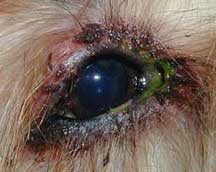
This is an inflammation of the eyes. The green discharge in the corner of the eye is from fluorescein stain that was checking for a scratch on the cornea.
Lichenification and hyperpigmentation
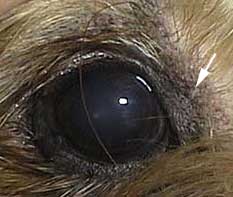
Chronic licking and scratching can cause thickening and dark pigmentation of the skin. The white arrow points to mild hair loss, hyperpigmentation, and lichenification in a Yorkie.
Acute Moist Dermatitis
Commonly know as a hot spot, it is an area of skin that has been maimed from intense pruritus. Pyoderma is also present, and the skin is very painful. Hot spots occur rapidly and can encompass a large section of skin in a short time. Affected areas usually include the rump and the side of the face. Other common causes of hot spots include anal gland problems, ectoparasites like mange, grooming, and deep skin infections. Golden and Labrador retrievers, St. Bernards, Collies, and German shepherds are more prone than other breeds.
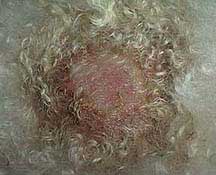
The serum that is exuded from the inflamed skin matts the hair and causes the problem to progress under the hair coat without anyone realizing how serious it is. These pets can be so painful that we need to sedate them prior to clipping the hair and cleaning the wound.

Hot spots can progress and cause serious skin conditions. What looks like a minor skin wound with matted hair can actually be a serious and painful infection.
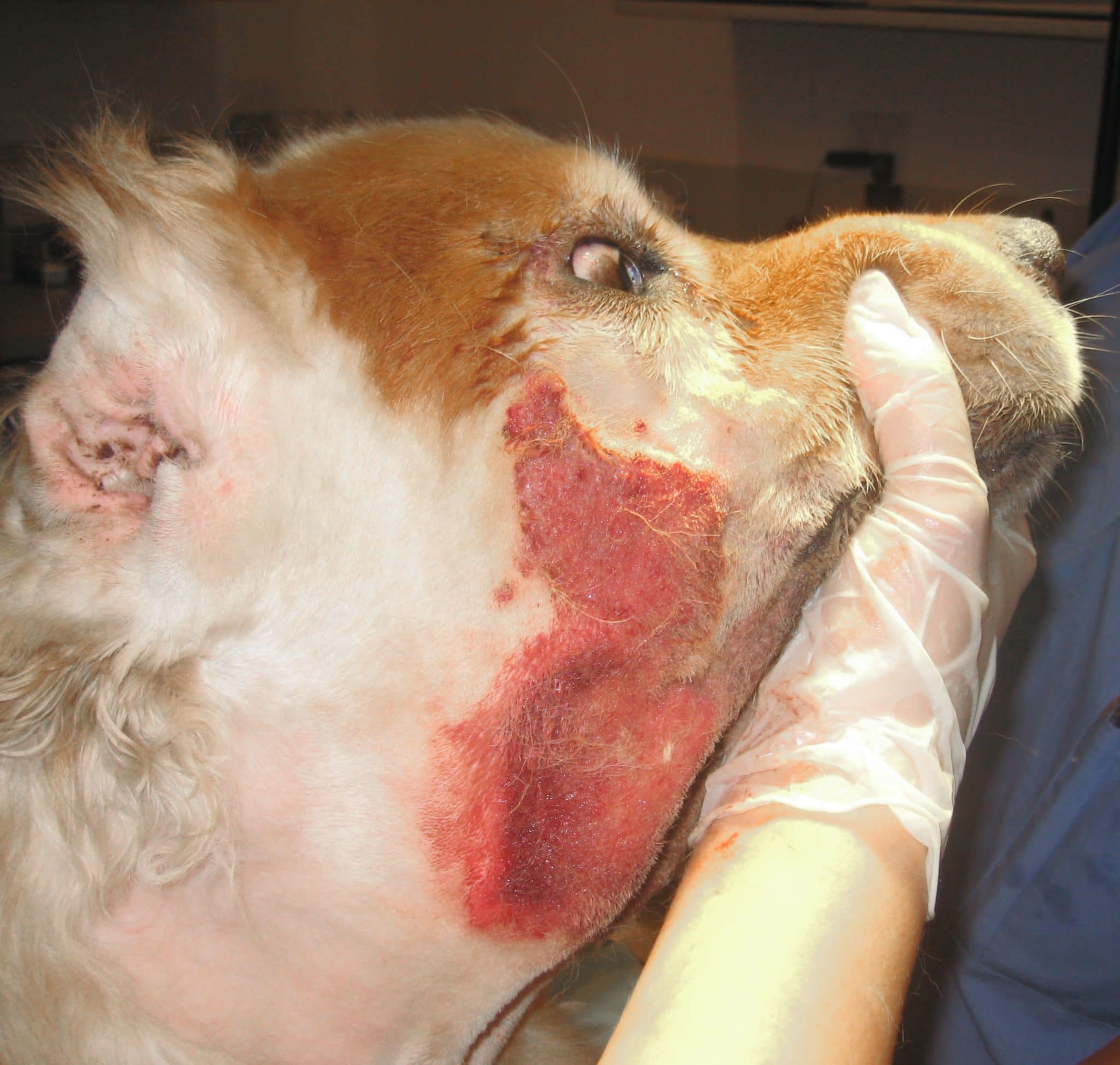
Once the hair is shaved away the seriousness of the problem is apparent
Feline Acne
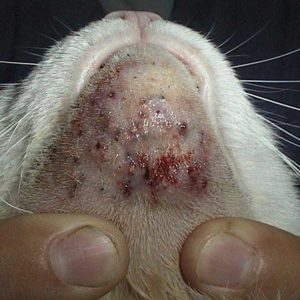
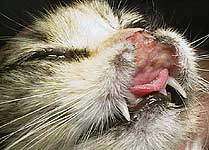
Some cats get very inflamed skin under the chin due to an allergy. Many times this is from feeding cats with a plastic bowl that causes this tremendous inflammation when the chin comes into contact with the plastic bowl.
Otitis externa
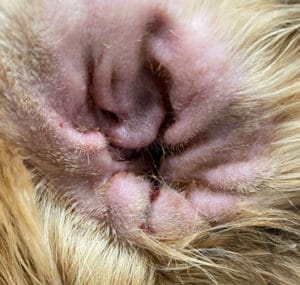
This is an infected ear secondary to an allergy. Sometimes this is the only symptom of allergy, especially food allergies.
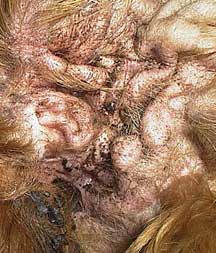
This ear is so severely infected that it is difficult to ascertain the normal anatomy. The ear canal is completely occluded, necessitating surgery to correct it. This dog is painful. The surgery to correct it is called a TECA (Total Ear Canal Ablation). It is performed by a specialist, and even though we are removing the ear canal and the dog cannot hear afterwards, it will feel dramatically better.
Pododermatitis
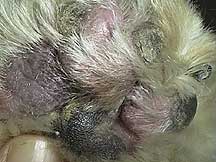
Infection of the feet can occur from chronic licking
Acral Lick Dermatitis
These are commonly known as lick granulomas. There are many causes, allergies being a primary one. Other causes include arthritis, skin tumors, inflamed nerves, fungal infections, ectoparasites, and psychological factors like boredom and stress. Once the licking starts the problem is difficult to control. In some cases we have found that the use of the laser has been a significant help. The most effective treatment is the use of antibiotics for many months.
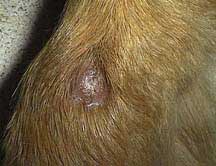
This small lick granuloma is on the front leg of a Golden Retriever
Fleas or flea dirt
Flea dirt is literally droppings from the flea after is has bitten a pet and the blood has passed through the flea’s digestive tract. It looks like pepper, and is easily visualized on a pet with a white hair coat.
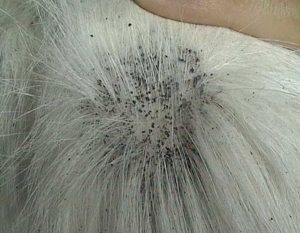
This is an example of lots of flea dirt
Flea eggs are small white particles, similar in size to flea dirt, that fleas lay in a pet’s hair coat. They eventually drop off and contaminate the environment. A pet can have fleas, yet show no evidence of fleas, flea dirt, or flea eggs.
Flea allergy dermatitis typically does not cause hair loss around the face, eyes, and ears like in atopy, although this is not a hard and fast rule.
Diagnostic Tests
Diagnostic tests are important even if we strongly suspect an allergy. In some situations other skin diseases can occur simultaneously with the allergy. It is impossible to make a diagnosis in any skin condition just by looking at it. This is because there are many diseases that affect the skin, yet the skin has only a limited number of ways to exhibit signs of disease.
For food allergies we want to completely remove the offending protein and see if the problem (skin disease or GI signs) completely resolves. At that point we again feed the offending protein and see if the problem recurs. This is called a trial elimination diet, and is the only way to confirm a diagnosis of food allergy.
The diagnosis of food allergy is not complete until we cause the allergy again by feeding the original food. This is because there are many allergens in the environment that can cause pruritus after the food allergy is controlled. Also, it is easy to assume the food allergy is under control when your pet is on medication simultaneously.
Skin Scraping
It is important to do a skin scraping in many cases of allergy because the lesions of atopy commonly mimic those of other diseases. Ectoparasites like demodex or scabies can cause skin lesions and itching.
Fungal Tests
Ringworm can mimic allergy symptoms. Lesions from Ringworm tend not to be as pruritic as allergies.
Malassezia, another fungus, is commonly associated as a secondary problem when the skin is infected. Even though it is a normal part of an animals hair coat, it will add to the itching if other conditions are present.
Common areas for Malassezia include the ears, lips, muzzle, between the toes, and the anal area. Indications that Malassezia is present include pruritus, erythema, and greasy skin with an offensive odor. These symptoms can occur with other diseases besides Malassezia.
Malassezia is diagnosed by the above symptoms and by looking for the organism under the microscope after swabbing the skin and placing the discharge on a microscope slide. Many pets respond to shampooing with specific antifungal shampoos twice weekly.
These topicals will only work when the underlying allergy and its associated skin infection are under control. In some cases we use oral antifungal medications to control the problem.
Thyroid Test
Hypothyroidism can cause skin conditions, although dogs with only hypothyroidism are not terribly pruritic.
Fecal Exam
Hypersensitivity to internal parasites can cause symptoms similar to atopy. This is not a common situation.
Skin Biopsy
In some cases it is difficult to make a diagnosis. When we are presented with this situation we will biopsy several small pieces of infected skin and have them analyzed by a veterinarian that specializes in tissue analysis of the skin.
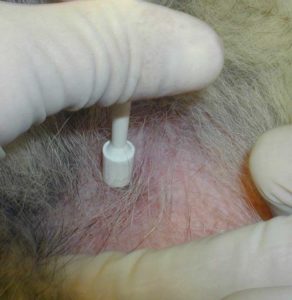
A small biopsy punch that can be utilized gives us the sample we need for analysis. Many times this is done under a local anesthetic only.
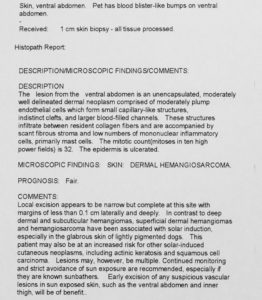
Here is a typical report from one of them
Allergy Testing
Allergy tests are performed in cases where we already have a diagnosis of allergy. The main purpose of allergy testing is to find exactly what your pet is allergic to, and also to set up a protocol for allergy injections. If giving allergy shots is not contemplated then this test is of less value, although it will let us know what allergens we want to avoid. Trying to avoid these allergens though is the hard part because they are in our houses and almost everywhere outside.
There are two main types of allergy tests that are performed. Neither one is perfect, and they can have false positives and false negatives. They are not accurate in diagnosis a food allergy.
Intradermal (skin) Test
Most of us are familiar with the first one. In this test, called the allergy skin test or intradermal test, small amounts of materials that routinely cause allergies in dogs are injected under the skin. The reaction, if any, is graded, and a determination is made as to whether or not a pet is allergic to that specific allergen.
This test is very subjective, and therefore prone to errors in interpretation, and therefore requires significant experience. Many different techniques are used.
Your pet must be off of oral cortisone medication for at least 1 month before testing. If injectable cortisone is given, the waiting time is longer. Your pet must not be on any tranquilizers at the time of testing and must be off of any antihistamine medication for 10 days.
Pets usually are given a sedative to calm them and to minimize the release of cortisone due to stress, which will affect the outcome. The hair on the side is clipped where there is no current dermatitis occurring. A tiny amount of histamine is injected first. If there is no reaction to histamine, the full test is postponed. A small amount of sterile saline is also injected as a control.
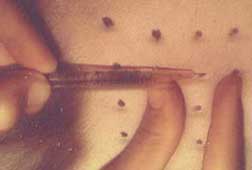
The areas where the allergen is injected are marked
Numerous allergens are injected into the skin and a reaction is noted at 15 minutes and again at 30 minutes. The reaction we are looking for is called a wheal. A positive test to a specific allergen occurs when the reaction is in between the saline and histamine tests in size.
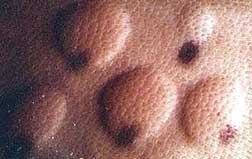
In some cases the wheal is obvious, in others it is subtle, which is part of the interpretation process
RAST (in vitro test)
The second type of test that is performed is called the RAST test. RAST stands for radioallergosorbent test. Another in vitro test is called the ELISA (enzyme linked immunosorbant assay) test. RAST tests for the levels of allergen specific IgE. In this test a blood sample is taken and submitted to a special lab for analysis.
The RAST test has advantages over the intradermal test. There is no clipping, sedating, and there is no potential to have an adverse reaction to an allergen injected into the skin. There is less of a chance that prior drug therapy (cortisone) will influence the outcome, and it can be used in patients that have dermatitis. The primary disadvantage is the fact that false positives are more common when compared to the intradermal test.
The RAST test is very thorough and checks for many different allergens in the home, outside, and in your pet’s food. Here is an example of one of their reports:
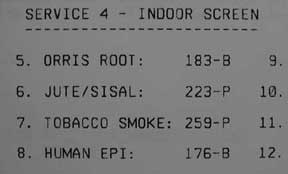
Here are 4 of the dozen household allergens they tested. This dog is borderline for orris root and human epithelial cells, and positive for jute/sissal and tobacco smoke.

These are a few of the food allergens tested in this sample. There was no allergy to venison, eggs, or milk, but this dog was allergic to soybean. This give us a rough idea of what food your pet might be allergic to, and can only be confirmed with the trial elimination diet.

This is a tiny sample of the numerous allergens found in the environment tested for on the same dog as above
Allergy tests can be unreliable at diagnosing food allergy. A better way to diagnose food allergies is using a technique called the elimination trial. By taking away a food that is suspected of causing the food allergy you can determine if the problem resolves. This might take up to several months to know for sure.
To verify the diagnosis you need to feed the suspected food again to see if the skin condition returns. Commercial diets that contain rice, venison, fish, and potato are commonly used for the elimination trial. There is a food manufactured by Hills called Z/D that has been a big help in diagnosing and treating food allergies.
Routine Blood Panels
On occasion a specific type of white blood cell, called an eosinophil, is elevated in allergic conditions. Other conditions, notably worms, can also cause this elevation in eosinophils.
A routine blood panel can also give an indication of internal or hormonal problems that might show up as a skin condition. The most important of these are hypothyroidism and Cushing’s Disease.
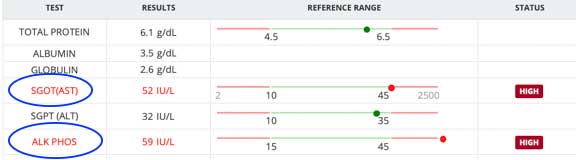
This blood panel shows an elevated alkaline phosphatase level. This could be an indication of a hormonal problem called Cushing’s Disease.
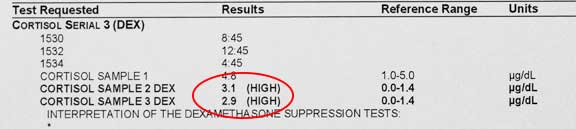
If the dog with an elevated ALK PHOS has symptoms consistent with Cushing’s we will run an LDDS (Low Dose Dexamethasone Suppresion) test to confirm. Click on the Cushing’s link to learn a whole lot about this disease.
Treatment
In the early years of atopy the pruritus is more easily controlled. As the problem progresses treatment is not as rewarding. Chronic changes to the skin can occur, especially lichenification and hyperpigmentation.
Treatment is aimed at all the factors that contribute to pruritus. For example, a pet that is normally not atopic might become so if exposed to fleas, or if it gets a pyoderma, or is allergic to a protein in its diet. This concept is called summation of effects, and might push the pet over what is called the pruritic threshold. By minimizing one of these components you might keep your pet under the pruritic threshold and minimize its skin or GI symptoms.
Food Allergy
Hypoallergenic means foods that your pet has never eaten, which technically, it cannot be allergic to. We recommend using these foods in some cases when we feel the pruritic threshold has been reached and any decrease in allergen load will put your put under this threshold. It might take up to 2 months to know if the food is working. You cannot feed any other foods or treats during this trial period, so plan on rewarding your pet with something else besides food.
There are 3 different diets to help:
-
- Homemade
- Commercial Novel Protein
- Commercial Hydrolyzed Protein
Homemade diets can be beneficial, and have the advantage of controlling the protein and carbohydrates sources. It is important to pick a protein source your pet has never been exposed to. To be sure of this we sometimes need to resort to diets that contain some unusual ingredients.
Homemade diets have the substantial drawback of time, expense, guesswork, and being nutritionally incomplete. Some pets do not accept the food, and some of them develop diarrhea. For these reasons most pet owners do not use this treatment method.
Commercial Novel Protein Diets are a popular treatment for food allergies. Novel protein means your pet has never eaten this protein in the past. For them to work, just like homemade diets, the protein source has to be a food your pet has never been exposed to, which can be difficult to determine. Traditionally they have contained fish, lamb, potato, or venison.
Many pets react to several different proteins compounded the problem. Compared to homemade diets commercial diets have the advantage of being nutritionally complete and convenient. It is becoming more and more difficult to find a food that contains a protein that is truly novel.
In many cases these foods work well to eliminate or decrease the food allergy. It takes up to 8 weeks to know if they are working, and your pet needs to be fed only these foods and nothing else, and be off all medications to decrease scratching. You might have to try different foods to find one that works for your pet. Unfortunately, it’s possible for some pets to eventually develop and allergy to one of the novel proteins in the food you are feeding.
Commercial Hydrolyzed Protein diets are the best option in most cases. The advent of these diets for food allergies has been a big step in eliminating the problem. Instead of trying to find a novel protein, these foods have literally decreased the size of the protein particle that gets absorbed in the intestines into the bloodstream. This reduced size is now too small to cause a food allergy, no matter what the protein source initially.
These foods are nutritionally complete, convenient, and the ones we tend to recommend in most cases of food allergy. The brand we use most is Hill’s z/d. Hill’s was the first manufacturer to identify this solution and z/d is still the gold standard. This food is unconditionally guaranteed and you will get your money back if you are not satisfied.
It is important that you do not have your pet on cortisone or antihistamines while trying to determine if your pet has a food allergy, since they will decrease the scratching and lead to an erroneous conclusion on the effect of the food. This causes a dilemma for those pets that have significant scratching, since they need immediate relief. In these cases we recommend using medication initially and starting your pet on a hypo-allergenic diet at the same time.
If the itching is decreased after 1-2 months you can start weaning your pet off the medication to determine if the scratching is still diminished while on the hypo-allergenic diet also. In some cases we find the use of this food will allow us to use less medication to control the scratching.
Compliance is important, so make sure that everyone that even remotely feeds your pet knows about the diet change. If you give your pet food with medication, or treats, make sure it is not the original food that might have caused some allergy. Even the soy or rice that is the carrier for oral medications can cause a food allergy. So the bottom line is: Do not give your pet anything but the hypoallergenic food one of our doctors has prescribed. The biggest cause of failure is someone in the family feeding an improper food or treat.
Some pets need time to make the transition to a new food so be patient. Never let a cat go more than a few days without eating due to potential problem with the liver. Mix their new food in with their original food and make the transition over 7 days.
Avoidance
Obviously, if it is exposure to an allergen that causes the problem in the first place, then logic will dictate that we eliminate this exposure. In reality though, these allergens are everywhere. Minimizing exposure can be beneficial since it will decrease the allergen load, and hopefully keep your pet under the pruritic threshold.
Pets that are allergic to kapok, wool, cotton, feathers, animal dander, newspaper, and tobacco smoke all might benefit from limiting exposure. Limiting the number of houseplants could be helpful, and use synthetic material for your pets bedding. Pets allergic to house dust mites might do better kept out of bedrooms or placed outside more often.
Being outside though might expose them to more pollens. Grass is a common allergen causing skin allergy, so if possible, try to minimize exposure. Keep the grass cut short, and keep pets out of the yard when cutting the grass. Rinse your pet’s feet and face off thoroughly after being exposed to grass can be beneficial in some cases.
Mold allergies might be helped by dusting and cleaning more thoroughly, especially house plants and bathroom carpets. Even think about replacing your carpets with wooden flooring. Keep your pet away from damp areas like basements (in California that’s easy since we don’t have many) and use humidifiers and air conditioners in humid weather. Rinse their filters frequently and clean with chlorine bleach. To truly filter most of the dust, mites, pollens, bacteria, and molds in your house you need to use a HEPA (high efficiency particulate air) filter. Upright vacuum cleaners return most of the dust back into the air, so use canister or cylindric type machines.
Routine and thorough washing, cleaning, and vacuuming of your household will keep mold, house dust, and house dust mites to a minimum. Keep your pet out of the house when doing thorough cleaning and vacuuming to minimize allergens that are stirred up by the cleaning. Put flea powder or a flea collar in the vacuum bag. Put plastic over bedding that might harbor house dust. Keep pets indoors at dusk and early morning during heavy pollen seasons.
Flea Control
Since we live in a flea endemic area year round, we cannot emphasize the importance of proper flea control in any pet that has a skin condition. Even pets that are 100% indoors are possible flea victims. This is especially important in cats, both indoor and outdoor cats.
The products available today are a significant improvement over flea control products in the recent past. They are economical, safe, effective, and very convenient. One of the products we recommend for dogs is Trifexis©. It prevents fleas, heart worms, and internal parasites, and is given orally instead of a topical gel.
The flea control product of choice for cats is called Revolution©. In addition to treating fleas, it treats heartworm, ear mites, and internal parasites (depending on the species).
Both of these products are used monthly. In some situations one of our doctors will have you use it more often. We also have detailed brochures on these products.
There are many flea products that also can be used. Some are oral, some are topical, some are long lasting collars. Some of them are also good at killing mosquitoes and the ticks that harbor Lyme Disease, so it behooves all pet owners to keep their pets on these medications year round.
Here are some of our recommendations:
Topical- Feline
Advantage II
Revolution
Vectra
Oral- Feline
Comfortis
Bravecto
Collar- Feline
Serestro
Medical Therapy
Every pet reacts differently to the medication used in atopy, so we might need to try different ones, at the lowest dose possible, to find the medication, or medications, that work best. Since treatment tends to be long term, so our goal is always to substatntially minimize the itching whilel using as little medication as possible. We use a multmodal approach, utilizing topicals, antibiotics, nutrition, and anti-inflammatories, to give the best possible outcome.
Antibiotics
Some dogs scratch so severely they cause a secondary bacterial infection of the skin called pyoderma. The bacteria that commonly causes this is called Staphylococcus intermedius or pseudointermedius. This secondary bacterial infection intensifies the itching. These dogs need treatment with antibiotics for several weeks to several months. In addition, they need to be bathed with shampoo that will help the skin infection. Long term use of antihistamines are not effective if a skin infection (pyoderma) is allowed to persist.
If a hot spot is present it will be gently clipped and cleansed. Pets with hot spots must be put on antibiotics and usually short term cortisone to prevent the problem from progressing. Hot spots are very painful, and oftentimes require sedation if the wound is to be clipped and cleansed properly.
Antibiotics that work best for pyoderma include:
- Cephalexin
- Clindamycin
- Baytril
- Clavamox
- Simplecef
There is a new version of injectable antibiotic called Convenia that lasts for 2 weeks. This is especially useful in cats due to the difficulty in giving them a pill.
Light Therapy
Phovia, a form of photomodulation therapy (PBM), uses multiple wavelengths of light giving different depths of penetration to kill bacteria in the skin follicles. It is showing promise as a safe and effective treatment for several different bacteria that cause skin infections (pyoderma).
Treatment is usually 2x per week, and is used in conjunction with antibiotics oftentimes. The faster healing time when Phovia is used decreases costs, side effects, and resistant bacteria, compared to when antibiotics are used without Phovia.
In some cases Phovia can be used without antibiotics to clear up skin infections (pyoderma). This means that pet owners do not need to give any oral antibiotics, a huge convenience factor to consider.
Antifungals
Secondary fungal infections can occur, especially when the feet are licked constantly. The most common one is called Malassezia. It is treated with topical antifungals in most cases.
In most cases, after we have ruled out parasites like scabies mites as a cause of the itching, we try antibiotics and anti-fungal medications as the first course of treatment. They need to be given for at least one month to be effective. If they don’t work, or if your pet is itching so bad it needs immediate relief, which is common, we add some of the following mediations. These medications are used long term since we never cure atopy, only control it.
Cortisone
One of the mainstays of therapy for treating atopy is cortisone, commonly know as steroids. These steroids fit in the class of drugs called corticosteroids, which are not the same thing as anabolic steroids used by bodybuilders. Cortisone use is usually reserved for flare-ups, since long term use has the potential for causing side effects. Long term use of high doses of cortisone can lead to hair loss, thinning of the skin, liver problems, stomach problems, and muscle weakness. The overuse of cortisone can also cause iatrogenic Cushing’s disease.
Cortisone is a potent drug used in human and veterinary medicine literally thousands of times each day. Without this drug we would not be able to treat a large number of diseases. Cortisone has been abused by some people, leading to a bad name for this drug in some people’s minds. When used judiciously, and under a doctor’s supervision, it is one of the most important drugs we have. It is our first line of defense when a pet is scratching so severely it is maiming itself.
Cats are more resistant to the side effects of cortisone than dogs. Some cats are difficult to pill, so it is not uncommon to use an injectable version of cortisone that lasts for several weeks to months. Older cats need to be checked for underlying problems like sugar diabetes and heart disease before instituting cortisone therapy. Cortisone will raise the blood sugar level, making it more difficult to control the problem. It can also cause the body to retain more sodium. This is only a problem in a cat that is in congestive heart failure.
Cortisone is usually given on an every other day basis and eventually decrease the dose even further as your pet improves. This minimizes side effects yet still gives an adequate amount of the drug to minimize scratching. In many cases we give an injection first to give your pet immediate relief from the scratching. We routinely use cortisone for 1-2 weeks to help get the scratching problem under control. Since cats are more tolerant to cortisone, and can be difficult to pill, it is not unusual to use the injectable version of cortisone in them.
While on cortisone you will notice that your pet drinks and urinates more than usual. It might also have an increased appetite and might show some behavioral changes. These symptoms will go away, in the meantime make sure your pet has access to fresh water at all times and can go outside to use the bathroom frequently.
Antihistamines
Antihistamines can be effective in treatment in some cases. They counteract the release of histamine (that’s why they are called antihistamines) from the mast cell, which as you know is the source of the itching. They are the mainstay of our long term medical treatment for skin allergies. Occasional side effects include drowsiness and dry mouth, both of which tend to resolve. In general, they are safe to use on a long term basis.
We will initiate an antihistamine trial to determine which one, if any, is most effective for your pet. We do a trial for up to 2 weeks to determine if one is effective or not. It is helpful not to have your pet on cortisone at the same time we are trying a new antihistamine, since we will not know if a decrease in pruritus is due the cortisone or the antihistamine. If we find one antihistamine that works well we stay with it on a long term basis. Eventually this might change, and if there is a significant flare up we will use cortisone to control the problem for several weeks. In the long run, even if antihistamine use has only minimal effects on decreasing pruritus, its use can help us decrease the use of cortisone.
Some of the common ones we use are:
Benadryl
Atarax
Tavist
Chlorphenaramine
Amitryptiline
Medications used to treat allergic dermatitis are used on a long term basis. We will refill medications as needed, and require a complete physical exam every 6 months to verify we are still treating the correct problem and to check for potential side effects to medication. A blood sample will be recommended periodically to verify the health of internal organs that might be affected by long term medication.
There is a combination antihistamine and cortisone called Temaril-P that has been use for decades. The two drugs in combination haven proven to be highly effective, and since each of these drugs is at a low dose side effects are rare.
Cortisone/Antihistamine Combination
A popular remedy we use commonly and successfully is called Temaril-P. The cortisone and antihistamine are in a low dose (trimeparizine -5 mg, prednisolone-2 mg), but when combined in the same medication have the effect of a larger dose. We get the best of both worlds in this case because the low amount of medication means less chance for side effects when used long term. This drug is also effective for pets that are coughing and vomiting.
Apoquel
Apoquel is a member of a class of drugs called Janus Kinase (JAK) inhibitors. It is an immune mediating drug that suppressed cytokine function. Cytokines are implicated in the cause of itchiness (pruritus).
A very small amount of dogs had diarrhea, vomiting, and excess drinking, which went away eventually.
It should not be used in dogs with history of cancer (neoplasia), demodectic mange, or that have severe immunoseppresion. Its simultaneous use with cortisone (prednisone) has not been evaluated.
Apoquel has proven to be highly effective, and has been the treatment of choice in many cases of atopy.
Cytopoint
This is an injectable version of Apoquel that has also proven highly effective in controlling atopy. An injection lasts up to 2 months. It is approved for use only in dogs.
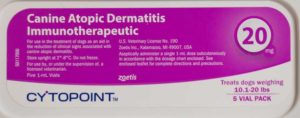
What the Cytopoint box looks like
Cyclosporine’s
An effective long term treatment for atopy relies on cyclosporine’s, the medication that prevents organ transplant rejections. Your dog must weigh at least 4 pounds for it to be used. Its main advantage is the fact it works without any side effects on a long term basis that can be encountered in drugs like cortisone.
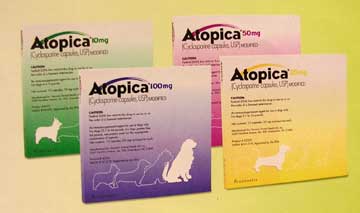
It is called Atopica©

It comes in a liquid form for cats
Atopica is highly effective, and we recommend it as one of our important long-term treatments for atopy. It does not contain cortisone so we do not have the side effects associated with cortisone.
Initially it is given once daily for 30 days, and should be given one hour prior or two hours after a meal. If a response is achieved we will decrease the dose slowly, with the ultimate goal of giving it 3X per week. It becomes cost effective at this twice per week dosing, and it is warranted to try this medication if your pet is on chronic cortisone use or you want an effective treatment without cortisone.
Modulis
This is a new version of cyclosporine by Ceva Animal Health for dogs and cats that is more affordable and comes in a liquid for easier dosing.
Allergy Shots
If an allergy test is performed on your pet we will know what it is allergic to, and allergy shots can be custom designed for your pets specific allergy. Giving allergy shots is called hyposensitization or immunotherapy. Theoretically, hyposensitization stimulates the production of IgG, which subsequently attaches to the allergen, preventing IgE from attaching to this same allergen. If there is no IgE attached to the allergen, then the mast cells do not release histamine.
This is one of the best ways to treat atopy since it is highly effective and there are no side effects to any drug. It takes longer to achieve the goal of decreasing itching and might cost more to implement.
Even if you do not give the allergy shots, knowing what your pet is allergic to can be beneficial in some cases, assuming you can remove the offending allergen (see previous section on avoidance). We tend to rely on allergy shots when avoidance methods and medication are unsatisfactory in minimizing pruritus. The company that performs the RAST test also supplies us with the allergens to give the allergy shots.
Giving allergy shots can be a significant way to minimize your pets scratching, although just like in people, no guarantee can be given to the outcome. Estimates vary, but in general, you can expect some improvement up to 70% of the time. In some cases we will still keep your pet on an antihistamine or cortisone, or Atopica©, but at a reduced dose. A decision to undertake this treatment modality takes a commitment to a lifetime of giving these injections in most cases.
Giving the injection is very easy since it is a small amount with a tiny needle. We will teach you how to give them, and if need be, will give them for you. Initially, the injections are given every few days for several months. It takes at least several months to know if the injections are working, and up to a year for full effectiveness. Eventually, they are only given from once every few weeks to only a few times per year. Each pet’s response is different.
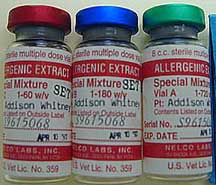
Allergens are made specifically for each pet. This dog is allergic to many things, so three vials are needed to treat its problem.
Room Purifier
If your pet is kept in a confined area, the use of a room purifier that filters out pollen particles can be of big help.
Food Supplements
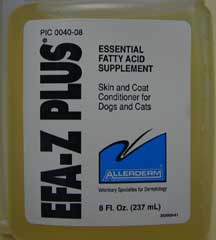
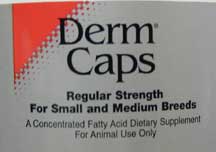
Some allergic dogs and cats scratch less when supplemented with essential fatty acids. Essential fatty acids tend to work best when combined with an antihistamine. The main ones we use are Derm Caps and EFA-Z. As with other therapeutic options, essential fatty acids will not work when the skin has pyoderma. It will take at least several weeks of supplementation to see any improvement. In some cases the need for inflammatory medication will be reduced when a pet is put on essential fatty acids supplementation.
Bathing
Bathing in cool water several times per week is beneficial. Do not use hot water because it can intensify the itching. Proper bathing will help remove allergens and eliminate dry skin, both factors that affect the pruritic threshold. Bathing your pet too often will dry its skin out and increase its itchiness.
We have many different shampoos that will help you- please ask one of our receptionists to show you. We have had best results with oatmeal shampoos and rinses, along with antihistamine shampoos and rinses. Use a mild shampoo once weekly to keep the hair coat clean without drying it out.
For hot spots we use OxydexR shampoo. If we suspect a secondary fungal infection caused by Malassezia we will use an anti-fungal shampoo called chlorhexidine.
We also use Malaseb® because it controls bacteria (Staphylococcus pseudointermedius), Malassezia, and Ringworm dermatophytes.
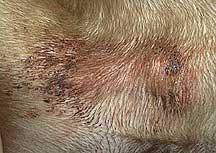
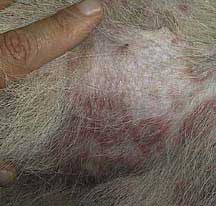
This is an allergic reaction to shampoo in the arm pit area of a 8 month old female pit bull named Pumpernickel. This illustrates the principal that many things can cause an allergic reaction, even treatments for allergies.
Topical Medications
There is a strong tendency on the part of pet owners to use topical medications for allergic skin disease. They are used, and are helpful, but should not be relied upon as the primary source of treatment. Topical medications we use usually have an antibiotic, an antihistamine, or cortisone as ingredients. We tend to use topical agents most often when presented with pets with hot spots. In these cases we use antibacterial creme in addition to antibiotics that are given orally.
Prognosis
Allergic Dermatitis is a chronic disease that is not cured, only controlled. It can be the cause of significant frustration, and will wax and wane in some cases. Understanding this disease will help you formulate a long term plan that suits your needs and minimize the chance of side effects when medications are used on a long term basis.