

Introduction
A common problem in dogs and cats is ear infections. When it occurs in the ear canal it is called otitis externa. As a general observation the canine species tends to have more of a problem with otitis externa than the feline species.
Dogs and cats have sensitive ears, and the amount of discomfort and pain they must endure when their ears are infected are not appreciated by most owners.
How Do Cats and Dogs Get Ear Infections?
There are many factors working in combination that determine whether or not a pet gets an ear infection. Without addressing the primary factors in the first place, and without addressing any of the remaining factors that apply, success in treating this disease will be limited. This is why ear infections tend to be chronic.
Primary Factors
- Allergies (atopy)
- Autoimmune
- Foreign bodies
- Hormone imbalance
- Parasites
- Vascular disease
- Tumors
Secondary Factors
They create disease in an ear that is already abnormal from one of the primary causes. For example, otitis is not caused by bacteria, it is made worse by bacteria.
- Bacterial infections exacerbating existing ear abnormalities
- Presence of yeast
- Over-cleaning ear
- Adverse reactions to medication
Predisposing Factors
- Cats prone to water exposure in their ear canals
- Cat breeds with deep and hair filled ear canals
Perpetuating Factors
Ear canals that have excess wax, swelling, inflamed cells that line the ear canal
A consistent cause of recurring ear infections is an underlying allergy called atopy. That is why it is the first Primary Factor listed above. Another name for atopy is allergic dermatitis.
Food allergies are sometimes a cause of this recurring ear infection. Some pets have atopy and food allergy as the cause.
Hygiene is of major importance both in curing the problem and prevention of recurrence. Ear infections can easily become chronic in nature, so proper therapy early in the course of the disease is important, along with long term commitment to keeping the ears clean.
Long term problems with the external ear can progress to problems with middle (otitis media) and inner (otitis interna) ears. This can cause substantial pain, equilibrium problems, and even hearing loss.
If you pet has a bad ear infection (otitis externa) it will need to be flushed by us while your pet is under anesthesia. These ears are painful, and we want to gently and thoroughly clean the debris and infection out of the ear. In addition, we want to be able to look down the ear canal and look for foreign bodies like foxtails, polyps, tumors, and also look at the ear drum (tympanic membrane). None of this can be accomplished if your pet is not under anesthesia.
Ear infections can be chronic in nature, and you need to control underlying cause like allergies, flush the ears at home periodically, and use medication in the ear.
Anatomy
Dogs and cats ears differ from human ears in several significant ways. The main difference is the shape and length of the ear canal. It is longer in animals and has a downward and then inward direction. Also, their ears are more sensitive than ours. Cleaning them requires more effort than in people. Also, when you apply medication it is difficulty for it to get into the horizontal ear canal, so it is important that you fill up the ear when treating.
This picture shows normal dog and cat ear canal anatomy. The arrows show the downward and inward path of the external ear canal. The tip of the arrow to the left is pointing to the ear drum. 
When you clean the ears you will gently be pulling up on the external ear to straighten this canal out and allow deeper penetration of medication
A normal dog ear has glands lining it they contain cilia to remove normal debris. This self cleaning mechanism works well for a healthy ear, not so well for an inflamed and infected ear. Cleaning this debris out of the ear canal is imperative for the bodies normal cleaning mechanism to work.
Symptoms of Ear Infections in Cats and Dogs
- Discharge, redness, swelling or odor in ears
- Head shaking or pawing at ears
- Sensitivity or pain around ears
Pets commonly give their owners a clue that their ears are bothering them, and you can easily see signs of ear infections in your cat. Most pets will either have discharge, redness, swelling, odor, or will be shaking their head. The ears can be sensitive or painful, and your pet will be reluctant for you to pet it or touch it around the head or face. When these symptoms are present it is called otitis externa.
Pets that have a foreign body in their ear like a fox tail will be shaking their head extensively and frequently paw at the affected ear.
These problems might be seasonal due to allergies. In dogs there are many immune and inflammatory cells in the ears and skin, which is why they exhibit problems in these areas. In people these cells are in the respiratory passages, which is why humanoids get runny noses and sneezing.
Causes of Ear Infections
Ear disease is caused by many different and complicated factors working in combination. These factors were listed in the beginning of this page under Primary, Secondary, Predisposing, and Perpetuating:
Anatomy – deep ear canals, hair filled ear canals, and long floppy ears are predisposing causes because they set up a warm and moist environment that bacteria and fungi thrive in. Cocker Spaniels, Labradors, Miniature Poodles, and Schnauzers are some of the dogs with this situation.
Breed – Some breeds like Cocker Spaniels are commonly effected because of allergies, long floppy ears, and inbreeding.
Allergy – In addition to causing itchy skin and hair loss in general, allergies are a Primary cause ear problems. Food allergy and atopy are common causes.
Low Thyroid – On occasion low thyroid hormone is a Primary cause ear problems.
Parasites – Ear mites are also a cause of ear disease, especially in cats, are a Primary cause of ear problems. Also chiggers and sometimes ticks.
Drug reactions – Any drug can cause a reaction that inflames the ear, including some cleaning agents, are a Secondary cause of ear problems.
Hygiene – Debris and excess hair in the ear canal are a Perpetuating cause of an infection.
Auto immune system diseases are a Primary cause
Tumors are a primary cause
Feline Leukemia (FeLV) and Feline Immunodeficiency (FIV) viruses.
Canine Distemper
Bacteria – Staph, Strep, Proteus, E. coli, and especially Pseudomonas.
Excessive cleaning
Yeast – Candida and Malassezia.
Foreign bodies – debris, hair, foxtails (plant awns).
Since there are many causes to ear disease an accurate diagnosis is essential to relieving the problem. Many ear problems are chronic by the time we see them, and the original cause can be difficult to discern.
Diagnosis of Ear Infections
Physical Exam
A routine physical exam is used on every pet that is presented with ear problems because ear infections can be a sign that there are problems elsewhere in the body. Our Diagnostic Process page has more detail on this important concept.
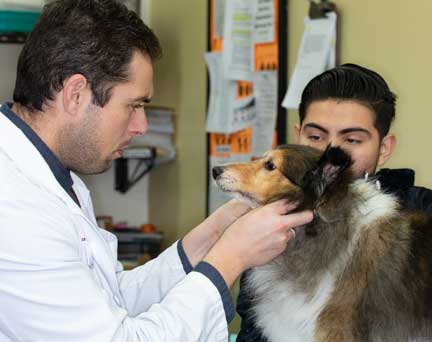
Every dog with an ear problem gets a thorough exam, especially of an organ near the ears like these submandibular lymph nodes being checked.
We have a nice page on teaching you how to examine your pet at home for early warning signs of problems, like ear and lymph node disease. Here is the link- In-Home-Exam.
Cytology to Analyze Discharge
Of all of the diagnostic tests we perform this one is one of the most important.

Ear swabs are used to obtain a sample of discharge for microscopic analysis
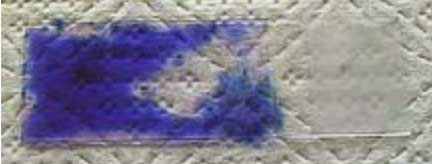
Microscopic analysis of the discharge helps us determine if your pet’s problem is bacterial or fungal related. We take some of the discharge from the ear canal, stain it blue with a special stain, and observe how many bacteria or fungi are noted.
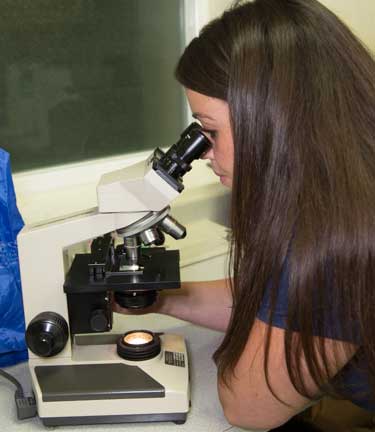
This analysis is performed in our office for an immediate result
Culture and Sensitivity Tests
A culture of the discharge from the ear is sometimes used as an aid to determine what bacteria or fungus is causing the problem. Since many organisms are usually grown in a culture, and some of them are normal inhabitants, this test is not always advantageous.
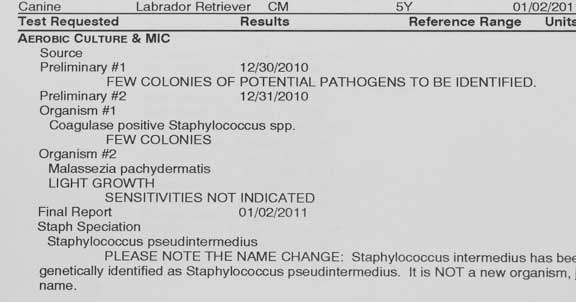
This picture shows a culture that grew out a staph infection and a fungal infection called Malassezia
When a bacteria is grown out in a culture our lab tests various antibiotics at various doses to see which one works best. These are based on blood levels of the antibiotic in some cases, and don’t reflect that higher dose of the antibiotic we get when we put it in the ear canal directly.
Otoscopic exam
The otoscope is an important tool that allows us to visualize the anatomy of the external ear canal, including the ear drum. It is also used to retrieve foreign bodies, usually foxtails, from the ear canal, and to check for tumors, cysts, and a ruptured ear drum (tympanic membrane). Ear infections are painful, and some pets need to be sedated before they let us examine their ears.

There are different sized cones depending on the size of the ear canal. The cone in this picture is one of our smaller ones.
Blood Panel to Check for Systemic Issues
A routine blood panel is performed to check for any systemic infection or underlying organ disease. We are looking for hormone diseases like diabetes and Cushing’s, along with internal organ problems and viral problems like FeLV and FIV.
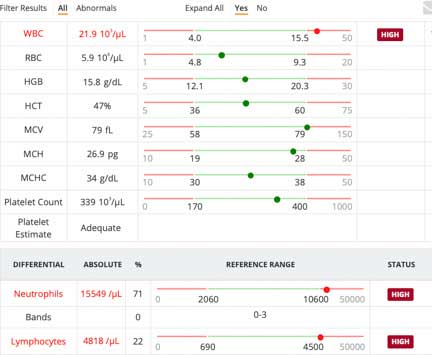
The blood panel is very thorough. This is the CBC, and it shows an elevated WBC count that could be a sign of infection
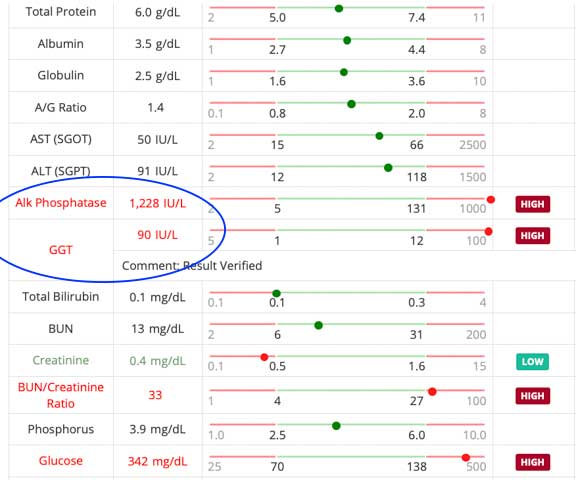
This BCP (Biochem Panel) shows elevated liver enzymes
Checking for proper thyroid level is an important test in every dog that has recurring problems, especially in Golden Retrievers. This is a report from a pet that has a low thyroid level.
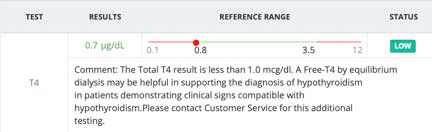
This one is low at 0.7
Allergy Testing if Suspected
In addition to these tests, allergy tests are utilized when they are suspected as the cause of the problem. A blood sample is taken that tests for allergies to food, commonly found material inside of your house, and plant like materials found throughout our area in the outdoors. Your doctor will let you know if this test is needed.
Treatment of Ear Infections
Each ear infection requires specific treatment depending on the results of the physical exam and diagnostic tests
If there are underlying problems your doctor will prescribe medication to prevent them. In the majority of cases medical care is all that is needed. Surgical correction of an ear infection is usually used only after medical care has been unable to control the problem.
If your pet has recurring ear problems we need to control the allergy that is likely causing this. If it is atopy, there are many things we can do to either prevent exposure to the allergen causing the problem. Food allergy is a common cause of recurring ear infection, so a trial of Hill’s Z/D or D/D will be indicated. Our Allergic Dermatitis page has all the details.
Some dogs and cats with infections have hair filled ear canals. This hair prevents normal circulation of hair into the deep vertical tube of the ear to keep it cool and dry. This area is now warm and moist, a perfect incubator for bacteria and fungi. So our first step in treatment is to get that air circulating again by clipping the hair inside the ears.
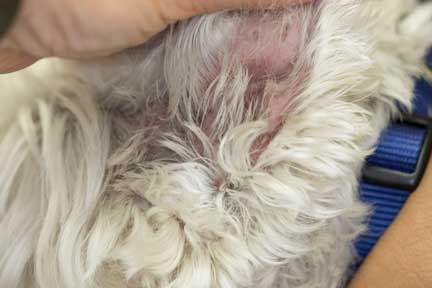
A Westie with a hair-filled ear canal
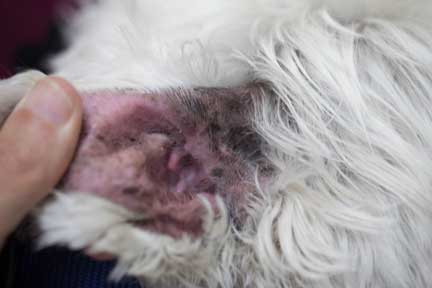
After we clipped the hair
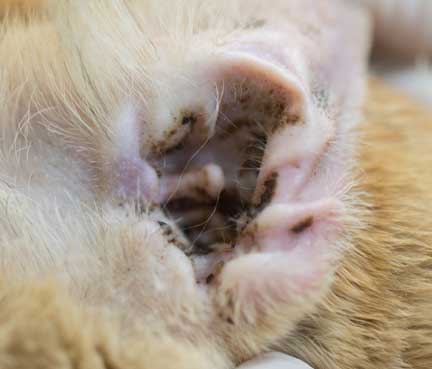
After we clip any necessary hair we gently clean the ears. The discharge in the ear of this cat needs to be cleaned
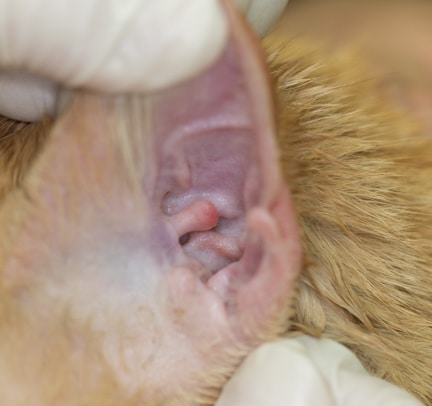
What it looks like after clipping and cleaning. This cat will feel better just from this even before we put in any medication.
For the majority of ear infections proper cleaning and routine topical medication will correct the problem. Learning how to clean your pet’s ears is crucial. Once you have an ear infection under control, which takes 3-7 days in most cases, your goal should be to clean your pet’s ears once or twice each week in order to prevent recurrence. Infections that continually recur are very painful and substantially decrease your pet’s quality of life.
In many mild cases we are able to clean the ears in our office without sedation. After we perform the initial cleaning in our office your job at home will be much easier. You will need to treat them at home to effect a cure and prevent recurrence. We do not want you cleaning the ears at home to often because it is hard for you to get all of the cleaning solution out of the ear and this then dilutes the medication and it will not be as effective.
Our nurses will demonstrate exactly how to do this with your pet. To learn the technique click here.
For pet’s with ears that painful to clean we will anesthetize them and thoroughly, yet gently, flush the debris out and instill medication. This is a huge start in your hygiene protocol at home.
Your doctor will routinely prescribe two medications. The first is used to gently clean the ear canal and remove debris and infection. The second medication is a combination preparation that kills either bacteria, fungi, or parasites. These medications usually contain an anti-inflammatory preparation to soothe the ear also. Occasionally your doctor will prescribe oral medication to clear up the infection and to decrease the inflammation in the ear canal.

Topical medications like this one are routinely used to treat. They have medication to treat bacteria and fungi, and also to decrease inflammation.

This is another topical medication that is used, especially for resistant bacteria
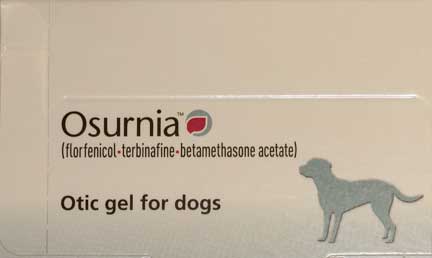
There is even a gel that is placed in the ear canal that lasts up to 45 days for pets that are difficult to medicate
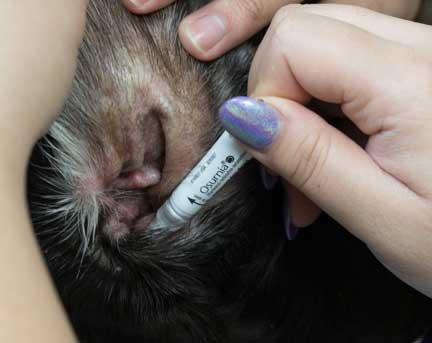
Our nurse will apply the Osurnia
Once we clean the ears we place Osurnia® in the ear using the pre-measured single-dose tube. You do not clean them if our doctor is using Osurnia®. It contains three ingredients that are beneficial to clear up the infection, both bacterial and fungal, and also sooth the ear. That is all you have to do for one week.
In one week we recheck the ear to make sure the infection is getting under control, then we place another tube of medication in the ear. If your pet has no underlying problems as described above the infection is usually cleared up, and you don’t need to clean and medicate the ears daily. The ears are not cleaned again until 45 days have passed.
In some pets the ears are so inflamed that its painful to clean the ears. In these severe cases we use sedation and flushing. A warm cleansing solution is used to remove debris and infection from deep within the ear canal by flushing action only. These ears are painful and we need to go gently so as not to cause more pain and damage to an already severely inflamed ear canal. 
A soft and flexible tube, with a warm cleansing solution, is used.
Ear Surgery
This ear has had recurring infections for so long that it is no longer possible to clean the external ear canal. The canal is swollen shut, infected and very painful. The only adequate remedy in this case is surgical correction to completely remove the ear canal. This surgery is called a total ear canal ablation (TECA). This surgery requires a surgeon with specialized training and expertise. The goal of long term ear care is to never let the disease progress to this point.

The ear canal is swollen shut, and cannot be cleaned. Surgery is the only option, and it works very well. Your dog will feel dramatically better after this procedure, although it will not be able to hear any sounds out of this ear.

Here is another dog with the same problem as it is prepped just prior to surgery for correction of the problem
Complications and Emergency Care
On occasion a pet can be so bothered by an ear infection that is shakes is heads so much that blood vessels in the ear flap (called the pinna) burst. This causes an ear (also called aural) hematoma. This can be painful, and a dog or cat can traumatize the ear and now it is an emergency.
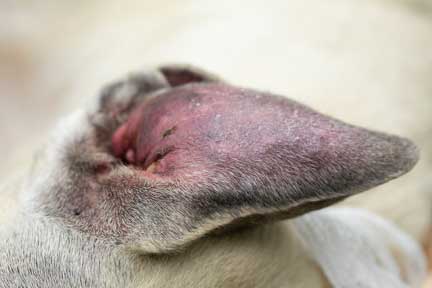
This is painful for animals like dogs and cats that have sensitive ears. Click here to see how we take care of an aural hematoma.
The Long Beach Animal Hospital, staffed with emergency vets, is available until the evenings 7 days per week to help if your pet is having any problems like this painful ear hematoma.
Think of us as your Long Beach Animal Emergency Center to help when you need us for everything from minor problems to major a major emergency. We serve all of Los Angeles and Orange county with our Animal Emergency Center Long Beach, and are easily accessible to most everyone in southern California via Pacific Coast Hwy or the 405 freeway.
If you have an emergency that can be taken care of by us at the Animal Emergency Hospital Long Beach always call us first (562-434-9966) before coming. This way our veterinarians can advise you on what to do at home and so that our staff and doctor can prepare for your arrival. To learn more please read our Emergency Services page.
How to Prevent Ear Infections
Controlling any allergy is of upmost importance.
Some dogs have excessive hair inside of the ear canal. If this hair is causing a problem it is removed to facilitate cleaning and to let air circulate into the ear canal. This should be done routinely, which for most dogs is at least once monthly. If you or your groomer are reluctant to remove this hair, we will do it for you.
Cleaning the ears several times per week with an ear wash with a neutral pH is beneficial once the infection is under control. Dogs with substantial waxy buildup might be given an ear wash that contains a cerumenolytic to break up waxy plugs. One of our doctors will discuss this if they think it is necessary.
FAQ’s
Can ear infections recur in cat?
They can, and this is a common problem due to the previously mentioned reasons, especially the unique anatomy of the ear canal and the problems with allergies.
Can ear infections lead to more serious health issues?
In some cases the ear drum can be ruptured, and the pet has what is called an otitis media or otitis intern. These are more serious consequences and can cause neurologic signs like head tilting, ataxia (incoordination), nystagmus (rotating or oscillating eyes), and walking in circles.
How long does it take for a cat ear infection to heal?
This depends on the underlying problems like allergy and if they get under control. It also depends on your ability to clean and medicate the ears.
Why does my cat keep on getting ear infections?
This is because of those chronic underlying problems like allergies. They are frustrating because just when you think everything is under control there is a flareup.