

Introduction
We will routinely use feeding tubes in tortoises that are not eating well even though some reptiles can go many days without eating. The tube can be used to administer food, water, and medication for an extended period of time. This page will teach you about a Reptile Feeding Tube.
Sometimes they are not eating due to a traumatic injury or internal illness. Other times they might be recovering from surgery, either a bladder stone removal, or a removal of their eggs.
This section will show you how we put a feeding tube into a California Desert Tortoise (CDT). We put feeding tubes in other species besides reptiles. Click here to see how we put a feeding tube in a cat.
You can learn more about our standard of care of sick reptiles from the Association of Reptile and Amphibian Veterinarians.
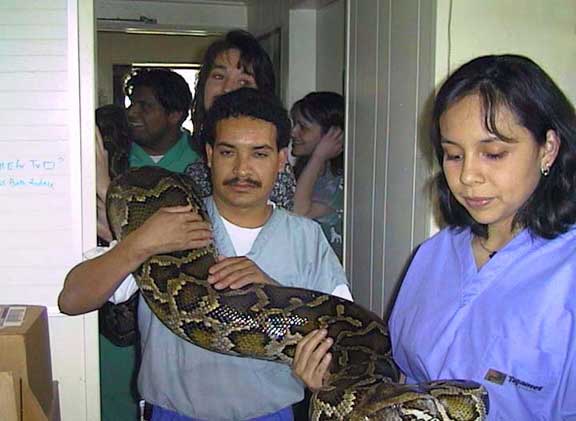
Thankfully snakes as big as the 120 pound python do not routinely need feeding tubes!
Tube Placement
This is what it looks like inside of the mouth of a CDT. They have a fleshy tongue and horny plates for teeth. Once it is in place the feeding tube will be bypassing this oral cavity and food that is administered through the tube will go directly into the esophagus.
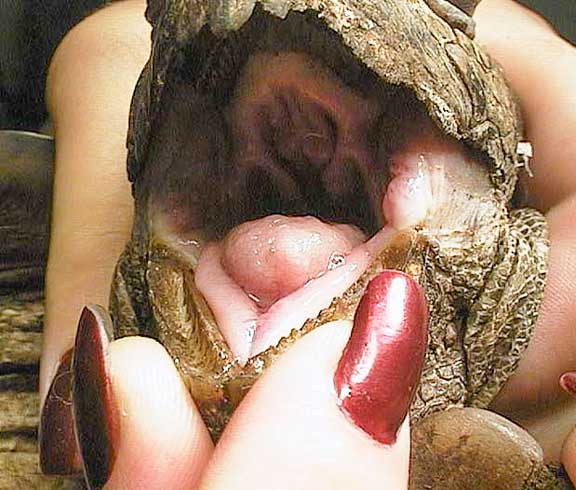
Tortoises do bite, so don’t try this at home. In addition, you can injure the tortoise by trying to pry its mouth open.
In reptiles the esophagus is found towards the right side of the neck. This is also true in birds, and the opposite of mammals. In this picture the tortoise is on its back and its head is towards the left.
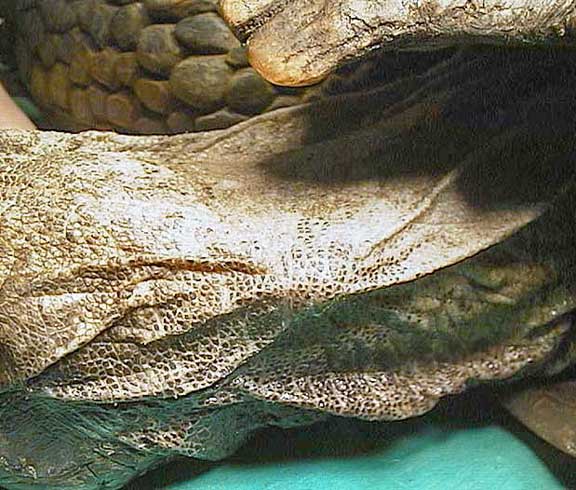
A hemostat has been passed through its oral cavity into the esophagus at the point where the feeding tube will be inserted. Do you see the hemostat as it bulges just under the skin in the center of the photo?
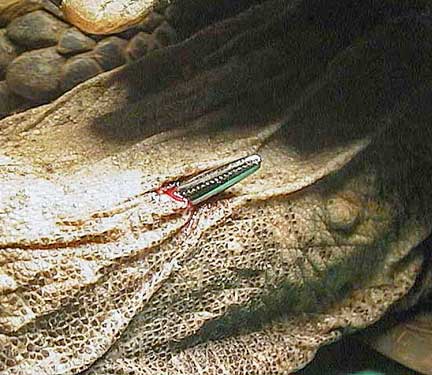
A nick is made in the skin with a scalpel blade right over the bulge. This allows the hemostat to gently advance through the wall of the esophagus and the skin to the outside.
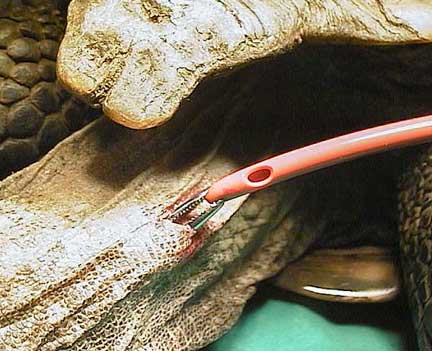
The hemostat is used to grab the tip of the feeding tube. The hemostat and feeding tube will be pulled back out through the oral cavity. It is not possible to just pass the tube down into the esophagus at this point in the procedure, it must first come out through the mouth and then be passed down into the esophagus.
This view shows several things. Under the tip of the orange feeding tube you can see the breathing tube we use to administer anesthesia.
You can also see the orange feeding tube passing into the esophagus in the upper right part of the picture and out through the mouth. We have taken off the hemostat that was used to pull it through so you can have better visualization.
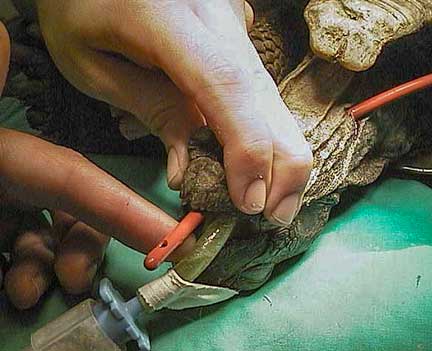
We will replace the hemostat on the tip of the tube and gently slide the tip of the tube backwards down the esophagus, past the original incision we made in the esophagus.

This close-up shows the feeding tube properly in place, having been passed down the esophagus to a previously measured point. This technique of pulling the feeding tube from the esophagus, out through the mouth, and then back down the esophagus, is called retrograde placement.
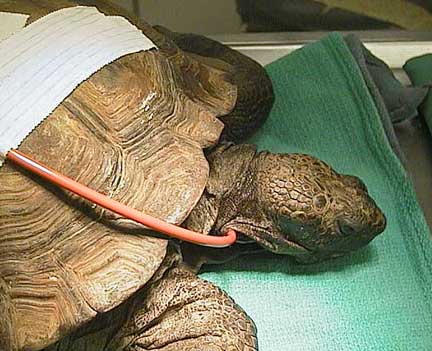
You can see how the tube comes out of the right side of the neck

The tube is sutured at its insertion point into the esophagus and the remainder of the tube is taped to the top of the shell.

This x-ray of the tortoise on its back shows how the tub looks like on the inside. The arrow on the left actually shows the part of the tube that is taped to the top of the shell. The arrow towards the right shows the tube in the esophagus.
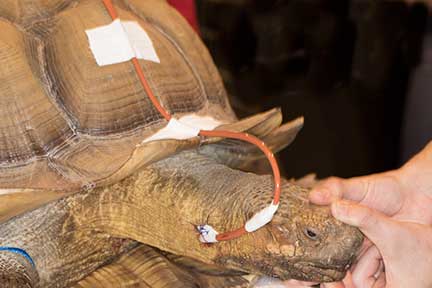
Now that your are an expert at feeding tubes you can assist us when we need to put one in a 100 pound sulcata tortoise!
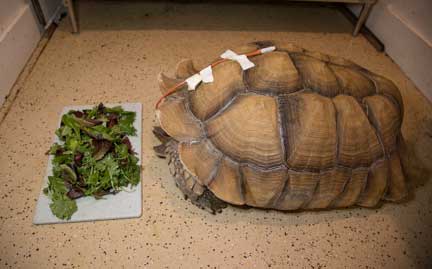
This gives you a better idea of his size. Even though he has a feeding tube we always give him an opportunity to eat.
We also put feeding tubes in mammals, especially cats.