

Introduction
Chihuahuas are lively pets filled with personality. They are predisposed to certain diseases though, so careful observation of your pets daily routine is important. Any significant change in this routine is cause for an examination.
Our web site in the Diseases Section has detailed information on many of the diseases they are prone to.
Common Chihuahua Health Concerns
Hydrocephalus (Greek for “water on the brain”)
Chihuahuas can develop a problem called hydrocephalus (water on the brain). In this problem cerebrospinal fluid (CSF) leaks inside of the skull and causes the brain to swell due to the pressure.
This is a birth defect related to the dome shaped skull of this breed. Oftentimes symptoms do not appear until later in life. This problem can also be acquired due to trauma and tumors of the brain.
If your pet ever shows signs of disorientation, circling, head tilting, behavior changes, falling to one side, incoordination, or depression, it should be examined to help determine if this problem exists.
CT scans and MRI’s are used in the diagnosis, and an examination by a veterinary neurologist is important.
In some cases a surgical procedure using a shunt to decrease the pressure is applicable. There are potential risks and complications to this procedure.
Eye Problems
They are particularly prone to eye problems due to their flattened faces and protruding eyes and globoid skull. This makes them susceptible to eye trauma, especially corneal ulcers.
Any sign of squinting, redness to the eye, ocular discharge, or cloudiness, warrants an exam.
Glaucoma, cataracts, and ulcers of the eye are not unusual.

This eye is inflamed with a cloudy cornea is caused by glaucoma
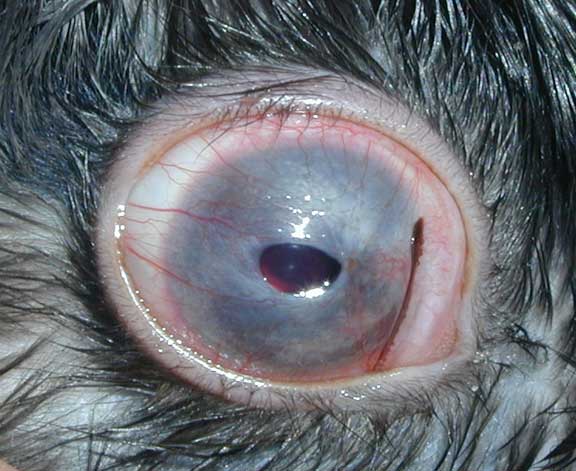
This is a severe (and painful) canine corneal ulcer
The shape of their face and eyes predisposes them to eye trouble. Any time you see your pet pawing at its eyes, have redness or discharge to one of the eyes, or is squinting, its needs help to determine if the problem is serious.
Dental Disease
Boston’s are particularly prone to dental disease. It is important to learn how to brush your pet’s teeth while it is a pup so that you are successful at it when the problem starts to arise later. We have a special kit for this purpose, please have one of our nurses show you the proper technique.

If you start early in life it becomes a fun game to play
We also have a food called t/d (it stands for tartar diet) that is a big help if you cannot brush its teeth. Our Nutrition Page has more information.
Wellness Exams
As your pet gets older yearly exams are needed to identify the accumulation of tartar and treat it before it progresses to more serious complications and we have to remove rotten teeth under anesthesia. As tartar accumulates on the teeth we will perform non-anesthetic dentals (this is not a replacement for brushing) every 6 months and hopefully never have to remove rotten teeth under anesthesia.
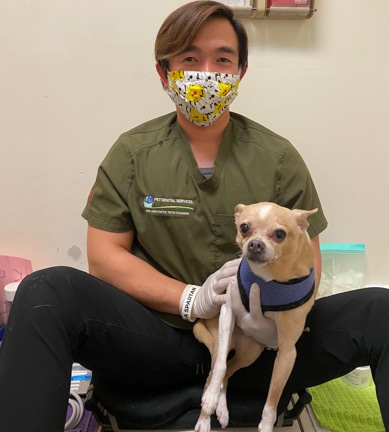
This dog just had its teeth cleaned with Non Anesthetic Dental
Knee Joint Problems- Patellar luxation
Chihuahua’s are prone to an orthopedic problem where the knee cap is loose and does not guide in the patellar groove properly. Any time it is limping significantly, especially on one of its back legs, or if it kicks its leg out when it runs, we need to check for this problem.It is cured surgically.
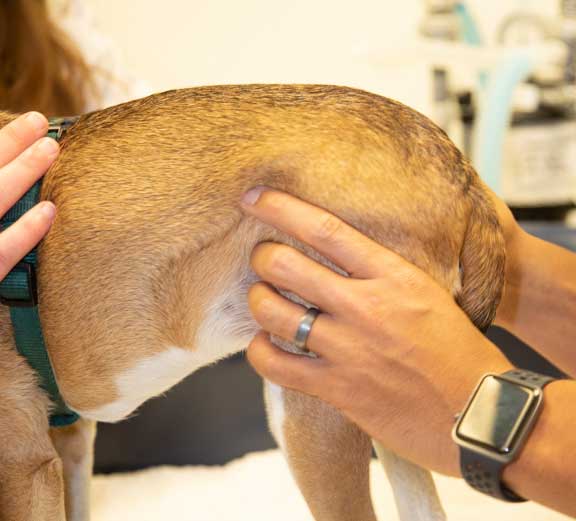
A knee exam confirms the diagnosis, and lets us know if the patellar laxation is medial or lateral

Those two white and round structures at the bottom of this radiograph are in the normal position
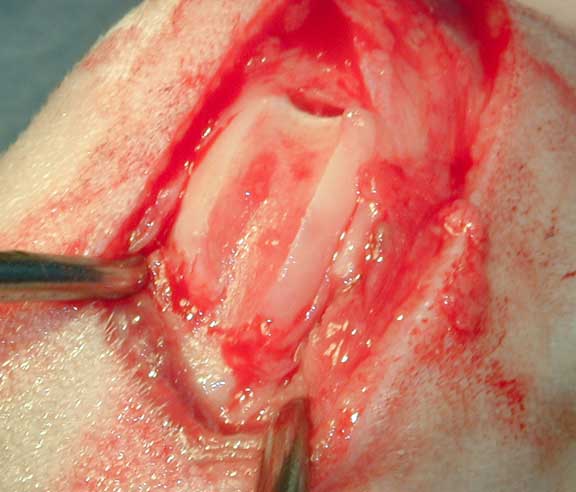
Surgery consists of deepening the patellar groove to correct the problem

If not corrected this can lead to painful arthritis
Dental Disease
Chihuahuas are particularly prone to dental disease. It is important to learn how to brush your pet’s teeth while it is a pup so that you are successful at it when the problem starts to arise later. We have a special kit for this purpose, please have one of our nurses show you the proper technique. We also have a food called t/d (it stands for tartar diet) that is a big help if you cannot brush its teeth.
As your pet gets older yearly exams are needed to identify the accumulation of tartar and treat it before it progresses to more serious complications and we have to remove rotten teeth under anesthesia. As tartar accumulates on the teeth we will perform non-anesthetic dentals (this is not a replacement for brushing) every 6 months and hopefully never have to remove rotten teeth under anesthesia.
Heart Disease
Heart disease can also occur as your Chihuahua ages. We will check for heart murmurs with our stethoscope during your yearly examine to diagnose this problem and treat it before the onset of congestive heart failure. Always be diligent for signs of coughing, lethargy, weight loss, and exercise intolerance as an indication of this problem.
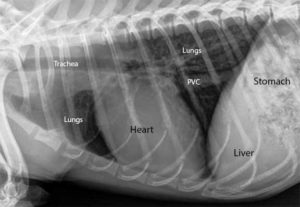
This radiograph gives you a feel of the anatomy of the chest where the heart resides