

Introduction
Labrador Retrievers are one of the most popular breeds we care for at our hospital. They are predisposed to certain diseases though, so careful observation of your pets daily routine is important. Any significant change in this routine is cause for an examination.
One of the best ways to catch these potential problems early, when more can be done to remedy them, is a yearly Wellness Exam.
Our web site in the Diseases Section has detailed information on many of the diseases they are prone to. It behooves you to read them to understand the early warning signs of these diseases. This page has specific links to the diseases that can occur in Labrador Retrievers.
Common Labrador Retriever Health Concerns
Hip Dysplasia
Labs are susceptible to hip dysplasia, a disease characterized by malformation in the hip socket, which eventually causes arthritis. The symptoms of this disease can vary, from a pet that is just not as active as it should be, to a dog that can barely get up after laying down.
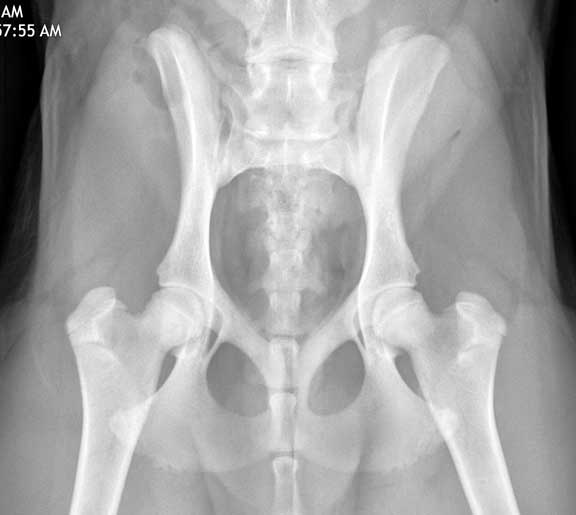
These hips are normal
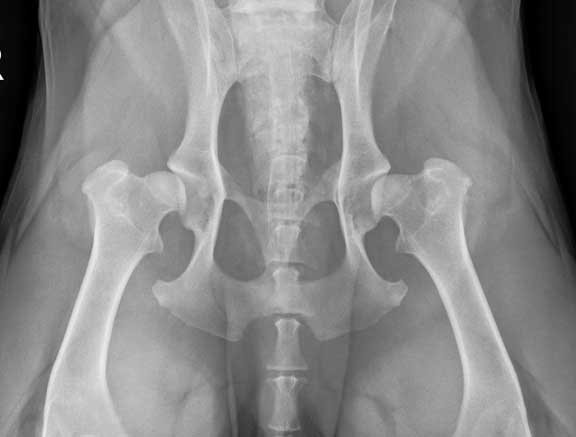
These hips are dysplastic
Our hip dysplasia page has a detailed analysis of this problem that you should learn about if you are contemplating adding a golden to your family.
This breed also gets joint problems in other bones, particularly to the elbow joint and shoulder joint. Problems here are usually manifested by limping in the front legs. A physical exam and x-rays will help make the diagnosis.
Skin Conditions
This breed is prone to many skin problems, particularly allergies and hot spots. The usual symptoms are excessive scratching, flaky or bumpy skin, an odor to the haircoat, and hairloss. Run your hands over its haircoat daily because they can even get a malignant skin cancer called a mast cell tumor. These can appear as minor bumps or areas of inflammation, yet they can be highly malignant.
They also get skin conditions, especially allergies. Some of the skin conditions are caused by hormone problems, particularly a low thyroid disease called hypothyroidism. Seasonal Flank Alopecia can also be seen, along with Cushing’s Disease.
Cancer
Labs are predisposed to a number of benign and malignant (cancerous) tumors that can affect many different body organs, subsequently showing different symptoms.
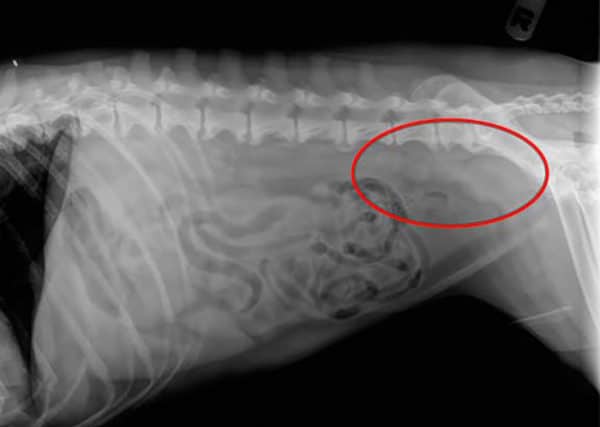
The large red circle is over the whitish and circular areas. These are the sub lumbar lymph nodeson a dog with malignant cancer of its large intestine.

This slightly inflamed area on the skin is a malignant cancer called a Mast Cell Tumor (MCT)
Spleen Tumors
They are also susceptible to a cancer called hemangiosarcoma. This is a malignant cancer of the spleen.
Testicular Cancer
Neutering your Labrador Retriever will go along way to preventing reproductive system tumors. We do all of our neuters by laser, so please visit our web site to learn more about this technique. The laser dramatically reduces post operative pain, swelling, and inflammation.
Bloat (gastic dilatation volvulus)
Deep-chested breeds like Labrador Retrievers are predisposed to a condition called gastric dilatation, or bloat. If signs of labored breathing, excessive salivation, or distended abdomen occur, your pet might be experiencing this potentially life-threatening condition, and requires immediate veterinary attention.
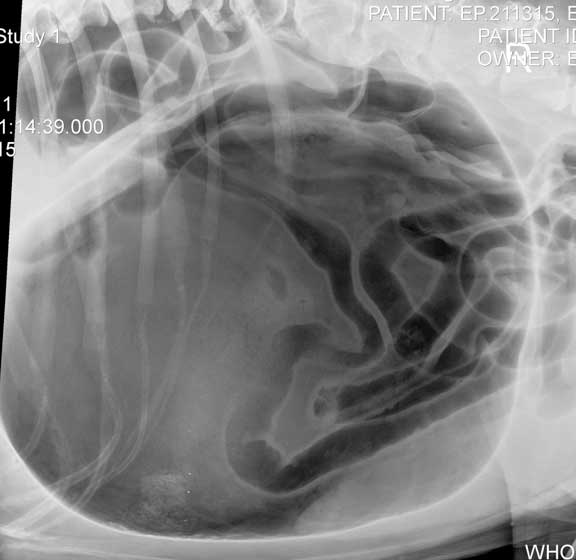
This is the radiograph of the stomach of a dog with bloat. It is twisted on itself, so it also has volvulus.
Eye Problems- Cataracts
Hereditary cataracts are a common eye problem in the Labrador Retriever. The problem can occur at an early age in affected Labs, and while cataracts may or may not interfere with the dog’s vision, some do progress into severe or total loss of vision.

This dog has a cataract, along with an eyelid tumor called a meibomian gland tumor
Progressive Retinal Atrophy
Labradors are also at risk for several eye problems including PRA (Progressive Retinal Atrophy), cataracts, and retinal dysplasia. All of these eye problems manifest themselves by a loss of vision. If we suspect one of these problems we will refer you to our ophthalmologist.
Hereditary cataracts can also occur. The problem can occur at an early age, and while cataracts may or may not interfere with the dog’s vision, some do progress into severe or total loss of vision.
Inherited Deficiency in Clotting Factors of the Blood
Labs can also have an inherited deficiency in one of the clotting factors of the blood. Dogs affected with this disease may have symptoms varying from very mild to severe bleeding. If your pet bruises easily or bleeds excessively, this disease is a possibility.
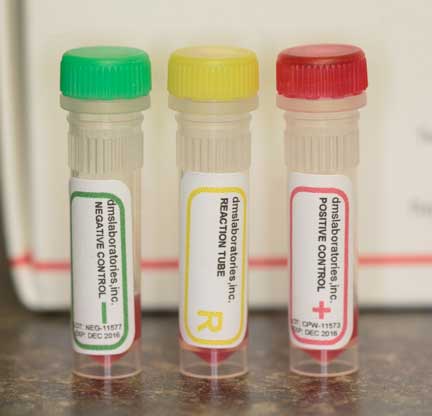
These dogs need a blood transfusion
Hypothyroidism
Hypothyroidism, a metabolic disease characterized by inadequate thyroid hormone circulating in the bloodstream, is common in the breed. Symptoms include obesity, lethargy, and/or coat problems. Affected animals may also have various reproductive problems, including irregular or absent estrus (heat cycle), and lack of fertility.
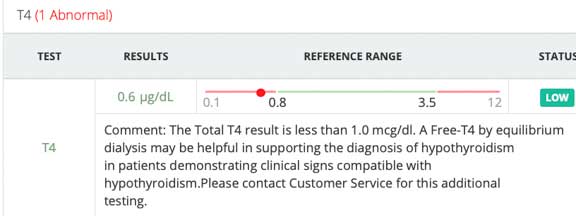
This result at 0.6 is low. The normal range is 0.8 to 3.5
Cushing’s Disease
Two other hormone disease that can occur include Cushing’s disease and Diabetes Mellitus (sugar diabetes). Symptoms here vary, but commonly represent as excessive thirst and urination.
In Cushing’s Disease the adrenal glands produce an excess of cortisone (cortisol). This causes a vast array of problems that you can learn about on our Cushing’s (Hyperadrenocorticism) Page.
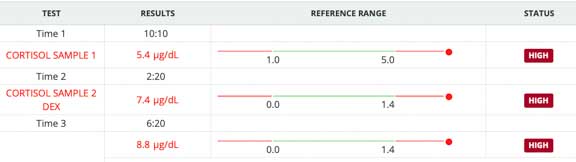
One of the tests to confirm Cushing’s is called the LDDS (Low Dose Dexamethasone Suppression Test)
Diabetes Mellitus (Sugar Diabetes)
Even though this disease is more prevalent in cats, Labradors can acquire this problem. It is so important and complicated that we have a page dedicated to Diabetes Mellitus.
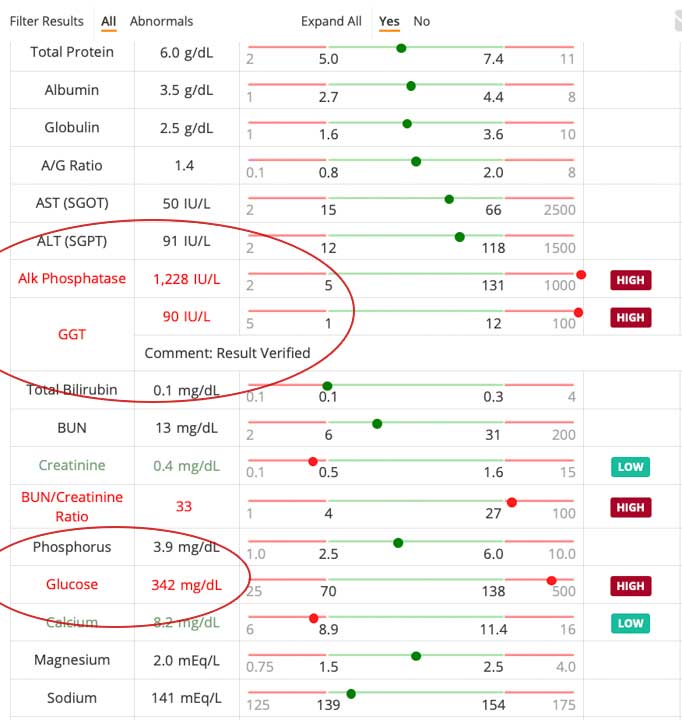
The elevated blood glucose is circled in red towards the bottom. The other two red circles show how the diabetes mellitus is affecting the liver.
Insulinoma
Another hormone problem is called Insulinoma. Lab’s with this problem have a low blood sugar due to excess insulin. They might appear weak, in-coordinated, behave strangely, can collapse, and even have seizures.
Myasthenia Gravis
If your Labrador is underweight and regurgitates its food it might have an esophagus problem secondary to myasthenia gravis.
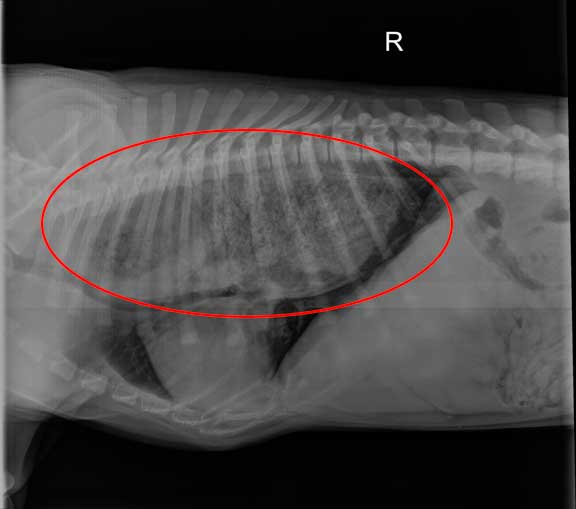
This side view of the chest shows an esophagus filled with food. This is abnormal, and an indication that Myasthenia Graves might be involved.
Kidney Disease
Labrador’s can get a kidney disease at an early age that can lead to kidney failure. Any symptom of excess drinking or urinating, weight loss, lethargy, or poor appetite is cause for an immediate exam and blood panel.
Ear Problems
They are also prone to ear trouble, which can be very painful without your realization. Any sign of head shaking, pawing at the ears, inflamed ears or odor requires veterinary attention. Daily checking for odors or discharge, and proper cleaning when needed, will help prevent this problem.
Heart Disease
Heart disease can also occur as your Lab ages. Look for symptoms of lethargy, exercise intolerance, coughing, and poor appetite as a clue.
We will check for heart murmurs with our stethoscope during your yearly examine to diagnose this problem and treat it before the onset of congestive heart failure.
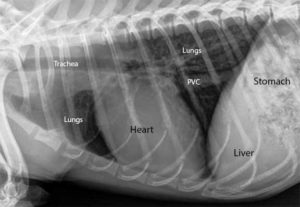
This radiograph gives you a feel of the anatomy of the chest where the heart resides
Liver Disease
If your young lab seems lethargic, disoriented, or just not with it, especially after eating, it might have a liver disease called a portosystemic shunt.
Lymph Node Disease
Unfortunately, the also can get a malignant cancer of the lymph nodes called lymphosarcoma. Please refer to our Learning Center to learn how to perform a lymph node exam. One of our doctors will help you find them.
Ruptured Cranial Cruciate Ligament
Active labs that run and jump vigorously are prone to tearing a ligament in their knee call the cranial cruciate ligament. This occurs where there is a twisting or tweaking motion. Symptoms range from a subtle lameness to complete limping.