

Shar Pei Medical Problems
Introduction
Shar Peis are known for their unusual and distinctive skin wrinkles. In 1978 the Chinese Shar Pei was one of the rarest dog breeds in the world, and this means that every Shar Pei alive today comes from a small number of breeding individuals, so inbreeding had to take place in order to increase their population. This has caused a high incidence of inherited diseases.
Shar Pei are high maintenance dogs and need constant monitoring for problems. Keeping their weight down, and having their teeth cleaned every 6 months with our non-anesthetic dental, along with constant monitoring for problems, is the best way for them to achieve their full lifespan.
When purchasing a Shar Pei chose one that has been genetically screened by the OFA (Orthopedic Foundation for Animals; www.offa.org) to help minimize the numerous genetic conditions of this breed.
Before you purchase one you need to be familiar with the significant and chronic diseases you will be dealing with for the life of your pet.Shar Pei’s are predisposed to certain diseases, so careful observation of your pets daily routine is important.
All of these possible problems emphasize the need for yearly exams and routine diagnostic tests to catch problems early. Many of the diseases of this breed are found in the Diseases section of our web site.
Any significant change in this routine is cause for an examination. Our web site in the Diseases Section has detailed information on many of the diseases they are prone to.
Health Issues in Shar Pei’s
Breathing Conditions (brachycephalic syndrome)
The shape of their face and folds of their skin predisposes them to breathing conditions. This is called the brachycephalic airway syndrome, and even though Shar Pei’s are not the classic brachycephalic dog, they do exhibit many of the symptoms. This makes them noisy breathers that snore quite a bit. If they are overweight these problems are exacerbated.
Symptoms of coughing, wheezing, or difficult breathing warrant an exam due to these breathing problems.
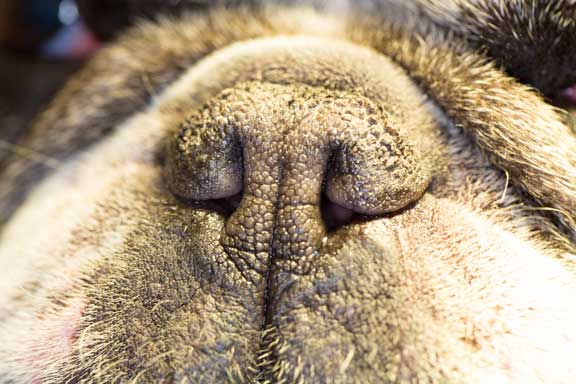
Their nostrils are occluded (called stenotic nares) in the brachycephalic syndrome
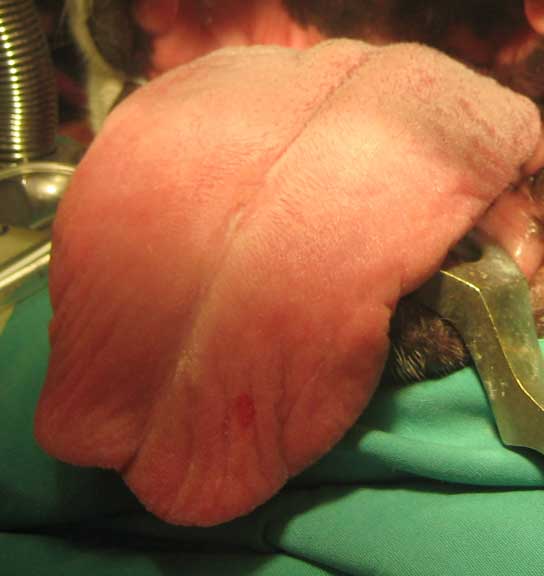
They might also have a thickened and very long tongue further making it difficult for air to get into the lungs.
In addition to these problems they sometimes have a small oropharynx and a small windpipe (trachea) in relation to their body size.
Since they are active dogs they can get heatstroke easily, so always exercise during the cool part of the day and supply plenty of fresh water and a cool environment when not exercising.
Autoimmune Disease
This is sometimes called Shar Pei AutoInflammatory Disease (SPAID)
Familial Shar Pei Fever is a serious and common inherited disease causing chronic fevers, swollen hocks and debilitation. There is no test for Shar Pei Fever, but some dogs may respond to treatment if instituted early enough.
Share Pei fever can also lead to Amyloidosis, an enzyme deficiency results in abnormal accumulations of amyloid proteins, causing liver or kidney failure.
Eye Diseases
Entropion- The eyelid rolls into the eye and the eyelashes irritate the cornea.
Glaucoma- Increased pressure in the eyeball that is painful and can lead to blindness.
Lens luxation- Trauma and abnormal pressure in the eye can cause the lens to prolapse from its normal location.
Prolpase of the nictitating membrane- Cherry Eye. This is inflammation of a gland in this organ.

This is Cherry Eye
Any sign of squinting, redness to the eye, ocular discharge, or cloudiness, warrants an exam.
Glaucoma, cataracts, retinal problems and ulcers of the eye are not unusual.

This eye is inflamed with a cloudy cornea is caused by glaucoma
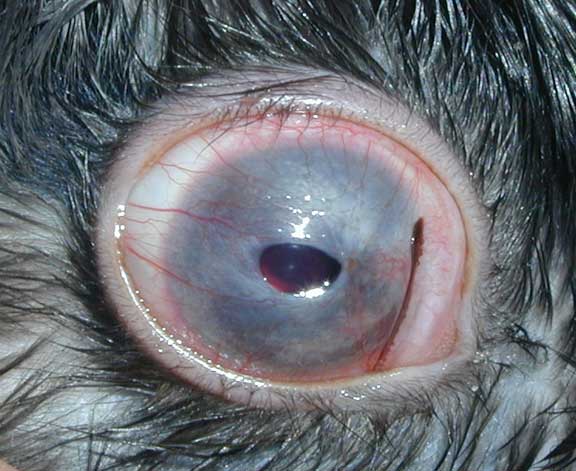
This is a severe (and painful) canine corneal ulcer
Skin Conditions
Skin problems are very common in Shar Peis, including allergies and skin and ear infections. They can become chronic in nature leading to debilitating conditions and unnecessary suffering. Any skin problem needs immediate diagnosis and usually long term treatment to prevent it from progressing.
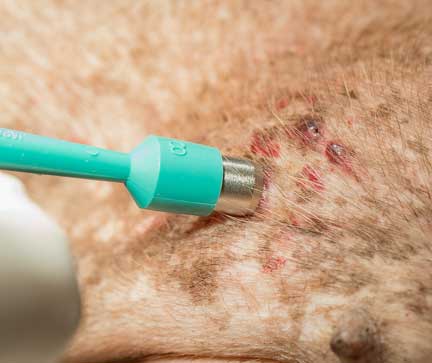
Shar Pei’s are highly prone to skin conditions, and sometimes we need to perform a biopsy for an accurate diagnosis
Shar Pei’s are prone to skin conditions, particularly mange and allergies. (atopic dermatitis) These diseases manifest themselves as hair loss or excessive licking or scratching. In addition to mange and allergies, they also get a skin tumor called a mast cell tumor. All skin lumps that persist should be checked to determine if this condition exists.

This is what a mast cell tumor of the skin looks like
Other skin diseases they can get include:
Acute febrile neutrophilic vasculitis
Cutaneous mucinosis
Juvenile demodicosis

This is a severe case of Demodex
Dental Disease
They are particularly prone to dental disease. It is important to learn how to brush your pet’s teeth while it is a pup so that you are successful at it when the problem starts to arise later. We have a special kit for this purpose, please have one of our nurses show you the proper technique.

If you start early in life it becomes a fun game to play
We also have a food called t/d (it stands for tartar diet) that is a big help if you cannot brush its teeth. Our Nutrition Page has more information.
Wellness Exams
As your pet gets older yearly exams are needed to identify the accumulation of tartar and treat it before it progresses to more serious complications and we have to remove rotten teeth under anesthesia. As tartar first starts to accumulate on the teeth we will perform non-anesthetic dentals (this is not a replacement for brushing) every 6 months and hopefully never have to remove rotten teeth under anesthesia.
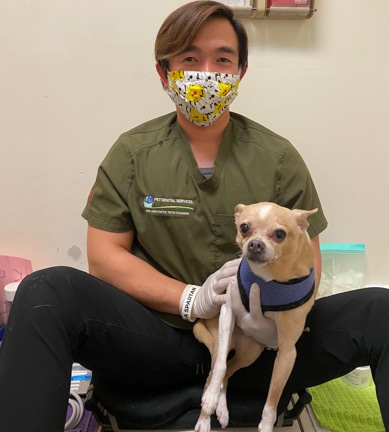
This dog just had its teeth cleaned with Non Anesthetic Dental
Heart Disease
Heart disease can also occur as your Boston ages. We will check for heart murmurs with our stethoscope during your yearly examine to diagnose this problem and treat it before the onset of congestive heart failure.
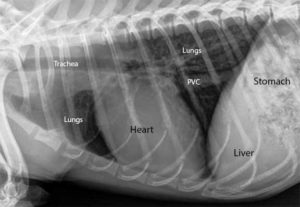
This radiograph gives you a feel of the anatomy of the chest where the heart resides
Hormone Diseases-
Hypothyroidism
A low thyroid level, called hypothyroidism, can cause many problems in various systems in the Shar Pei body. Lethargy and obesity are some of the more common symptoms. The link to your hypothyroidism page has much more information.
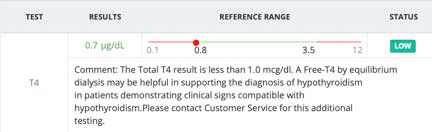
One of the ways we diagnose hypothyroidism is with a blood panel. This T4 level, at 0.7 micrograms per deciliter, is low, and supports the diagnosis
Musculoskeletal Diseases
Elbow Dysplasia
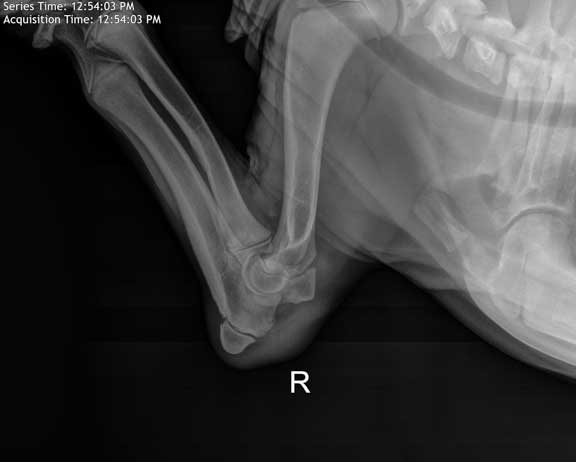
The elbow of young dog showing where elbow dysplasia occurs and where it is diagnosed
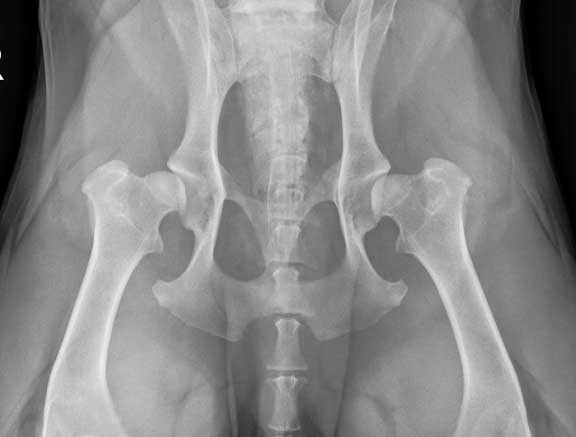
This is a bad case of hip dysplasia on both sides
Patellar luxation
Shar Pei’s are prone to an orthopedic problem where the knee cap is loose and does not guide in the patellar groove properly. The symptoms of this are occasional lameness where you dog kicks its leg out on occasion. It is cured surgically. If not corrected this can lead to painful arthritis.
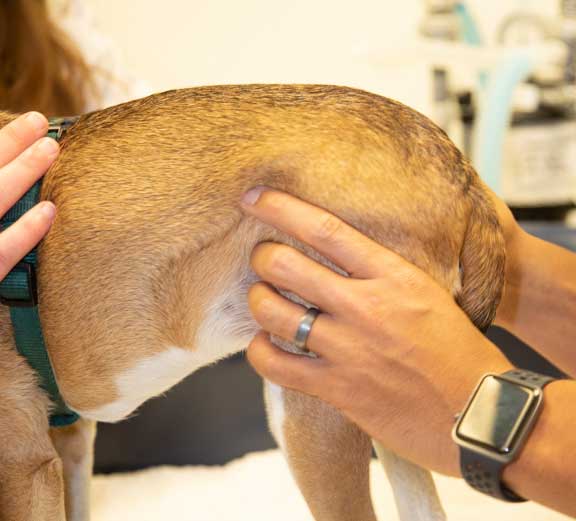
A knee exam confirms the diagnosis, and lets us know if the patellar laxation is medial or lateral

Those two white and round structures at the bottom of this radiograph are in the normal position
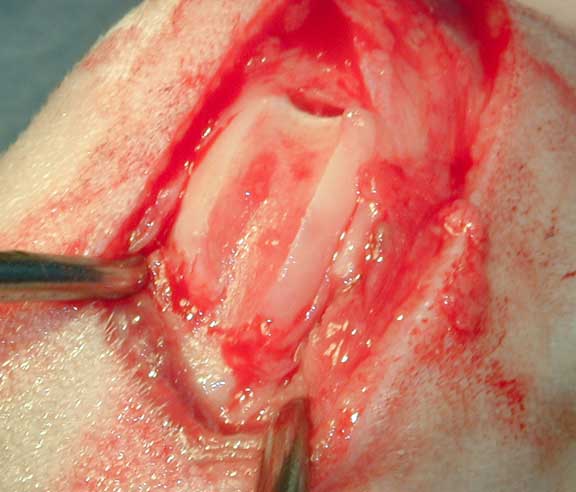
Surgery consists of deepening the patellar groove to correct the problem

The arrow points to painful arthritis along the knee
Back to Breed Diseases page.