

Shih Tzu Medical Problems
Introduction
Shih Tzus are wonderful pets due to their friendly personality. Their name comes from the Chinese word for “lion dog”, because the breed resembled the lion as depicted in traditional oriental art. They have silky long hair and typically weigh between 11 and 15 pounds.Shih Tzu are to some degree hypoallergenic, in comparison to other breeds. They do not shed to the same degree, only losing small amounts of hair when bathed or brushed. Remember that it is the dog’s dander and saliva that trigger most allergic reactions in people.
Always keep the hair out of their eyes., and since they have long and luxurious hair coats that can get out of control, many people keep their hair clipped short. They are much more comfortable this way and less prone to skin conditions.
Shih Tzus are predisposed to certain diseases though, so careful observation of your pets daily routine is important. Any significant change in this routine is cause for a veterinary examination. Any significant change in this routine is cause for an examination. Our web site in the Diseases Section has detailed information on many of the diseases they are prone to.
All of these possible problems emphasize the need for yearly exams and routine diagnostic tests to catch problems early.
Before you purchase one you need to be familiar with the significant and chronic diseases you will be dealing with for the life of your pet, and that you will learn about in this page.
Health Issues in Shih Tzu’s
Bladder Stones
Shih Tzus are genetically predisposed to many different types of bladder stones; calcium oxalate, urate, struvite calcium phosphate, and silica crystals. These problems are diagnosed with radiographs, ultrasounds, and fresh urine samples. Our bladder stone page has all the details, including diagnosis, treatment, and surgery to remove them.

This dog has many bladder stones in its urinary bladder
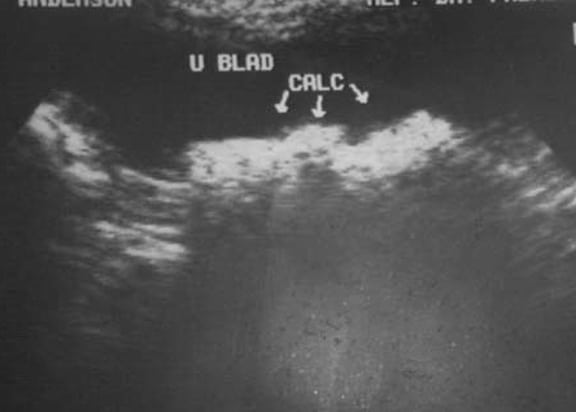
Ultrasound of bladder stones:
U BLAD- lumen of the urinary bladder
calc- bladder stones (calculi)
Kidney Disease- Renal Dysplasia or Glomerulonephritis
Shih Tzus can develop kidney disease (renal dypsplasia) early on in life, which verifies the importance of routine exams on a yearly basis. The initial symptoms of this disease are subtle, consisting only of a mild increase in thirst and urination. Due to this subtle nature, it is a good idea to quantify how much water you put in your pets bowl everyday. This problem is diagnosed with a blood sample, a urinalysis, radiographs, and especially, ultrasound.
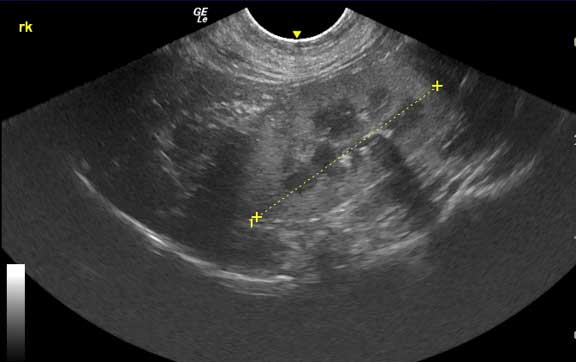
The diagonal line in this ultrasound demarcate the renal pelvis, and is checking for renal dysplasia
The kidneys are such an important organ that we have dedicated a complete and comprehensive page to them. Click here to learn more.
Breathing Conditions (brachycephalic syndrome)
Shih Tzus can have breathing problems related to the shape of their nasal passage ways and face. This is called the brachycephalic airway syndrome, This makes them noisy breathers that snore quite a bit. If they are overweight these problems are exacerbated. Symptoms of coughing, wheezing, or difficult breathing warrant an exam due to these breathing problems.
They may have a “goose type honk” when they become excited. Certain surgeries can be performed if you pet has a serious problem caused by snorting, snoring or passing out. As Shih Tzu’s age they can also have a collapsing trachea. The cartilage rings of the trachea become weakened and flat.
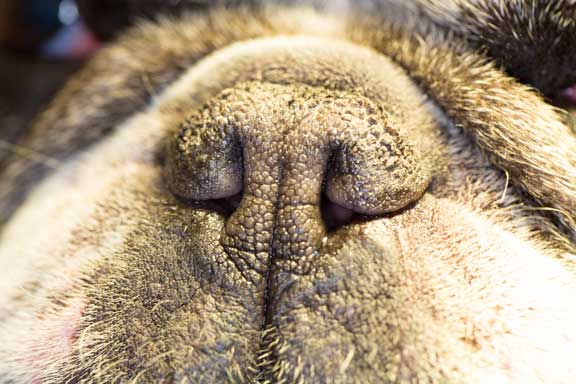
Their nostrils are occluded (called stenotic nares) in the brachycephalic syndrome
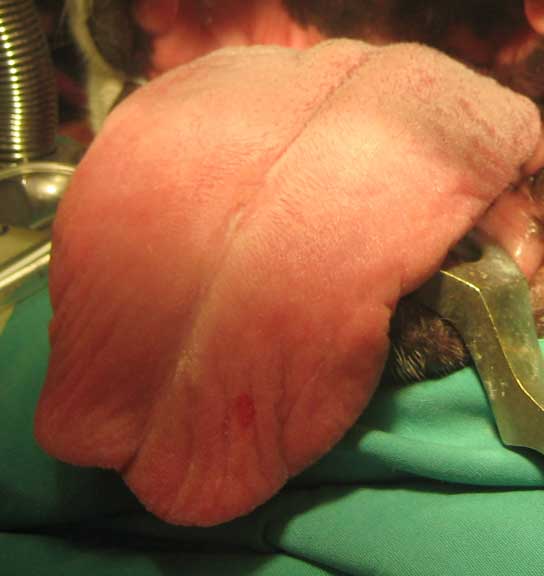
They might also have a thickened and very long tongue further making it difficult for air to get into the lungs.
In addition to these problems they sometimes have a small oropharynx and a small windpipe (trachea) in relation to their body size.
Since they are active dogs they can get heatstroke easily, so always exercise during the cool part of the day and supply plenty of fresh water and a cool environment when not exercising.
Back (Spine) Disease
They are prone to a problem with spinal disks, called Intervertebral Disk Disease (IVD). This is a painful disease that can also cause paralysis of the rear legs. Please read our page on IVD to learn more about how we diagnose and treat this problem, and how you can prevent it.
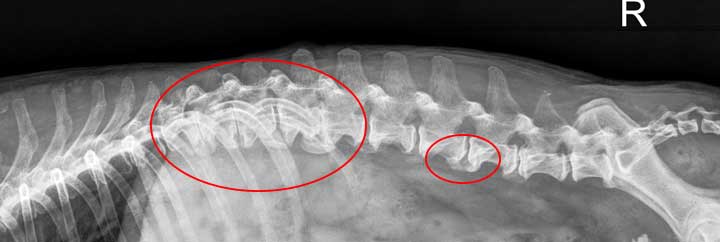
Each of the circled vertebral disks have problems
Eye Diseases
Entropion- The eyelid rolls into the eye and the eyelashes irritate the cornea.
Glaucoma- Increased pressure in the eyeball that is painful and can lead to blindness.
Lens luxation- Trauma and abnormal pressure in the eye can cause the lens to prolapse from its normal location.
Dry Eye- keratitis sicca. This is disease where not enough tears are produced, and is diagnosed with a Schirmer Tear Test.
Prolpase of the nictitating membrane- Cherry Eye. This is inflammation of a gland in this organ.

This is Cherry Eye
Any sign of squinting, redness to the eye, ocular discharge, or cloudiness, warrants an exam.
Glaucoma, cataracts, retinal problems and ulcers of the eye are not unusual.

This eye is inflamed with a cloudy cornea is caused by glaucoma
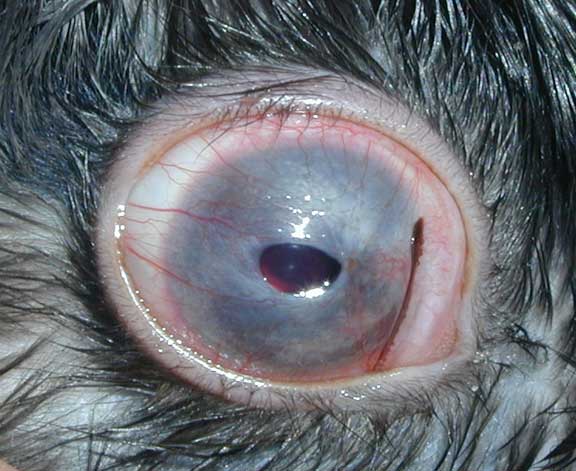
This is a severe (and painful) canine corneal ulcer
Skin Conditions
Shih Tzu’s are prone to skin conditions, particularly mange and allergies. (atopic dermatitis) and demoedectic mange. These diseases manifest themselves as hair loss or excessive licking or scratching. They can become chronic in nature leading to debilitating conditions and unnecessary suffering. Any skin problem needs immediate diagnosis and usually long term treatment to prevent it from progressing
They also commonly get ear infections. So plucking the hair in the ear canals, along with cleaning and inspecting the ears on a regular basis will help prevent this painful problem.
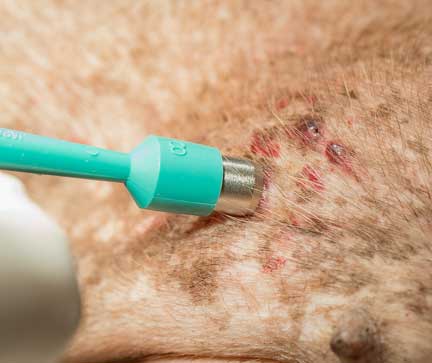
Sometimes we need to perform a biopsy for an accurate diagnosis
In addition to mange and allergies, they also get a skin tumor called a mast cell tumor. All skin lumps that persist should be checked to determine if this condition exists.

This is what a mast cell tumor of the skin looks like

This is a severe case of demodectic mange
Dental Disease
They are particularly prone to dental disease. It is important to learn how to brush your pet’s teeth while it is a pup so that you are successful at it when the problem starts to arise later. We have a special kit for this purpose, please have one of our nurses show you the proper technique.

If you start early in life it becomes a fun game to play
We also have a food called t/d (it stands for tartar diet) that is a big help if you cannot brush its teeth. Our Nutrition Page has more information.
Stomach Disease
Male Shih Tzus are commonly affected by a disease of the stomach musculature called antral pyloric hypertrophy. The result of this malady is a reduction of outflow and resultant back-up of ingesta in the stomach. Abdominal pain and vomiting are typical signs if this problem is present. X-rays and ultrasound are used in the diagnosis.
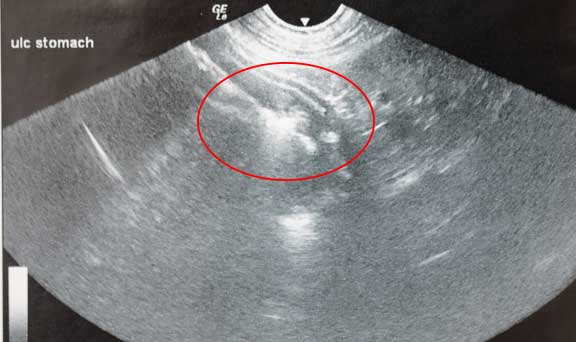
This is an ultrasound of the stomach, in this case showing an ulcer
Wellness Exams
As your pet gets older yearly exams are needed to identify the accumulation of tartar and treat it before it progresses to more serious complications and we have to remove rotten teeth under anesthesia. As tartar first starts to accumulate on the teeth we will perform non-anesthetic dentals (this is not a replacement for brushing) every 6 months and hopefully never have to remove rotten teeth under anesthesia.
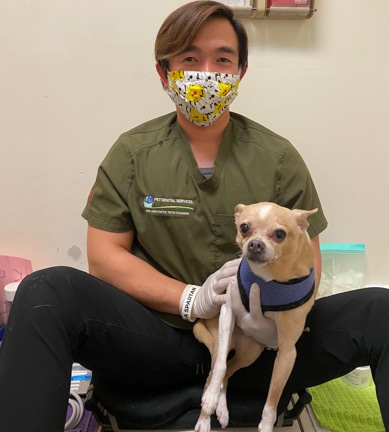
This dog just had its teeth cleaned with Non Anesthetic Dental
Heart Disease
Heart disease can also occur as your Boston ages. We will check for heart murmurs with our stethoscope during your yearly examine to diagnose this problem and treat it before the onset of congestive heart failure.
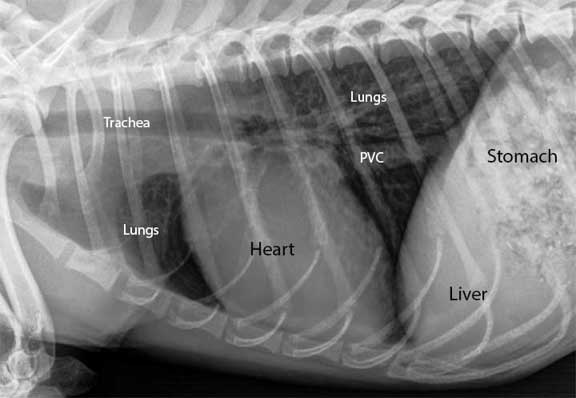
This radiograph gives you a feel of the anatomy of the chest where the heart resides
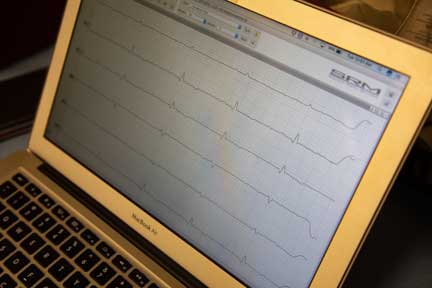
Electrocardiograms (ECG or EKG) are used in the diagnosis

An echocardiogram (ultrasound of the heart) is the definitive way to make a diagnosis of heart disease
Hormone Diseases-
Hypothyroidism
A low thyroid level, called hypothyroidism, can cause many problems in various systems in the Shis Tzu body. Lethargy and obesity are some of the more common symptoms. The link to your hypothyroidism page has much more information.
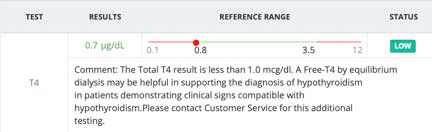
One of the ways we diagnose hypothyroidism is with a blood panel. This T4 level, at 0.7 micrograms per deciliter, is low, and supports the diagnosis
Musculoskeletal Diseases
Elbow Dysplasia
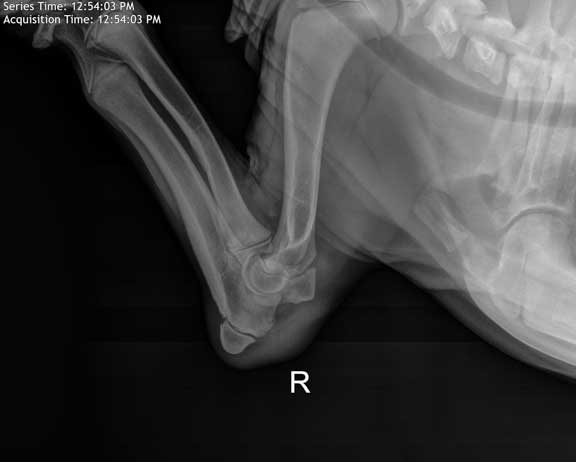
The elbow of young dog showing where elbow dysplasia occurs and where it is diagnosed
Hip Dysplasia
Small dogs like Shih Tzu can also get hip dysplasia like large dogs. Our hip dysplasia page has all the details.
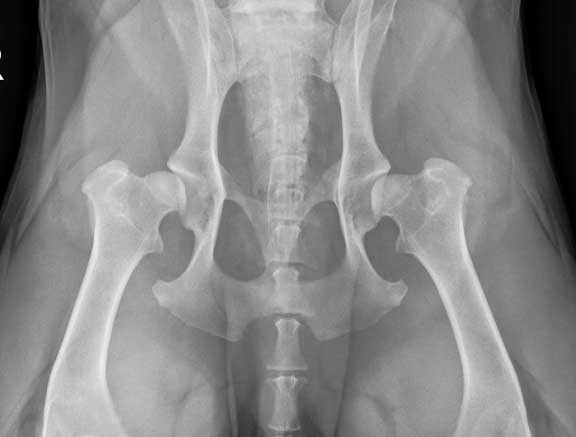
This is a bad case of hip dysplasia on both sides
Patellar luxation
Shih Tzu’s are prone to an orthopedic problem where the knee cap is loose and does not guide in the patellar groove properly. The symptoms of this are occasional lameness where you dog kicks its leg out on occasion. It is cured surgically. If not corrected this can lead to painful arthritis.
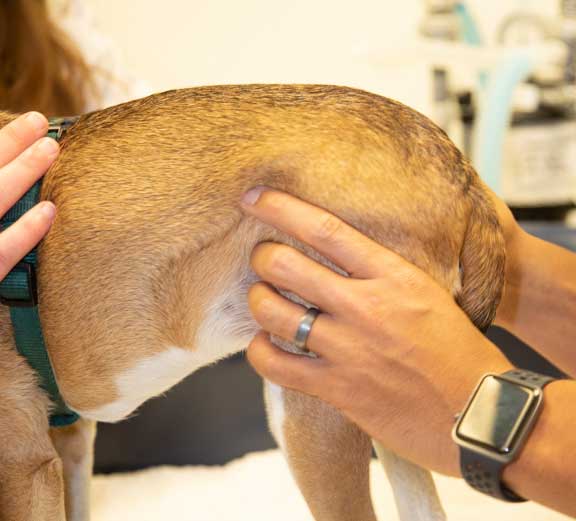
A knee exam confirms the diagnosis, and lets us know if the patellar laxation is medial or lateral

Those two white and round structures at the bottom of this radiograph are in the normal position
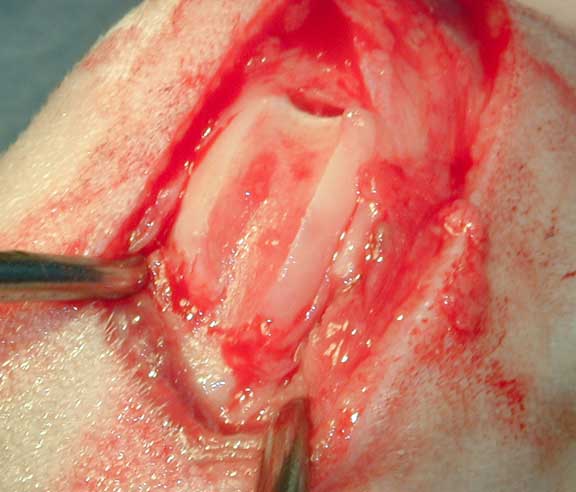
Surgery consists of deepening the patellar groove to correct the problem

The arrow points to painful arthritis along the knee
Liver (portosystemic) shunt
This is a serious liver disease that Shih Tzu are prone to. Symptoms vary, all depending on what age your dog has this disease.
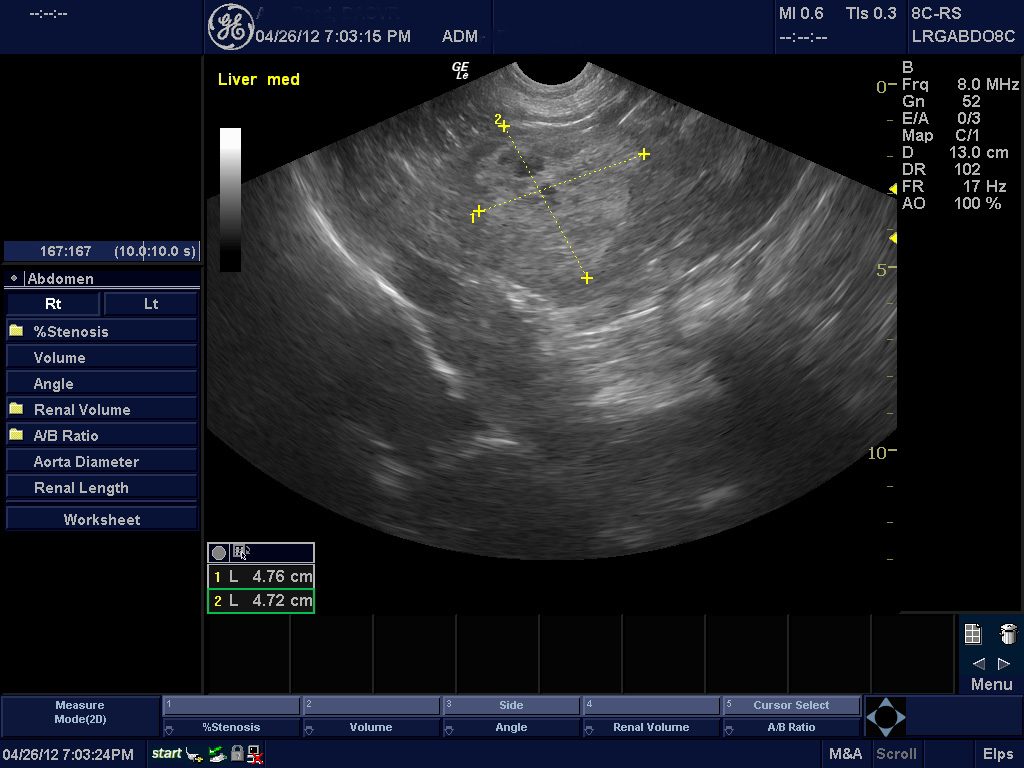
Ultrasound is very beneficial in this diagnosis
All liver diseases that Shih Tzu are prone to are serious, and because of this we have a detail Liver Disease Page for more information.
Back to Breed Diseases page.