

Introduction
Reptiles get cancerous tumors in numerous locations in their body. This page describes how we treated an oral tumor, called a squamous cell carcinoma, in a Tegu. Squamous cell carcinomas also occur in mammals, especially the ears of white cats that are exposed to the sun. We have a page describing this disease in a cat- click here to link to it.
You can learn more about our standard of care of sick reptiles from the Association of Reptile and Amphibian Veterinarians.
Cause
It is hard to know what causes this tumor in tegu’s, which is par for the course in many cancers. This one, called a squamous cell carcinoma, tends to be related to sunshine, which is not the case for a tegu.
Symptoms
Being a reptile and with the so pace of change, it can be hard to know when your tegu has a problem like this It might not eat well, lose weight, have discharge from the mouth, or even paw at the mouth. In the case of this tegu the owner noted the tumor on the side of the mouth and brought it in for an exam.
Treatment
This is the Tegu upon presentation to our office. This growth had been present for several weeks according to the owner. In reality, it was probably growing on the inside of the mouth for a much longer period of time.
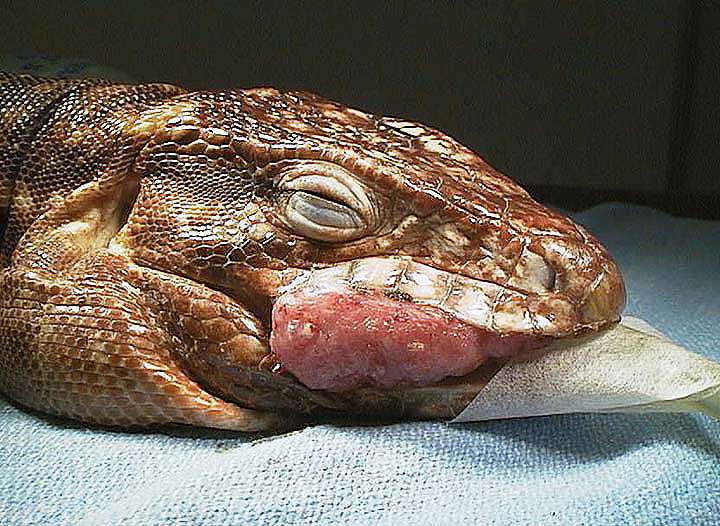
This large of a mass was interfering with its ability to eat
We anesthetized it (you can see the breathing tube in its windpipe) to assess the degree of involvement.

As expected it went deep into the oral cavity.
We used cautery to remove it since this location has an extensive blood supply and cautery minimizes bleeding both during and after the procedure. The appearance of the mouth is much nicer with the tumor removed.

Side view appearance of the mouth after removing as much tumor as possible
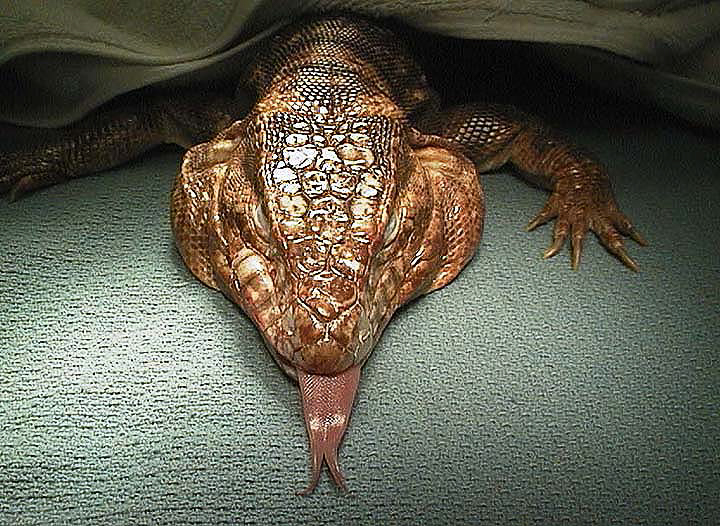
Front view appearance of the mouth after removing as much tumor as possible
Diagnosis
The cancerous tissue was submitted to the pathologist for analysis. It is a squamous cell carcinoma, a malignant tumor. Due to the aggressive nature of this tumor there is a high chance that it will recur in this spot, although usually it does not spread to the rest of the body.
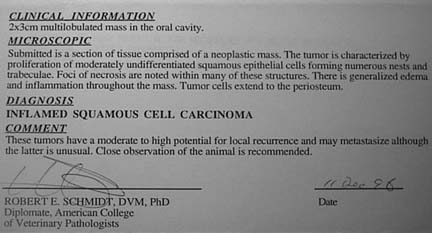
This is the actual report we received from our pathologist. It is from a doctor that specializes in reading tissue samples from reptiles.
Return to Reptile Diseases page.